Insurance Fraud Lie Detector Test
Detect staged accidents, exaggerated claims, arson fraud and bogus injury with P300 EEG brain-wave technology. 95% accuracy for insurers, loss adjusters, SIU teams and honest claimants proving their case. UK-wide from £499.
The not-knowing ends today.
One session. A clear, written answer you can finally act on.
An answer you can trust
The question you've carried for months — sometimes years — is settled in a single 90-minute session. Examiner-led, evidence-based, built to be certain.
A result that holds up
Clear, written and defensible. No "inconclusive", no grey areas — a definitive conclusion you can stand behind.
Same day, across the UK
Your written report is in your hand within the hour, before you even leave. Same-day appointments nationwide.
Insurance Fraud Lie Detector Test
P300 EEG brain-wave analysis detects concealed knowledge in insurance fraud cases — whether you are an insurer investigating a suspicious claim or an honest policyholder proving your case is genuine.
For Insurers, SIU Teams & Loss Adjusters
Insurance fraud costs the UK industry over £1 billion every year. Traditional investigation methods — surveillance, forensic accounting, witness interviews — are slow, expensive and often inconclusive. P300 EEG lie detector testing cuts through the noise in 20 minutes by detecting whether a claimant's brain recognises details only a fraudster would know.
- Staged accident and cash-for-crash ring detection
- Exaggerated whiplash and personal injury claim verification
- Arson investigation — confirm or clear policyholder involvement
- Fabricated burglary and theft claim exposure
- Inflated contents and high-value item fraud
- Business interruption and escape-of-water claim fraud
- Motor insurance fraud — phantom passengers, pre-existing damage
- Application fraud and material non-disclosure detection
- Ghost broker and intermediary fraud investigation
- Organised fraud ring screening — multi-claimant bulk testing
- Employer's liability and public liability fraud
- Travel, pet and specialist insurance fraud detection
Starting from £499
SIU multi-claimant packages from £449/person • Legal-grade evidence package £799 • On-site testing UK-wide
For Honest Claimants — Prove Your Claim Is Genuine
If your insurer suspects fraud and you know your claim is honest, a P300 EEG lie detector test provides independent scientific evidence that can break the deadlock and get your claim paid. Several clients have had claims settled within days of submitting a P300 clearance report.
Insurance Fraud P300 EEG Features:
- Reports formatted for SIU fraud panels, loss adjusters and solicitors
- On-site testing at insurer offices, claims centres or neutral venues
- 95% accuracy with involuntary P300 brain-wave recognition response
- Supports Section 57 fundamental dishonesty applications
- Compatible with IFB, IFED and Insurance Fraud Register referrals
- Same-day emergency appointments for time-critical investigations
- Multi-claimant bulk screening for organised fraud rings
- Expert witness testimony available for court proceedings
- Full chain-of-custody documentation and GDPR compliance
- Claimant clearance reports to accelerate genuine claim settlement
Who Uses Insurance Fraud P300 EEG Testing?
Our insurance fraud lie detector test serves both sides of the claim — those investigating fraud and those wrongly accused of it.
Special Investigation Units
SIU teams use P300 EEG to screen suspicious claimants, identify organised fraud rings and build evidence packages for claim repudiation or prosecution referral.
Loss Adjusters & Investigators
Loss adjusters integrate P300 results alongside forensic evidence and site inspections to build comprehensive fraud assessments for underwriters.
Insurance Solicitors & Barristers
Legal teams use P300 evidence to support fundamental dishonesty applications, counterschedule defences and fraud prosecution cases in county and crown courts.
Honest Claimants
Genuine policyholders volunteer for P300 testing to clear their name, break investigation deadlocks and get legitimate claims paid faster.
Claims Departments & Underwriters
Claims teams and underwriters commission P300 testing to resolve suspicion on high-value or complex claims without months of extended investigation.
Fleet & Motor Trade
Fleet operators and motor trade businesses use P300 to identify employees or third parties staging accidents against company vehicles.
Types of Insurance Fraud We Detect
P300 EEG brain-wave testing detects concealed knowledge across every major category of insurance fraud in the UK market.
🚗 Motor Insurance Fraud
Cash-for-crash, staged collisions, phantom passengers, slam-on braking, pre-existing damage claims, vehicle conversion fraud, hire car credit fraud and induced accidents.
🏠 Property & Contents Fraud
Fabricated burglaries, staged break-ins, inflated contents claims, arson for insurance payouts, escape-of-water staging and subsidence fraud.
🤕 Personal Injury Fraud
Exaggerated whiplash, fabricated soft tissue injuries, staged slips and trips, employer's liability fraud and malingering claims.
🔥 Arson & Fire Fraud
Deliberate fire-setting for commercial or residential insurance payouts. P300 detects knowledge of accelerants, ignition points and pre-fire preparation.
🏢 Commercial & Business Fraud
Business interruption fraud, plant and machinery theft staging, stock loss inflation, professional indemnity fraud and commercial property damage claims.
📋 Application & Policy Fraud
Material non-disclosure, claims history concealment, ghost broking, fronting, identity fraud on proposals and undisclosed modifications.
Visual Comparison: Polygraph vs P300 EEG
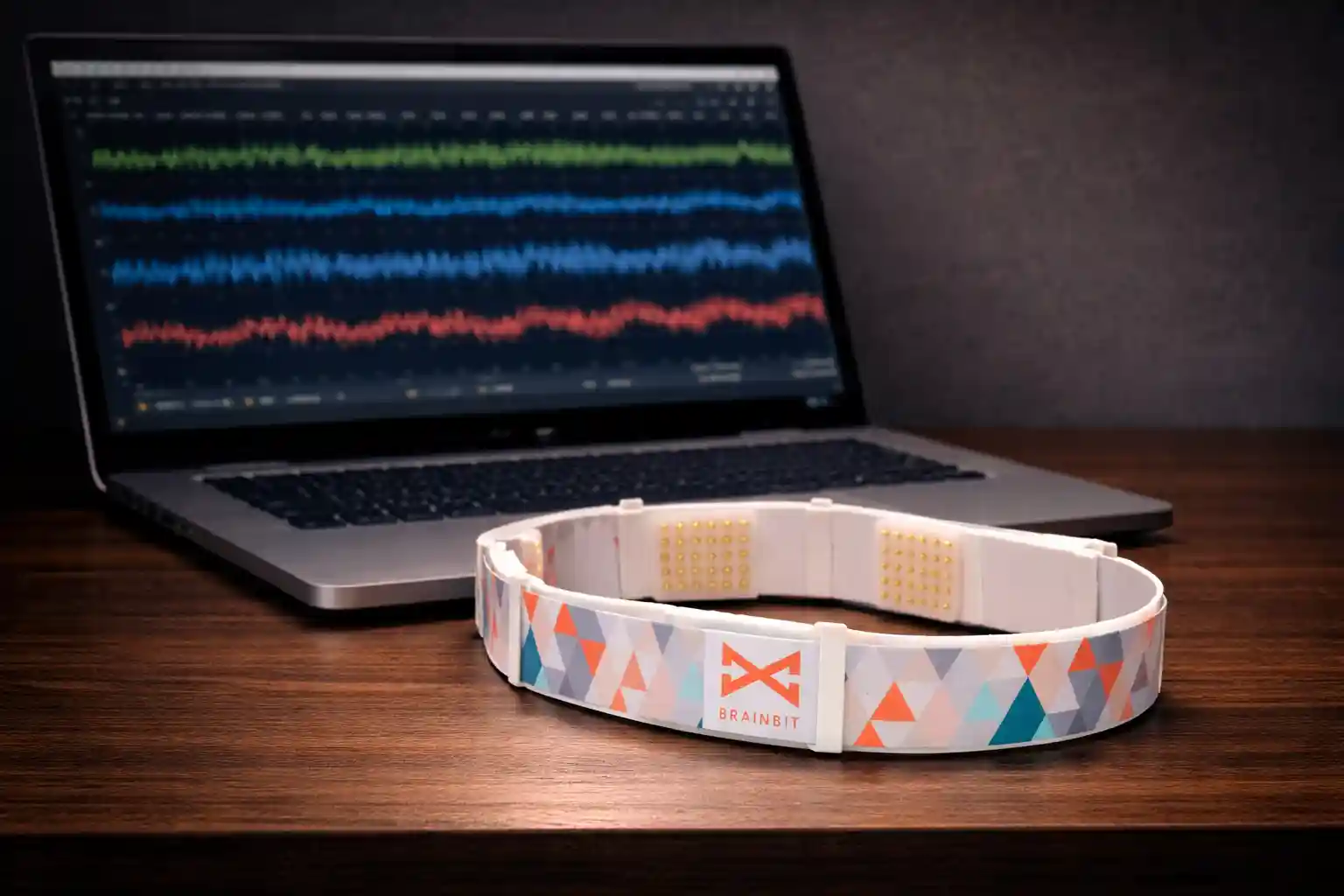
See the clear difference between traditional polygraph testing — with multiple sensors, straps, and stress — and the simplicity of modern P300 EEG lie detection, using only a lightweight brainwave headband.
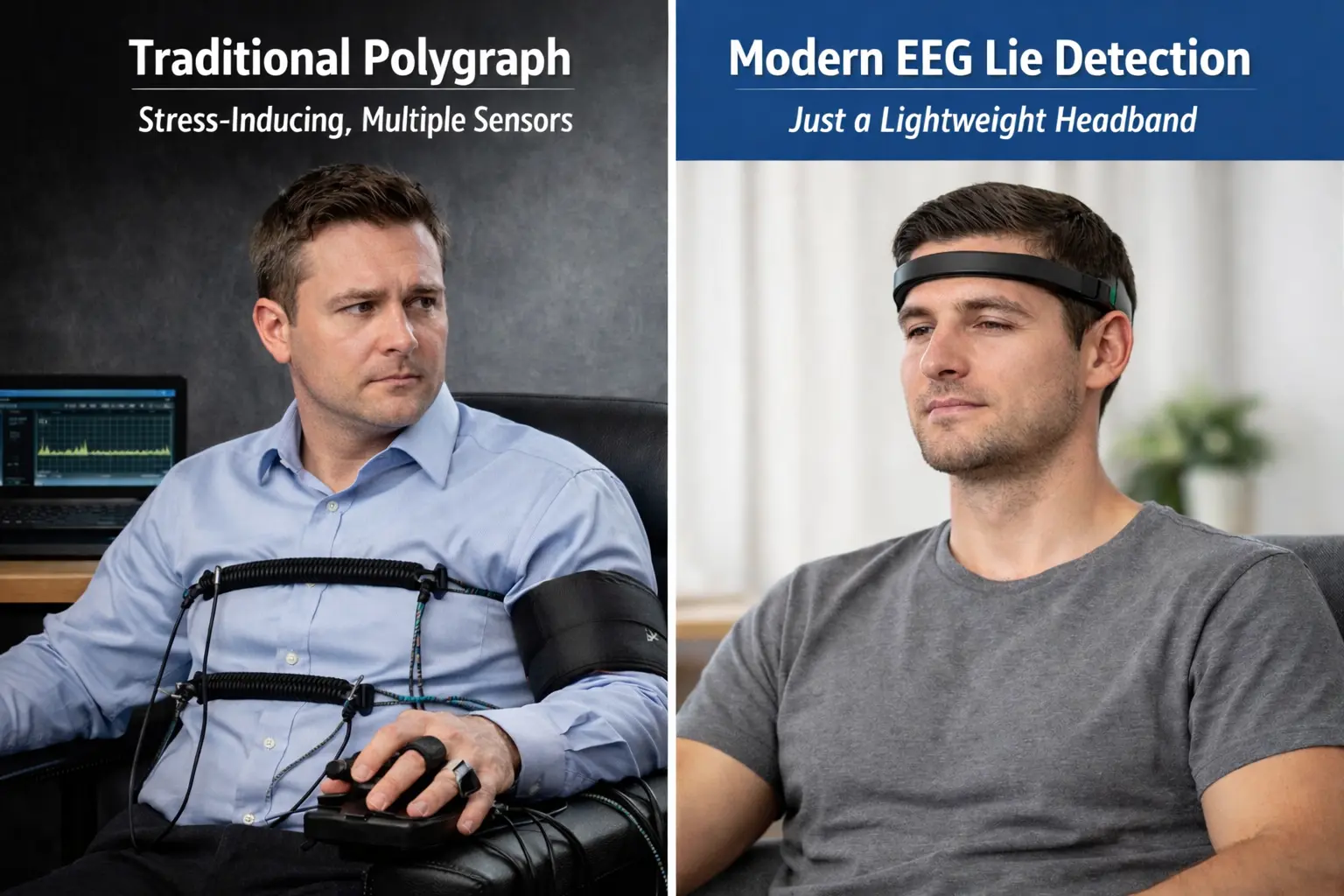
Right: P300 EEG – minimal, non-invasive headband.
Comprehensive Insurance Fraud P300 Analysis Reports
Every test includes a detailed 8-page PDF report analyzing neural responses. Swipe through example pages below to see the depth of our forensic data.
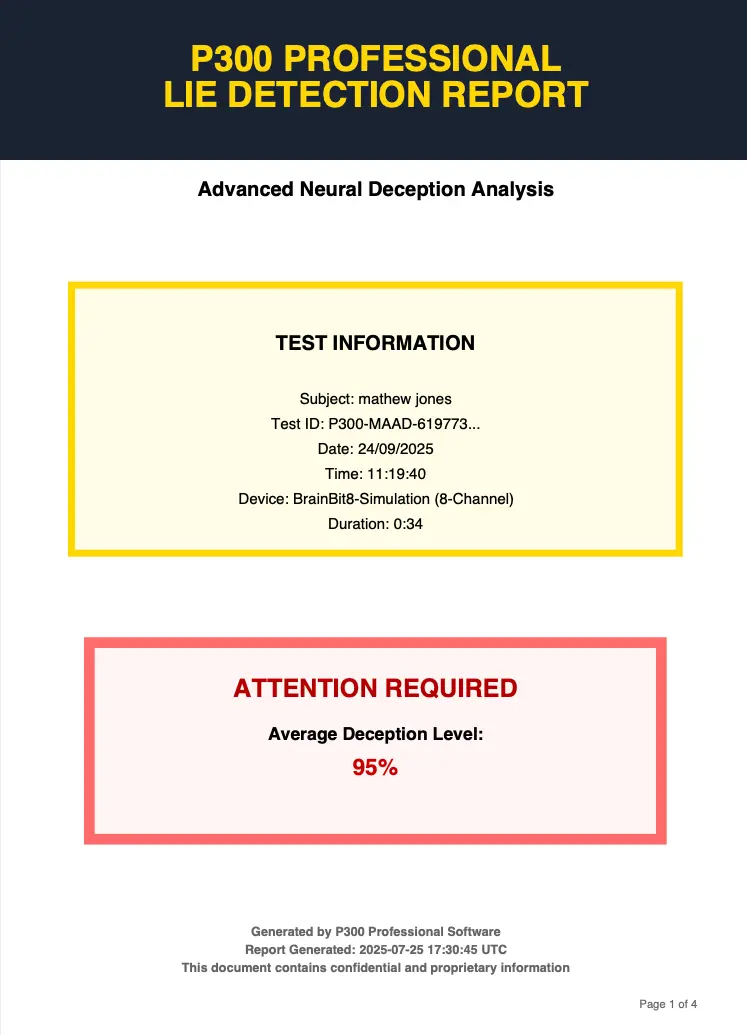
Deception Score Analysis
Granular breakdown of deception scores calculated from specific neural biomarkers.
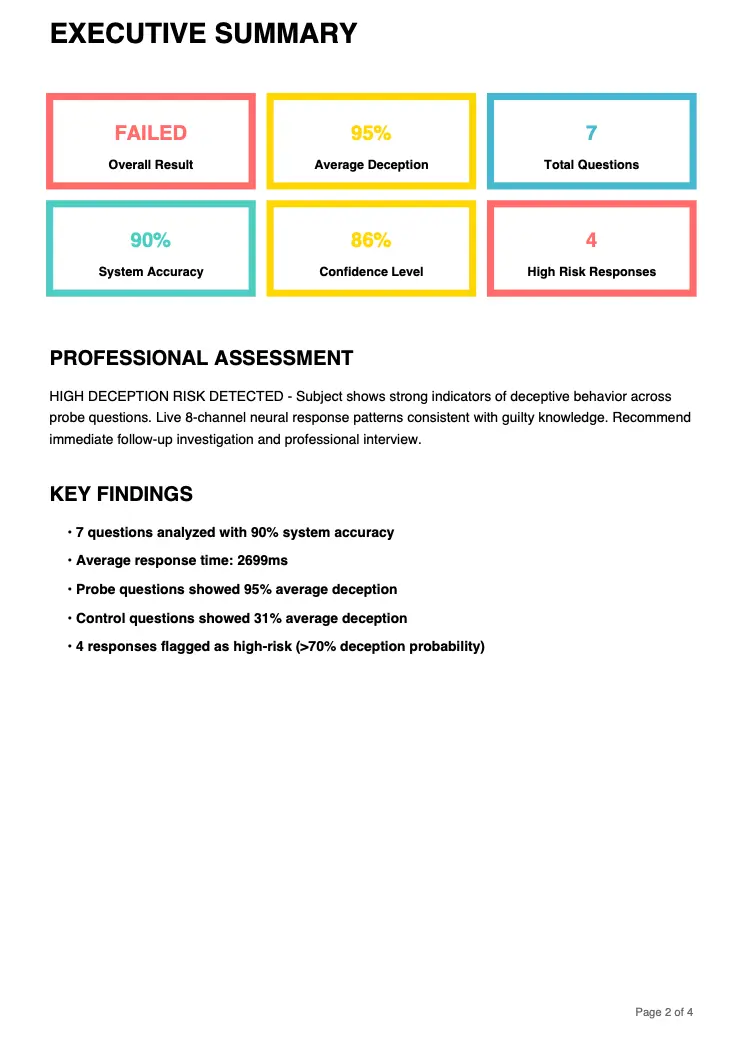
Executive Summary
Clear, definitive results indicating deception probability and overall risk assessment.
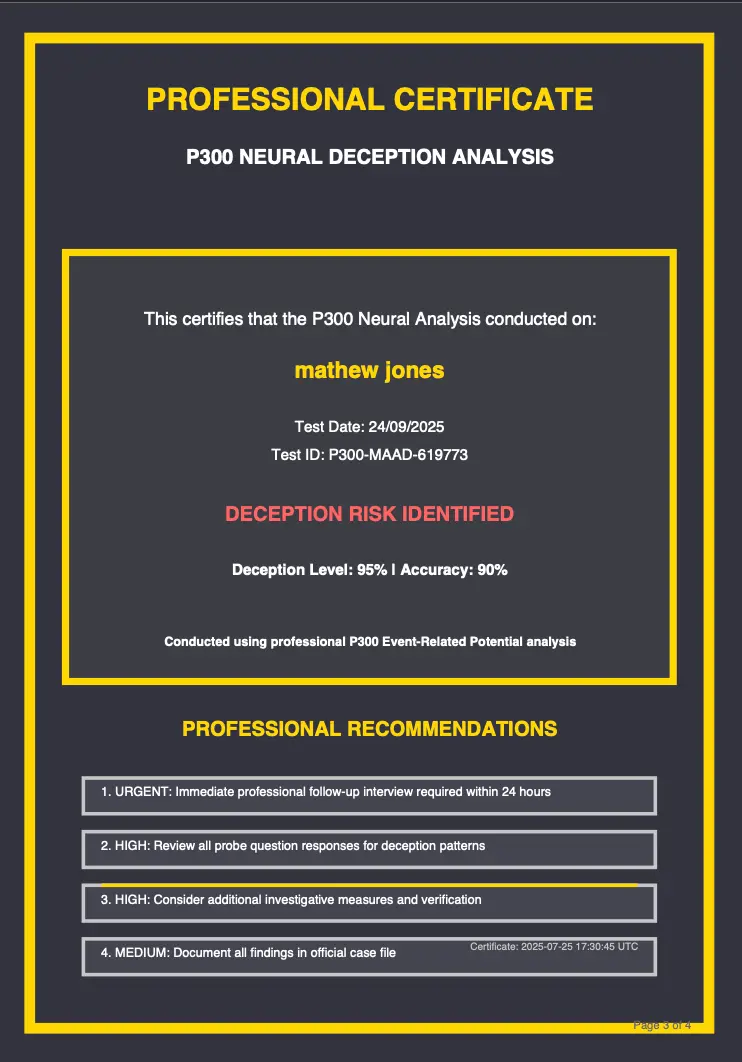
Official Certificate
Signed certification of examination suitable for insurer fraud panels and court.
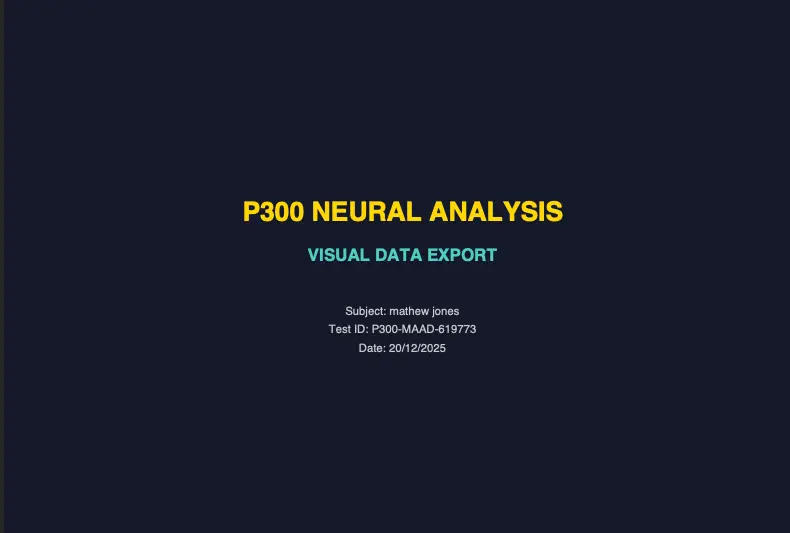
Raw Data Export
Full transparency with access to the raw visual data used to generate the final conclusion.
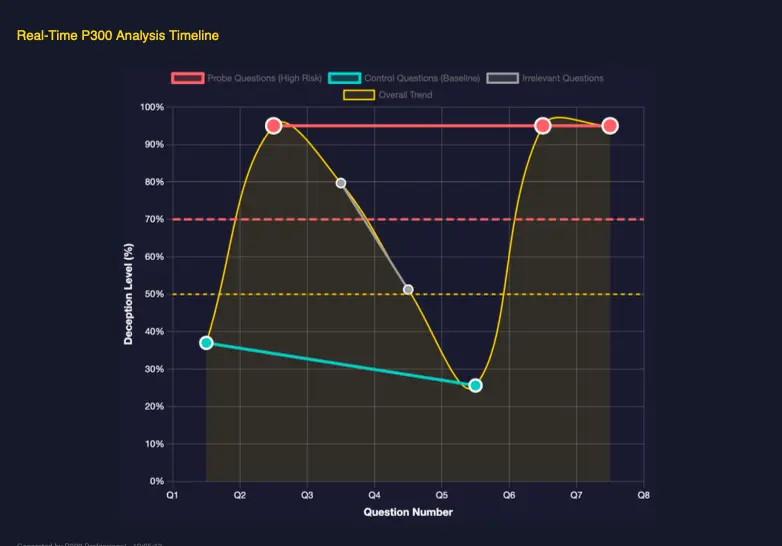
Neural Response Timeline
Millisecond-by-millisecond timeline of brain activity in response to probe stimuli.
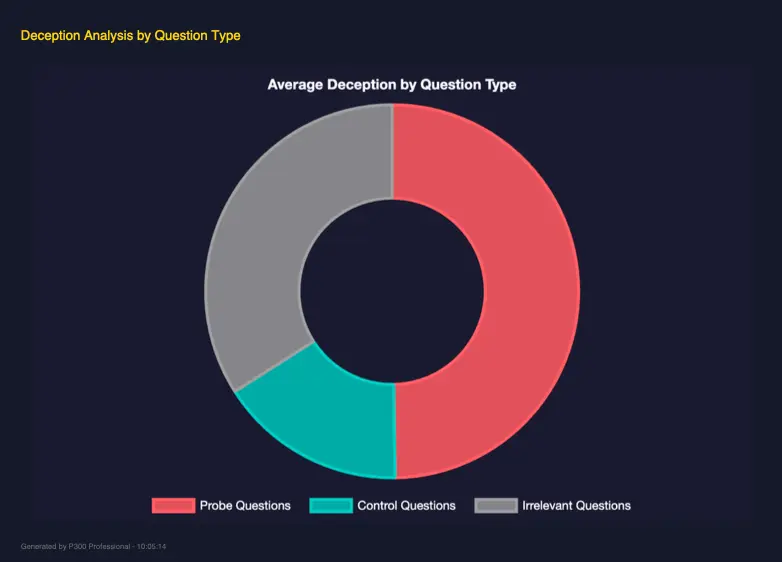
Question Category Breakdown
Comparative analysis of responses to relevant, irrelevant, and control questions.
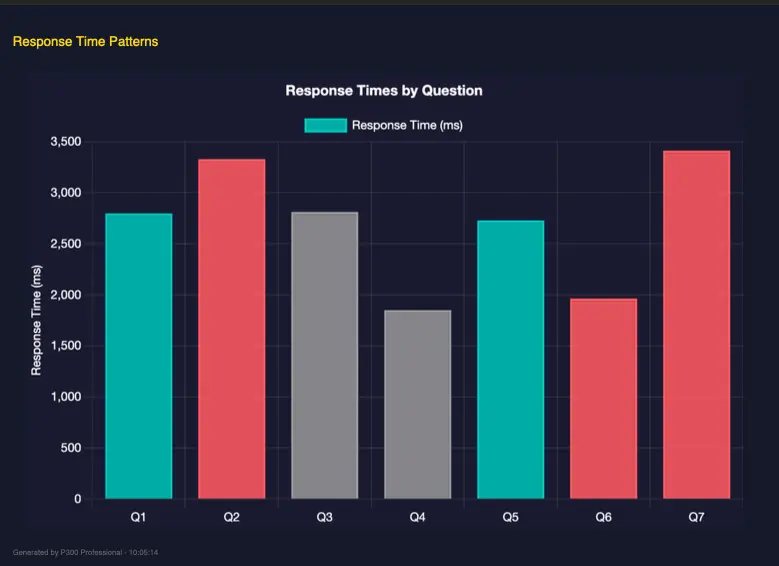
Cognitive Load Metrics
Analysis of response latency indicating increased cognitive load during deceptive answers.
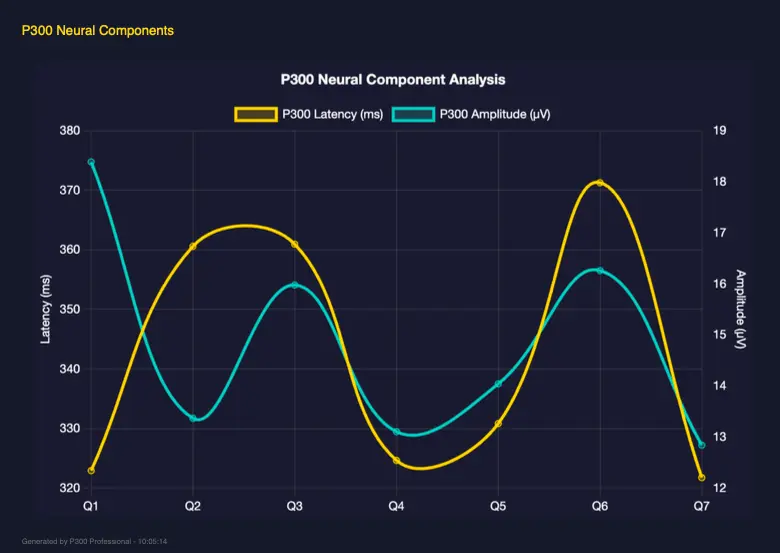
Component Amplitude Data
Scientific validation of P300 wave amplitude and latency specific to the subject.
P300 EEG vs Polygraph — Accuracy Comparison
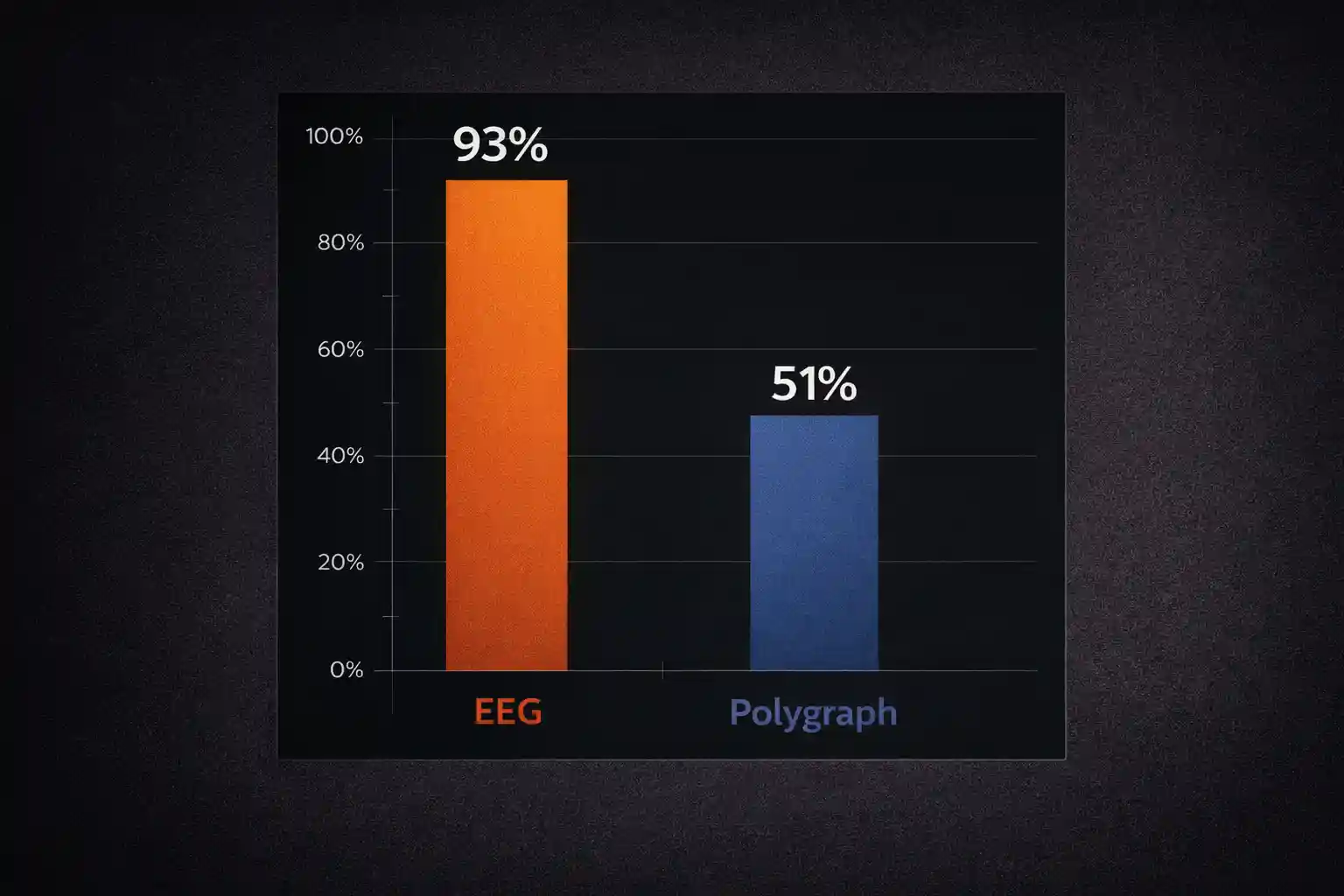
Independent research consistently shows P300 EEG brain-wave analysis outperforms traditional polygraph across every key measure — critical for insurance fraud evidence.
Sources: Farwell & Donchin (1991), Rosenfeld et al. (2008), peer-reviewed EEG literature.
What the Readings Actually Look Like
The P300 brain-wave spike is a single, unmistakable response. Polygraph produces four overlapping signals full of noise — see why P300 EEG results are so much clearer for insurance fraud evidence.
P300 EEG — Brain Wave Response
✓ One clear spike — unambiguous result
Polygraph — 4 Overlapping Signals
✗ Noisy, subjective, open to interpretation
Illustrative waveforms based on published EEG and polygraph signal characteristics.
Insurance Fraud Investigation Client Feedback
Insurers, SIU teams, loss adjusters, solicitors and honest claimants who used our P300 EEG lie detector test to resolve insurance fraud investigations.
"Our SIU suspected an organised cash-for-crash ring across six linked claims. P300 EEG testing confirmed three claimants had specific knowledge of the staged collision. Saved the company an estimated £180,000."
"The insurer suspected arson on a commercial property claim worth £340,000. P300 testing of the policyholder showed no deception. Claim was paid in full within 10 days of our report."
"Four passengers from a low-speed rear-end collision all claimed severe whiplash. P300 EEG confirmed two had no genuine pain recognition responses. The fraudulent claims were declined saving £95,000."
"A household contents claim listed items the claimant had never owned. P300 testing showed their brain did not recognise 60% of the items they claimed to have lost. Fraud confirmed and claim withdrawn."
"Policyholder reported a break-in but physical evidence was inconsistent. P300 EEG confirmed they had detailed knowledge of how the scene was staged. Claim was declined and referred to police."
"A motor claim included damage our engineers suspected was pre-existing. P300 testing confirmed the claimant recognised the damage existed before the reported incident. Saved a £28,000 payout."
"My insurer suspected I had started the fire that destroyed my kitchen. I volunteered for P300 testing and passed completely — no deception detected. My £47,000 claim was settled within a fortnight."
"A customer claimed they slipped on a wet floor with no witnesses. P300 testing revealed they had detailed knowledge of staging the fall and pre-selecting the location. Claim dismissed entirely."
"Three company vehicles were involved in suspicious claims within two months. P300 EEG testing identified two drivers who had coordinated the incidents. The fraud ring was broken."
"I was devastated when my insurer implied I had faked a burglary. P300 testing confirmed I had no knowledge of how entry was gained. Claim paid in full. This service saved my reputation."
"A restaurant owner claimed £120,000 for business interruption after a flood. P300 testing revealed they had prior knowledge of the valve that caused the flood. Claim declined and police notified."
"Our client's insurer was threatening to void their policy over a suspicious claim. We arranged P300 testing which cleared them completely. Policy renewed and relationship restored."
"Claimant reported £8,000 of electronics stolen during a holiday. P300 testing showed no recognition of the alleged theft location or circumstances. Travel insurance fraud confirmed."
"My insurer delayed my water damage claim for four months suspecting fraud. One P300 session cleared me of any deception. £32,000 settlement arrived within the week."
"We identified a ghost broker selling fraudulent motor policies. P300 testing confirmed their knowledge of the fake policy documentation and premium diversion scheme."
"A commercial policyholder claimed £200,000 for stolen plant equipment. P300 confirmed they recognised that several items had already been sold before the reported theft."
"We had surveillance footage contradicting a personal injury claim but needed corroborating evidence. P300 confirmed the claimant recognised activities their injury should have prevented."
"A neighbour filed a subsidence claim blaming my property. P300 testing showed they had knowledge of pre-existing structural issues they failed to disclose. Fraudulent claim withdrawn."
"Three vehicles reported stolen from my dealership. My insurer suspected an inside job. P300 testing cleared me and my staff. £190,000 claim paid in full."
"Eight linked public liability claims against a supermarket chain. P300 screening identified four claimants with knowledge of coordination. All fraudulent claims repudiated."
"My insurer accused me of deliberately damaging my own vehicle. I volunteered for P300 testing and it confirmed zero deception. Five months of investigation ended in one afternoon."
"An employee claimed £65,000 for a workplace injury we suspected was fabricated. P300 confirmed no genuine recognition of the incident. Claim successfully defended."
"The P300 EEG report was admitted as expert evidence in a county court hearing for a disputed motor claim. The judge referenced the brainwave findings in their judgment."
"Our fleet was targeted by a fraud ring staging accidents with our vehicles. P300 testing of three third-party claimants confirmed orchestrated knowledge. All claims withdrawn."
"Insurer suspected I had caused the roof damage myself before claiming for storm damage. P300 test took 20 minutes and showed no deception. Claim approved the following week."
"Claimant reported £45,000 of jewellery stolen. P300 testing confirmed they did not recognise several high-value items listed on the claim. Adjusted to genuine value saving £28,000."
"We suspected material non-disclosure on a commercial property policy. P300 confirmed knowledge of previous claims they failed to declare. Policy voided."
"An agricultural policyholder claimed £90,000 for crop damage. P300 confirmed they had knowledge of the deliberate contamination. Claim declined and referred to police."
"I was the victim of a hit-and-run and my own insurer questioned my account. P300 testing proved I was telling the truth about every detail. Claim accepted in full."
"A veterinary practice was referring suspicious pet insurance claims. P300 testing of two owners confirmed knowledge of inflated costs and fabricated conditions. Ring referred to IFED."
"My insurer suspected my staff staged a break-in at our warehouse. P300 testing cleared all three employees and myself. The £78,000 theft claim was settled."
"Policyholder reported a vehicle stolen and destroyed. P300 confirmed they had specific knowledge of where it was hidden. Vehicle recovered intact and claim prosecuted."
"P300 EEG evidence supported our fundamental dishonesty application under Section 57. The claimant's entire case was dismissed with costs. Exceptional report quality."
"My insurer investigated me for three months over a burst pipe claim. P300 testing confirmed no fraud. £54,000 settlement arrived within the week. Should have done it sooner."
"We suspected a proposer was misrepresenting their claims history. P300 confirmed recognition of three undisclosed incidents. Application declined before inception."
"A tenant deliberately set fire to my rental property and denied involvement. P300 confirmed their knowledge of accelerant placement. My £160,000 claim was accepted."
"Five passengers were claimed in a vehicle that seats four. P300 testing of the fifth claimant showed no recognition of the vehicle interior or journey details. Fraud declined."
"Tools worth £12,000 stolen from my van. Insurer questioned my claim for weeks. P300 test showed I was completely truthful. Claim paid and I was back to work within days."
"Owner of a holiday let was suspected of arson after a fire during a vacant period. P300 showed no deception or knowledge of how the fire started. Genuine electrical fault confirmed."
"A claimant had made seven claims across four insurers in three years. P300 testing confirmed they had knowledge of staging the latest incident. Referred to the Insurance Fraud Register."
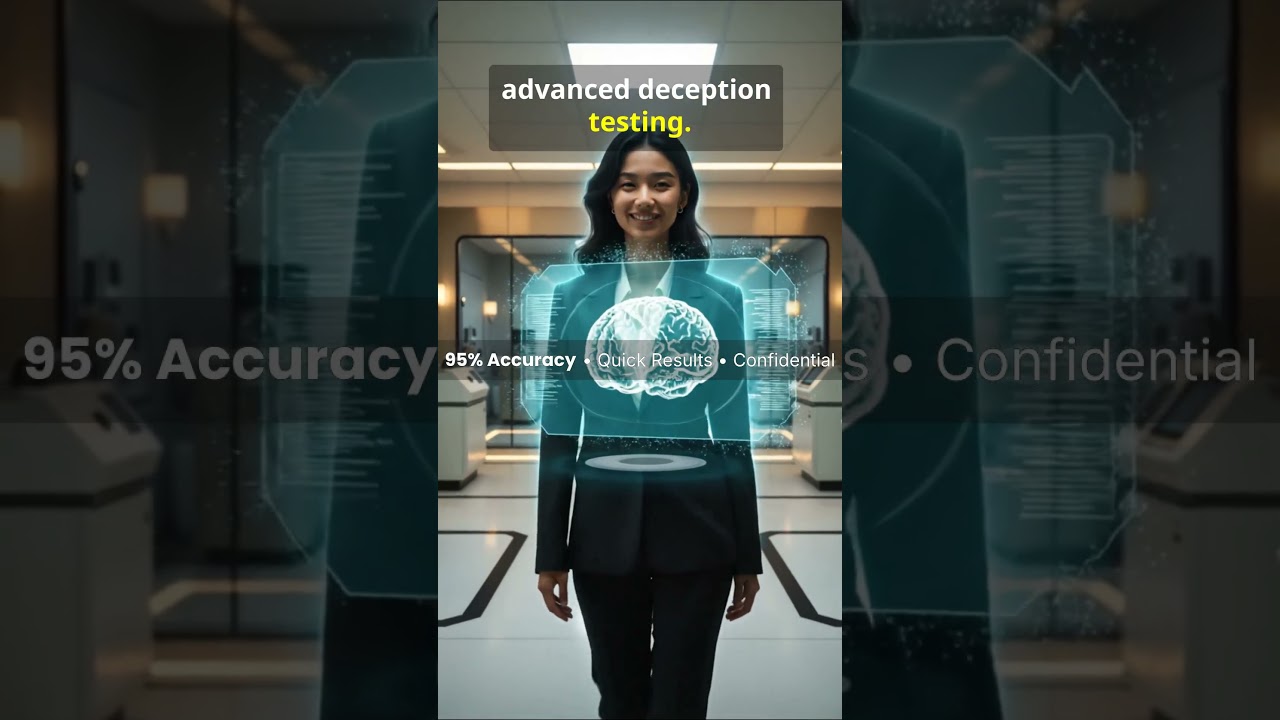
See Our P300 EEG Test in Action
Watch how our brain-wave lie detector technology achieves 95% accuracy in detecting deception — the same technology used in insurance fraud investigations.
Find Insurance Fraud Testing Near You
Select your area for local insurance fraud lie detector testing with on-site visits, same-day appointments and mobile coverage across the UK.
Insurance Fraud Lie Detector Test FAQs
Answers to common questions about using P300 EEG testing for insurance fraud investigation, claim verification and evidence gathering.
Insurance fraud lie detector testing starts from £499 for a standard P300 EEG session. Insurer SIU multi-claimant investigation packages start at £449 per person with volume discounts. Legal-grade evidence packages with expert witness testimony start from £799. All prices include detailed PDF reports and a post-test consultation.
P300 EEG results provide strong supporting evidence for claim decisions. Insurers use the results alongside other investigation findings to build a complete picture. The reports are formatted for internal fraud panels and, where required, for court proceedings including fundamental dishonesty applications under Section 57 of the Criminal Justice and Courts Act 2015.
P300 EEG detects concealed knowledge related to staged accidents, cash-for-crash schemes, arson, exaggerated claims, bogus personal injury, phantom passengers, inflated contents claims, fabricated burglaries, business interruption fraud, application fraud, non-disclosure, ghost broking, and organised fraud rings. The technology detects whether the brain recognises specific details the person denies knowing.
Yes. Many honest claimants use P300 EEG testing to clear their name when an insurer suspects fraud. If the test shows no deception, the report provides independent scientific evidence that can accelerate claim settlement. Several clients have had delayed claims paid within days of submitting a P300 clearance report.
P300 EEG achieves 95% accuracy in 20 minutes compared to weeks or months of surveillance, forensic accounting and witness interviews. It costs a fraction of extended investigation and cannot be beaten by countermeasures. The involuntary brain recognition response occurs within 300 milliseconds — before conscious control is possible.
P300 EEG results are increasingly accepted as supporting evidence in civil litigation, county courts and insurance dispute resolution. Our reports are prepared to expert witness standards with full methodology disclosure. We provide expert testimony where required to explain the science and findings to legal professionals and the court.
Yes. We regularly screen multiple claimants for SIU teams investigating organised fraud. Each claimant is tested individually with case-specific stimuli. We can test up to 20 people per day on-site. Volume pricing applies and results can be cross-referenced to identify coordination patterns.
For urgent fraud investigations we aim to arrange testing within 24-48 hours and in many cases can offer same-day appointments. Reports are delivered within 24 hours of testing. Contact us by phone for the fastest response — we understand that time-sensitive investigations cannot wait.
Our reports are formatted to support referrals to the Insurance Fraud Bureau (IFB), the Insurance Fraud Enforcement Department (IFED) and the Insurance Fraud Register (IFR). We provide chain-of-custody documentation and can support criminal proceedings where insurers choose to prosecute.
Informed consent is required for all P300 EEG testing. However, refusal can be noted by insurers as part of their overall claim assessment. In practice, genuine claimants typically volunteer for testing to prove their claim is honest and accelerate settlement. Refusal in the context of an active fraud investigation is often itself a significant indicator.
Insurance Fraud Case Studies — Real Outcomes
Four documented P300 EEG fraud investigations. Staged accidents, inflated claims, property damage fraud, and expense manipulation — what was found, what it stopped, and the ROI each investigation produced.
Fraudulent Injury Claim Detection — £250,000 Saved
A workplace injury claim entered verification after inconsistencies emerged. P300 EEG revealed deceptive recognition patterns with 93% accuracy — the result the polygraph failed to produce at 51%. Over £250,000 in fraudulent payouts stopped. Result supported the insurer's legal position through to settlement.
Read the case study
Staged RTA: Five Claimants, All Deception-Indicated, £94,500 Stopped
Five claimants from a single road traffic accident tested in one day. All five deception-indicated. £94,500 in staged personal injury claims stopped before settlement. 29:1 return on investigation cost. Findings referred to the police fraud unit.
Read the case studyLandlord Property Damage: £38,500 Flood Claim Stopped — 21:1 ROI
A tenant submitted a £38,500 flood damage claim at a vacant rental property and denied liability. P300 EEG — deception-indicated on all three probe sets. Claim denied. Civil recovery proceedings issued. Investigation returned 21:1 on cost with full documented evidence.
Read the case study
Contractor Expenses Fraud: £47,000 — Perpetrator Confirmed, Innocent Suspect Cleared
An IT contractor falsified expenses over 18 months. Two suspects faced equal suspicion. P300 EEG confirmed the contractor's deception and — critically — gave the innocent second suspect a documented clear result. Both findings delivered in a single session.
Read the case studyInsurance Fraud Investigation — Essential Reading
In-depth guides for insurers, loss adjusters, and legal teams — covering how P300 EEG is used in fraud investigations, the documented ROI, what a session involves, and how results are used in legal proceedings.
How Businesses Use Lie Detection for Fraud Claims in the UK
UK businesses lose billions annually to fraudulent claims. P300 EEG changes the economics of fraud investigation — with a documented 29:1 return on investigation cost in real cases. How insurers, loss adjusters, and legal teams are integrating neurological testing into their fraud detection process and what the commercial case looks like in practice.
Read the guide
What Happens During an Insurance Fraud EEG Investigation
From initial referral to written report — a complete stage-by-stage walkthrough of a P300 EEG insurance fraud investigation. How probe design is built around specific claim details, what the session involves for the subject, how the result is documented, and what the report contains for the instructing insurer or legal team.
Read the walkthroughP300 EEG and Insurance Fraud: How Brain Science Is Changing Claims Investigation
£94,500 in staged road traffic accident claims. Six claimants. Five tested. Five deception-indicated results. A 29:1 return on investigation investment. The full documented case study — including how the investigation was designed, what the EEG sessions found, and how the results supported the insurer's legal position.
Read the case study
Using P300 EEG Results in Insurance Fraud Legal Proceedings
P300 EEG results are not automatically admissible as standalone court evidence — but they carry meaningful weight in civil proceedings, arbitration, and settlement negotiations when properly documented and presented. What courts accept, how to position the report correctly, and how to brief legal teams on the evidence it provides.
Read the legal guideInsurance Fraud Investigation — Book Your Test Today
Whether you are an insurer investigating a suspicious claim or an honest policyholder proving your case, P300 EEG brain-wave testing delivers 95% accurate scientific evidence in 20 minutes.
Secure Data Handling
All investigation data and results are encrypted and stored securely with full chain-of-custody documentation.
SIU & Loss Adjuster Ready
Reports formatted for insurer fraud panels, loss adjusters, solicitors and court proceedings.
Court-Grade Evidence
Expert witness testimony available. Reports support Section 57 fundamental dishonesty applications.
Results in 24 Hours
Same-day testing available. Full PDF reports delivered within 24 hours of testing completion.