The P300 EEG Lie Detector: Technology, Accuracy & Results
An 8-channel EEG brain scan with P300 pattern recognition, delivering 95% accuracy in professional deception detection. Here's the equipment, how a test runs, how it compares to the polygraph, and real case results.
Step by Step
How a P300 EEG Lie Detector Test Works
The entire process takes around 90 minutes from arrival to receiving your report. Here's exactly what happens.
Pre-Test Briefing
Your examiner explains exactly how the test works, walks you through the equipment, and agrees the test questions with you in advance. Nothing is a surprise. You can ask anything and take as long as you need before starting.
Headband Goes On
You wear a lightweight BrainBit EEG headband — no wires, no straps, no chest sensors. It sits on your forehead and behind your ears, reading electrical activity from 8 channels across your brain. Completely non-invasive.
Stimuli Are Shown on Screen
You sit in front of a screen and are shown a series questions — some relevant to the case, some irrelevant. Your brain does the rest. When it recognises something it knows, it fires an involuntary electrical spike called the P300 response.
Your Brain Response Is Recorded
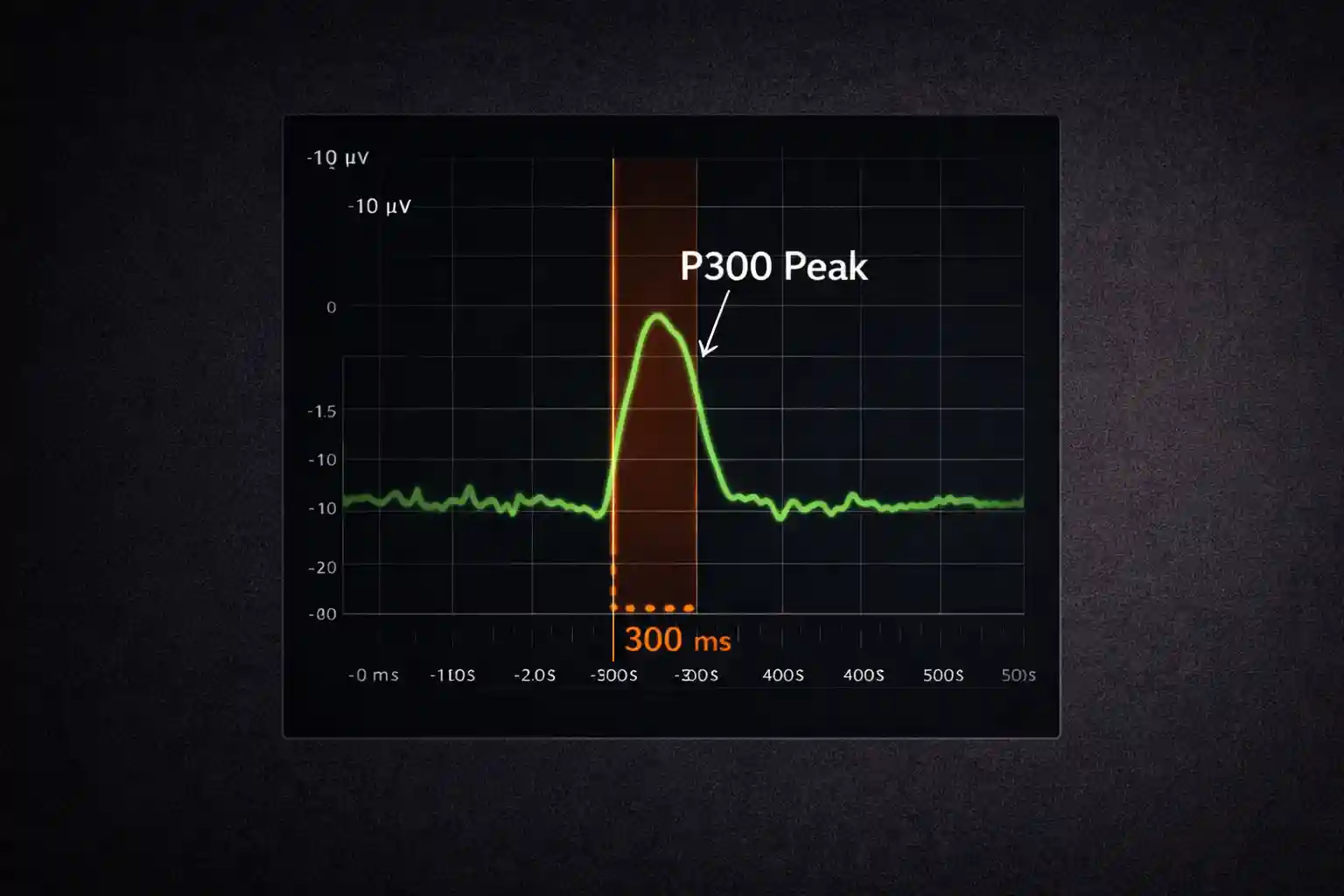
Our system captures the P300 spike in real time — roughly 300 milliseconds after each stimulus. The spike only appears when your brain recognises information it already holds. You cannot suppress it, control it, or fake it. It's an involuntary neurological reaction.
Analysis and Report
The raw EEG data is analysed and compiled into a detailed 8-page forensic report — including spike patterns, deception scores, and a clear truthful or deceptive determination. You'll receive the full report within the hour, suitable for solicitors, employers, or personal use.
The Science, In Brief
What the P300 Response Actually Measures
It doesn't measure stress, nerves, or guilt. It measures one thing — whether your brain recognises information it already knows.
When your brain meets something it recognises — a face, a name, a location — it fires an involuntary electrical spike about 300 milliseconds later: the P300. It happens before conscious thought, so it can't be trained away, breathed away, or faked. That is the whole basis of the test — recognition, not emotion.
This is why it is fundamentally different from a polygraph, which reads stress responses that spike under ordinary anxiety. The P300 goes straight to the brain's recognition memory — the reason the test reaches 95% accuracy.
Accuracy
How Accurate Is P300 EEG — and Why?
95% isn't a marketing number. Here's where it comes from and what it means in practice.
The 95% figure isn't ours — it comes from decades of published, blind-tested research (Farwell & Donchin, 1991; Rosenfeld et al., 2008 onward), which repeatedly shows detection rates in the 90–98% range. We break down how that research works, and why the modern protocol resists cheating, on our P300 science page.
By comparison, traditional polygraph testing achieves accuracy rates of roughly 65–70% in independent studies. The reason for the gap is simple: a polygraph measures heart rate, blood pressure, breathing, and perspiration — all of which spike under general anxiety, not just deception. A nervous truthful person fails. A calm liar passes. P300 EEG bypasses all of that by going directly to the brain's recognition memory.
In practice, this means our results carry significantly more weight when used in legal proceedings, workplace investigations, and personal disputes. The data is objective, the signal is binary, and the report is backed by decades of neuroscience — not an examiner's subjective interpretation of squiggly lines.
Technology Comparison: EEG vs Traditional Polygraph
| Feature | EEG P300 Technology | Traditional Polygraph |
|---|---|---|
| Accuracy Rate | 95% ✓ | 65-85% ✗ |
| Detection Method | Direct brain wave analysis | Physiological responses |
| Test Duration | 15-30 minutes | 2-4 hours |
| Subject Comfort | Non-invasive headset ✓ | Multiple body sensors ✗ |
| Countermeasure Resistance | Highly resistant ✓ | Vulnerable to manipulation ✗ |
| Results Speed | Real-time analysis ✓ | Post-test analysis required |
| Scientific Backing | Peer-reviewed neuroscience ✓ | Limited scientific validation |
| Legal Admissibility | Growing acceptance ✓ | Limited admissibility |
Scientific Validation & Research
Peer-Reviewed Research Foundation
Our EEG lie detection is built on decades of neuroscience and validated through blind, peer-reviewed studies across multiple independent research institutions. The P300 it relies on is one of the most-studied signals in cognitive science.
For the full picture — which brain regions produce the P300, the millisecond-by-millisecond sequence, and what the Rosenfeld countermeasure research proved — see our P300 science page.
Real Case Studies from Our Lie Detector Testing
Documented outcomes from real P300 EEG investigations. Every case below was conducted using the same 8-channel BrainBit EEG system we use for appointments. View full case studies library
Tech Company Internal Theft
Employee suspected of stealing proprietary code. Our P300 EEG detected deception with 94% accuracy versus the polygraph's 52%. The subject attempted countermeasures that fooled the polygraph but had no effect on the EEG result.
Read full case

Witness Credibility Assessment
Key witness in a fraud case. Our EEG showed 93% accuracy identifying truthful responses where the polygraph was inconclusive at 48%. The evidence was accepted in civil proceedings.
Read full caseRelationship Trust Verification
Private client seeking clarity on infidelity suspicions. P300 EEG provided a 92% accurate result where the polygraph produced ambiguous 51% readings. The client was able to move forward with a clear answer.
Read full case

Executive Background Check
C-suite candidate screening revealed employment history discrepancies. EEG detected deception at 95% accuracy versus the polygraph at 59%, preventing a costly hiring mistake for the business.
Read full caseFraudulent Injury Claim Detection
Workplace injury claim verification. EEG revealed deceptive P300 patterns with 93% accuracy. The result saved the insurer over £250,000 in fraudulent payouts and supported their legal position.
Read full case

Insider Threat Investigation
A financial firm suspected an employee of selling client data. EEG testing of five suspects identified the perpetrator with 94% accuracy through involuntary brain responses that could not be suppressed.
Read full case8-Channel BrainBit P300 Validation
Controlled study documenting P300 response patterns and measurement accuracy using our medical-grade 8-channel BrainBit EEG system. Peer-reviewed methodology with full statistical validation.
Read full study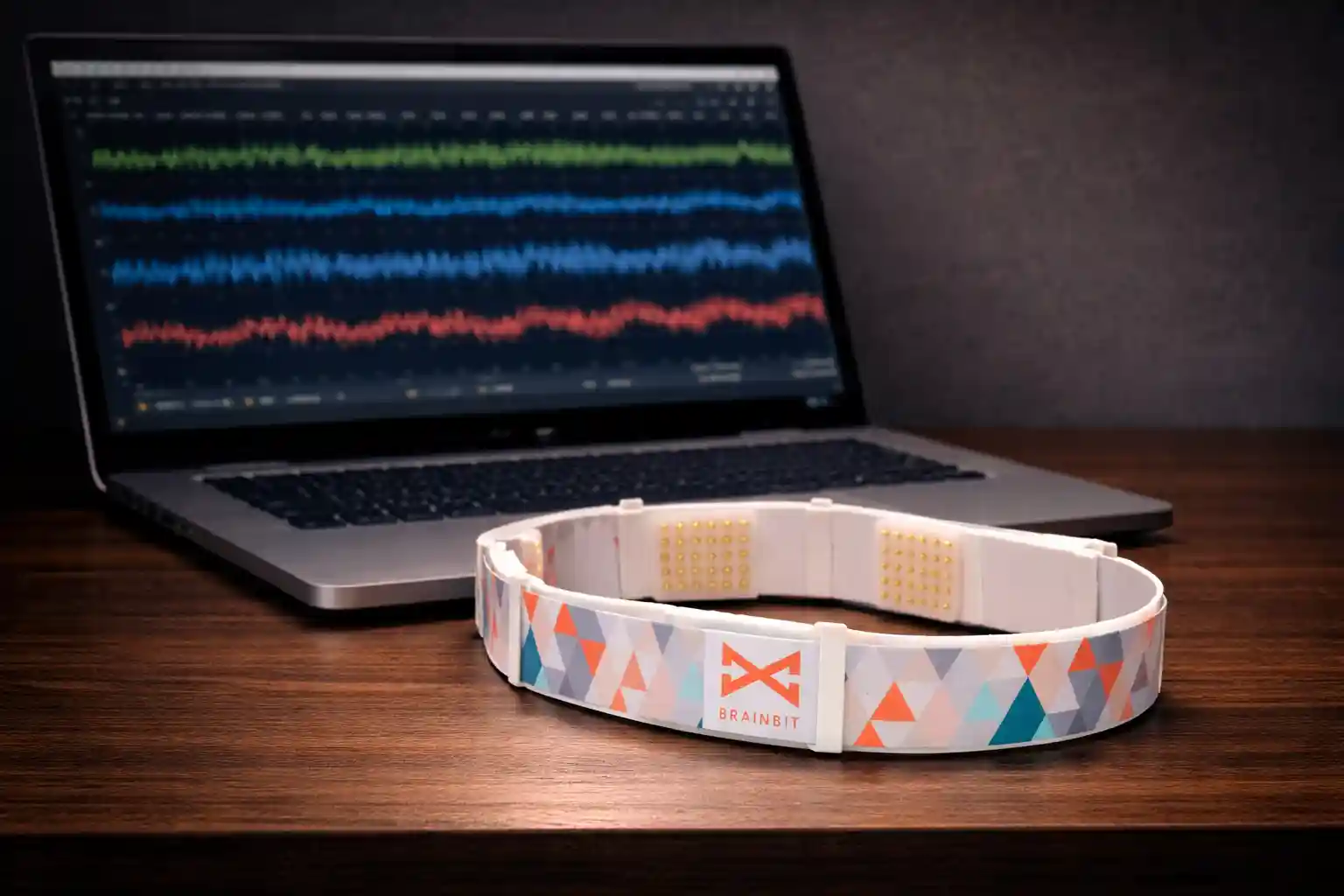
P300 Recognition Memory Research
Controlled study of P300 recognition responses comparing innocent versus guilty knowledge paradigms. Our 8-channel BrainBit EEG achieved 95% accuracy detecting concealed information versus 48% polygraph reliability.
Read full studyTechnology FAQ
What is EEG lie detection technology?
EEG lie detection technology uses electroencephalography to monitor brain wave patterns and detect deception through neural responses. Our 8-channel system analyzes P300 patterns with 95% accuracy rates by measuring electrical activity in the brain when processing truthful versus deceptive responses.
How accurate is the P300 detection system?
Our P300 detection system achieves 95% accuracy rates in controlled testing environments. The system uses advanced pattern recognition algorithms to analyze P300 brain wave responses, providing significantly higher accuracy than traditional polygraph methods which typically achieve 65-85% accuracy.
What are the advantages of EEG over traditional polygraph testing?
EEG technology directly measures brain activity rather than physiological responses, making it more difficult to manipulate. It provides faster results, requires no physical contact sensors, offers higher accuracy rates, and is more comfortable for subjects. Additionally, EEG is based on established neuroscience principles.
Is EEG lie detection technology scientifically validated?
Yes, our EEG lie detection technology is based on peer-reviewed scientific research and has been validated through extensive testing. The P300 pattern recognition system has been proven effective in multiple independent studies, with results published in scientific journals and validated by neuroscience experts.
How long does an EEG lie detection test take?
An EEG lie detection test typically takes 15-30 minutes including setup, baseline measurement, testing, and immediate analysis. This is significantly faster than traditional polygraph tests which can take 2-4 hours. Results are available within minutes of test completion.
Can EEG lie detection be fooled or manipulated?
EEG lie detection is highly resistant to countermeasures because it directly measures brain activity rather than conscious physiological responses. While no technology is 100% foolproof, our P300 system includes sophisticated algorithms to detect and compensate for potential manipulation attempts.
Is EEG lie detection technology legally admissible in court?
The legal admissibility of EEG lie detection varies by jurisdiction and is evolving as the technology gains acceptance. Our system provides scientifically validated evidence that can support legal proceedings, and our expert testimony helps establish the reliability and accuracy of the results in court.
See Our P300 EEG Test in Action
Watch how our brain-wave lie detector technology achieves 95% accuracy in detecting deception.
Experience Advanced EEG Technology
Discover how our revolutionary 8-channel EEG P300 detection system can provide accurate, reliable deception detection for your professional needs.
Book You Test today.