Polygraph Test UK
Book Your Lie Detector Test Today
Professional, confidential lie detector testing across the whole of the UK. Whether you are dealing with infidelity suspicions, a family dispute, a false accusation or a workplace investigation, our examiners travel to you - at home or at a discreet local venue - and every test comes with a clear written results certificate.
Same-day and next-day appointments are available nationwide. Book online in minutes or call us to talk your situation through in confidence first.
Our own lie detector tests use EEG recognition technology. The booking page explains how it compares with a polygraph before you choose.
Polygraph and Lie Detector Testing Across the UK
Every week, people across the UK search for a polygraph test because they need the truth about something that matters: a relationship, a family fallout, money that has gone missing, an accusation that will not go away. We provide professional lie detector testing to answer exactly those questions - covering England, Scotland, Wales and Northern Ireland, sometimes from Scotland to Cardiff in a single day.
You choose where the test happens. Our examiners carry out home visits anywhere in the UK, or we arrange a discreet local venue near you - typically a private hotel meeting room or a business centre. Either way the process is calm, private and professionally documented from first contact to final report.
What Happens During a Polygraph Test in the UK
If you are researching a polygraph lie detector test, it helps to know exactly what the appointment involves. A professional polygraph examination follows the same broad three-stage structure wherever you go.
The pre-test consultation
The examiner discusses the issue under investigation and agrees every question with you in advance. There are no surprise questions in a professional test. This stage matters more than any other, because a well-defined single issue with precisely worded questions is what separates a reliable examination from a vague one.
The test itself
The subject is fitted with sensors that record heart rate, blood pressure, breathing and skin conductance, and the agreed questions are asked in a controlled sequence while those responses are charted. A professional session is calm and structured - no interrogation tactics, no pressure. A full polygraph examination, including the pre-test interview required by professional standards, is commonly quoted by UK examiners at around two to three hours from arrival to debrief.
Analysis and the written result
After the session the recorded data is analysed and the result is reported, followed by a written results certificate setting out the method, the questions examined and the conclusion in plain English. You are not left interpreting jargon: the report tells you what was asked and what the data showed.
How Much Does a Polygraph Test Cost in the UK?
Private polygraph examiners in the UK commonly advertise between £400 and £700 for a single-issue examination, and because the industry is unregulated there is no standard pricing. Some providers add substantial extras for home visits, evening appointments or urgent bookings, so the advertised price is not always the price you pay.
Our lie detector tests start from £499, with UK-wide coverage included. Home visits and local venue arrangements are part of the service rather than a surcharge, urgent same-day and next-day appointments are available, and every test includes the written results certificate.
What Can a Polygraph Test Help With?
Lie detector testing is used every day across the UK to settle questions that conversation alone cannot. These are the situations we are asked about most:
- Cheating partner and infidelity concerns - the single most common reason people book a test
- Family disputes - missing money, broken trust, and accusations between relatives
- Workplace accusations - theft, misconduct claims and clearing an employee's name
- Corporate investigations - internal theft, data leaks and pre-employment screening
- Insurance fraud - verifying or challenging suspect claims
- Private matters - any personal question where you need a documented answer
If your situation is not on the list, call us. If a properly structured test can answer your question, we will tell you how - and if it cannot, we will tell you that too.
Lie Detector Testing Near You
Searching for a polygraph test near me? We are a genuinely mobile nationwide lie detector testing service: our examiners travel to every corner of the UK, so your nearest test is wherever suits you - your own home or a discreet venue in your town. Popular areas include:
- London · Manchester · Birmingham · Liverpool
- Leeds · Glasgow · Edinburgh · Cardiff
- Bristol · Newcastle · Sheffield · Brighton
Not listed? We still cover you. See every area we serve.
Polygraph Questions Answered
Everything people ask before booking a lie detector test, answered in plain English. Each guide below is a full, detailed article - not a two-line FAQ.
- How accurate is a polygraph test?
- How does a polygraph test work?
- Can you fail a polygraph test if you are nervous?
- Can a polygraph test be beaten?
- Are polygraph tests admissible in UK courts?
- How much does a lie detector test cost in the UK?
- What questions are asked in a polygraph test?
- How long does a polygraph test take?
- What happens if you fail a lie detector test?
- Polygraph vs EEG lie detection - which should you book?
Ready to Get the Truth?
Booking takes a few minutes. Choose your test, pick a date and time that suits you, and we handle the rest - including arranging the venue if you would rather not test at home. Same-day and next-day appointments are available across the UK.
Book Your Test NowOr call us on +44 161 524 5513 to talk it through in confidence first.
Polygraph Accuracy and UK Law
Two questions come up before almost every booking: how accurate is the test, and can the result be used in court? Both deserve straight answers.
On accuracy: it depends heavily on how the examination is designed and run. Practitioner bodies report high accuracy for well-conducted single-issue examinations, while independent academic reviews are more conservative. What everyone agrees on is that test design matters enormously - which is why every examination we run is built around one clearly defined issue, with every question agreed in advance and a documented, consistent procedure.
On the law: lie detector results are not admissible as evidence in UK criminal courts, and private testing in the UK is unregulated. What private test reports are used for, every day, is informing personal decisions, resolving family and relationship disputes, and supporting internal workplace and business investigations - situations where a documented professional finding carries real practical weight even though it is not a court exhibit.
A Brief History of the Polygraph Lie Detector
The modern polygraph dates back to 1921, when John Larson, a police officer and physiologist in Berkeley, California, built a machine that continuously recorded blood pressure, pulse and respiration during questioning. Leonarde Keeler later added the skin conductance channel and commercialised the instrument, and by the mid-twentieth century the polygraph was embedded in American policing and government security screening.
More than a hundred years on, lie detection remains one of the most requested investigative services in the world, and the field has continued to evolve - in question technique, in protocol design and in the technology used to measure responses. What has not changed is the reason people book a test: the need for a clear, documented answer to a question that will not go away on its own.
Case Studies from Our UK Lie Detector Testing
Three anonymised case studies showing how a test is scoped, run and reported: a false cheating accusation cleared, a workplace theft narrowed to one person, and a family dispute over missing savings. Names, dates and identifying details have been changed. View all case studies
Accused of Cheating and Telling the Truth
A late-night screenshot, a two-month argument, and an accused partner who volunteered for the test himself. How single-issue questions agreed by both partners - and a pre-commitment about what a pass would mean - ended it in ninety minutes.
Read the case study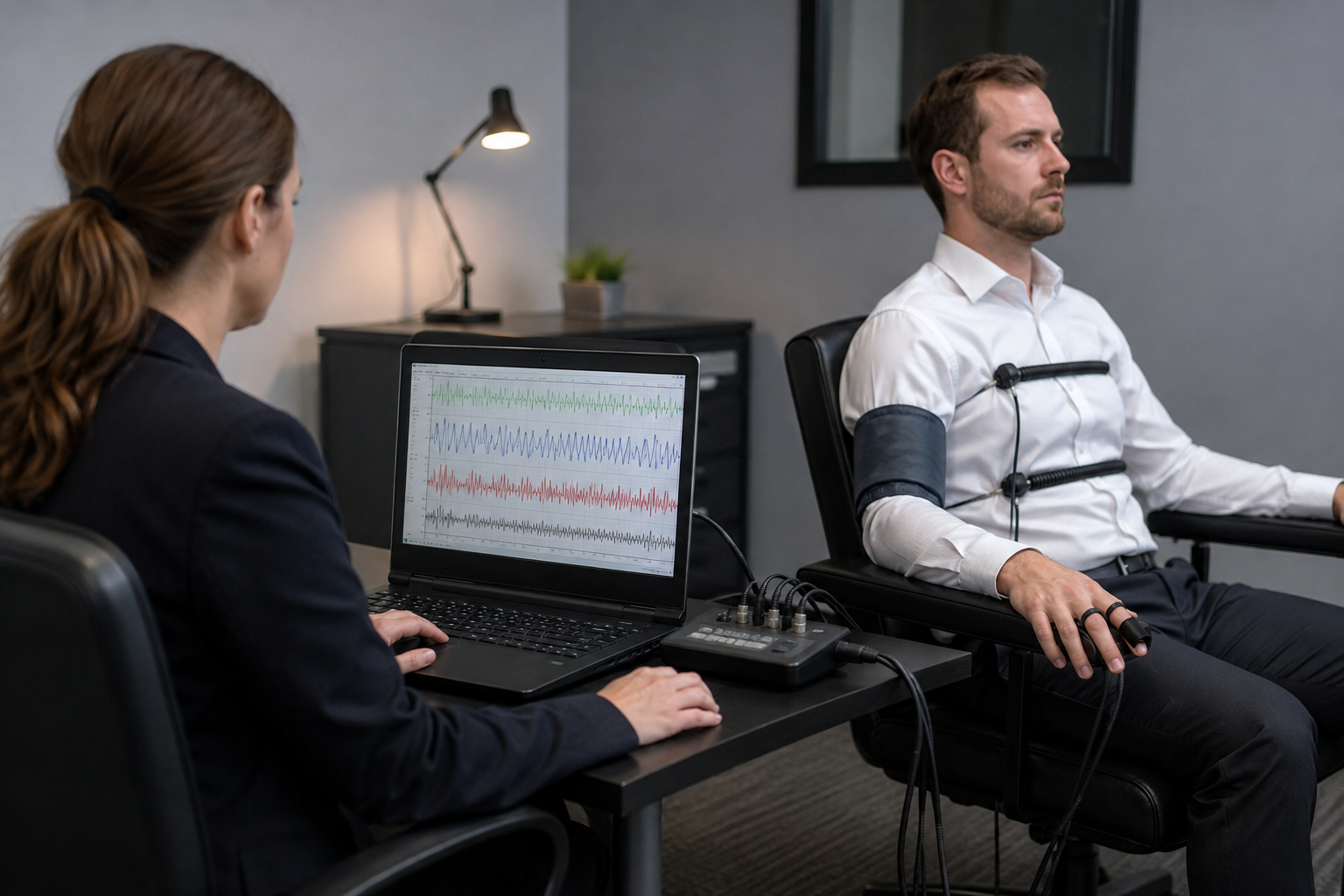
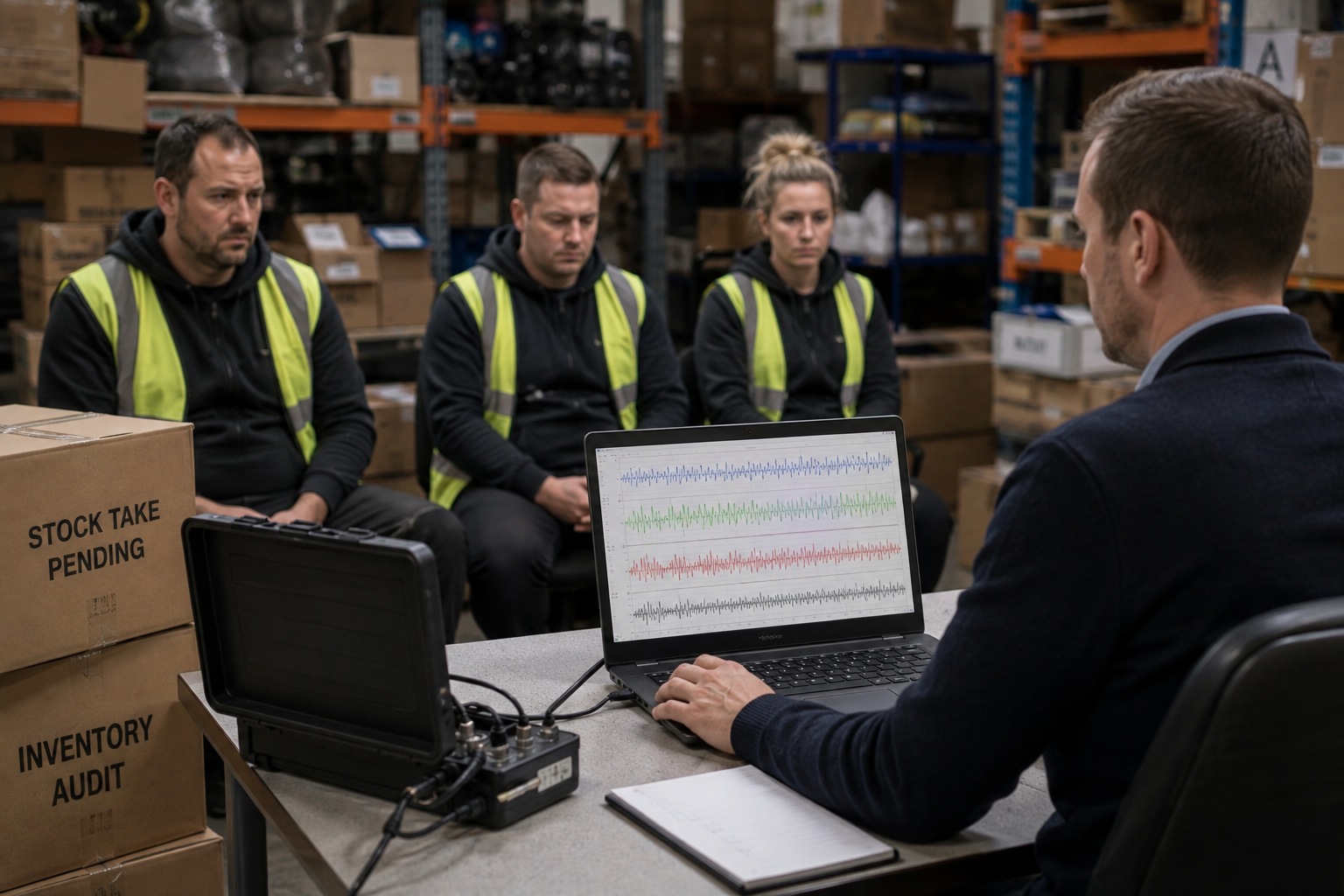
The Nine Thousand Pound Question
Five months of losses, four keyholders, three of them innocent. How one employer used voluntary, identical single-issue tests lawfully - clearing three staff in two days and pointing the paperwork at the right person.
Read the case studyTwo Siblings, One Accusation
Fourteen thousand pounds missing from their mother's savings and a two-year estrangement conducted through solicitors. How a symmetrical pair of tests - identical scope, results shared simultaneously - gave a family itself back.
Read the case study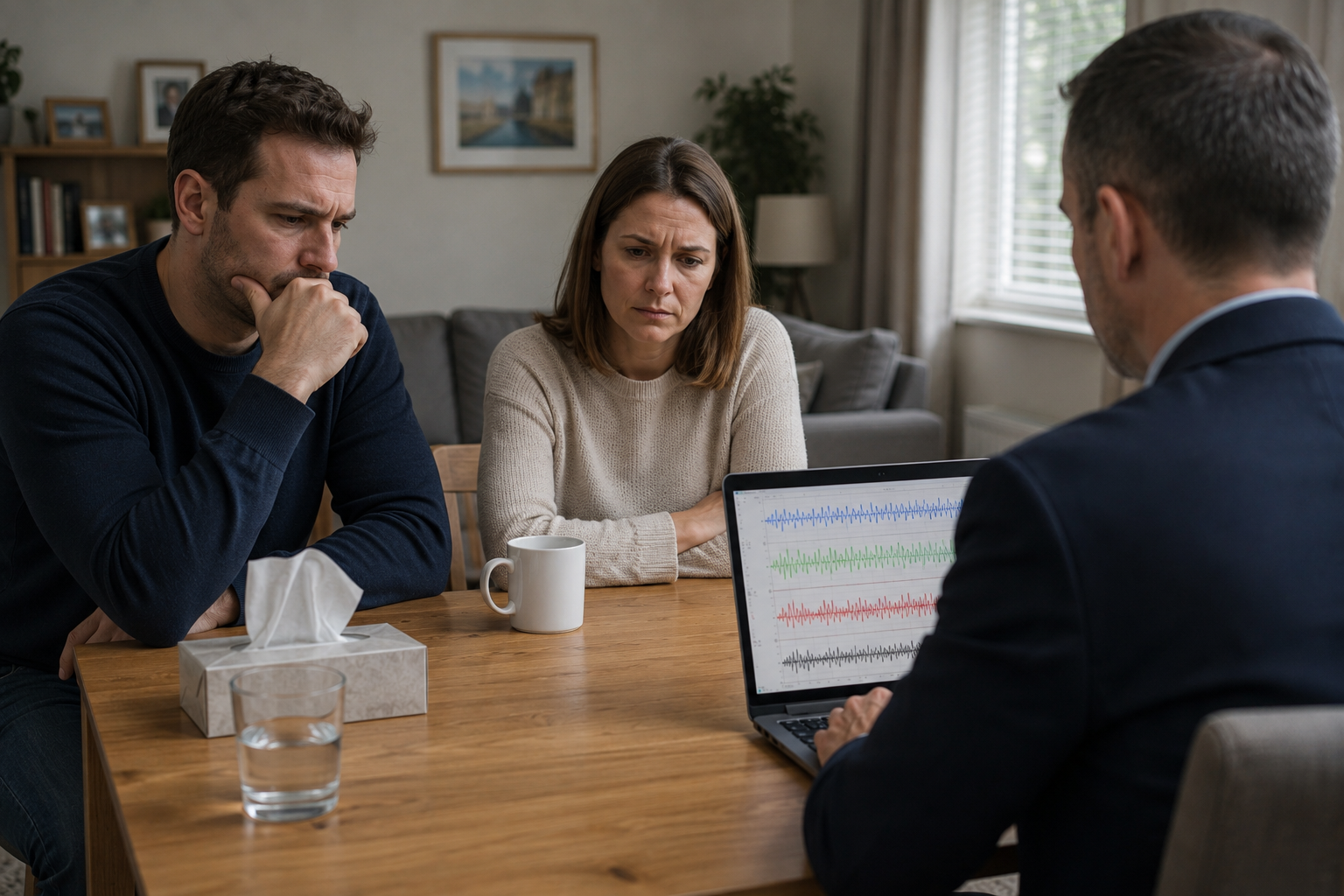
Polygraph Testing UK: Your Questions Answered
Straight answers to the questions people ask before booking a lie detector test in the UK.
How much does a polygraph test cost in the UK?
What happens during a polygraph test in the UK?
How long does a polygraph test take?
How accurate is polygraph testing?
Are lie detector test results admissible in UK courts?
Can I get a lie detector test near me?
Can I have a lie detector test at home?
How quickly can I book a test?
Is the test confidential?
Do I get a written result?
Can someone be tested without their consent?
How do I book a lie detector test?
Stop Wondering. Get Your Answer.
Whatever the question - a relationship, your family, your business - a professional lie detector test gives you a documented answer you can act on. Same-day and next-day appointments available across the UK. Book online in minutes.
Book Your Test Now