How Accurate Is a Polygraph Test? Lie Detector Accuracy, Reliability and What the Research Shows
Accuracy is the first question everyone asks about lie detector testing, and it deserves a straight answer rather than a marketing number. This guide covers what the independent research actually says, what practitioners claim, why the two disagree, and what genuinely determines whether the test you book can be relied on.
Quick answer: independent research places typical polygraph accuracy in the 60-70% range, while practitioner bodies claim up to 90% or more for well-run single-issue examinations. The gap is explained almost entirely by test design - and that is the part you can control when you book.
By the Deception Detection examiner team · Updated
The Numbers
Are Polygraph Tests Accurate? The Figures at a Glance
Every accuracy number you will see quoted for lie detector tests comes from one of a handful of settings, and the setting explains the number. This table puts them side by side so you can see why "60%" and "95%" are both being said about the same instrument.
Setting
Reported accuracy
What is driving the figure
Chance
50%
The baseline any test has to beat
Independent reviews, real-world testing
60-70%
Real stakes, mixed examiner quality, mixed question quality; the most conservative and most credible estimate for a typical booking
Laboratory mock-crime studies
80% and above
Nothing at stake for the subject, so the fear signal the instrument records is weaker and cleaner
One issue, questions agreed in advance, validated technique, trained scorer; the instrument at its best
Employee and security screening
Too low to rely on
Many innocent people screened for a rare behaviour, so most failures are false alarms; the 2003 US National Academy of Sciences review was blunt on this
Recognition-based EEG (the method we use)
Up to 95% in controlled conditions
Measures a recognition response the subject cannot consciously control, removing nerves as an error source
The pattern is the same one that runs through the rest of this page: the disciplined, single-issue, agreed-questions examination sits at the top of the range and the vague multi-issue test sits at the bottom, whatever the machine.
First Principles
What Accuracy Actually Means for a Lie Detector Test
Before any percentage means anything, it helps to understand what is being counted. A lie detector test can be wrong in two different directions. A false positive is a truthful person scored as deceptive - the anxious but honest partner who fails a test about an affair that never happened. A false negative is a deceptive person scored as truthful - the prepared liar who walks out with a pass. A single accuracy figure blends both error types together, and providers quoting one number rarely tell you which kind of error their figure is hiding.
The mix matters because the two errors hurt different people. If you are the one being tested and you are telling the truth, false positives are your entire risk. If you are the one commissioning the test, false negatives are what make the exercise pointless. A method can be reasonably good at catching liars while still regularly failing honest people, and the traditional polygraph has exactly that profile: its documented weakness is the truthful-but-nervous subject, not the practised deceiver.
There is also a base-rate problem that almost nobody advertising testing will mention. When a test is used to screen many people for a rare behaviour - employee vetting is the classic case - even a genuinely capable instrument produces mostly false alarms, because nearly everyone screened is innocent. This is one of the central reasons the major independent reviews are so much harsher about screening programmes than about specific-incident testing on one person about one event.
So when you read accuracy claims, ask three questions of every number: was it measured on single-issue tests or screening, does it separate false positives from false negatives, and was it measured in a laboratory where nothing was at stake or in the field where everything was? The honest answers to those questions explain almost every disagreement in this industry.
The Research
What Independent Research Says
The most thorough independent review of polygraph testing remains the 2003 report by the US National Academy of Sciences, commissioned after concerns about security screening in American government laboratories. The panel examined decades of studies and concluded that the theoretical basis of the polygraph is weak, that accuracy claims are frequently overstated, and that for screening purposes the instrument performs far too poorly to justify reliance on it. It did accept that specific-incident testing performs better than chance - the criticism is of the gap between performance and the claims made for it.
Most independent estimates place real-world accuracy of a typical examination somewhere in the 60-70% range once realistic conditions, imperfect examiners and mixed question quality are accounted for. Laboratory studies using mock crimes report higher figures, sometimes above 80%, but laboratory subjects have nothing at stake: no marriage, no job, no reputation riding on the charts. Fear of the consequences is precisely the physiological signal the machine records, so removing the consequences changes the test being studied.
It is worth being clear about what the research does not say. It does not say the polygraph is a coin flip - a properly run specific-incident examination beats chance comfortably. It does not say every result is unreliable. What it says is that the instrument measures arousal rather than deception, that the inference from one to the other is fragile, and that the confidence with which results are often presented outruns the evidence underneath them. Those are exactly the criticisms a careful buyer should price in.
Accuracy vs Reliability
How Reliable Are Polygraph Tests? Not the Same Question as Accuracy
Accuracy and reliability get used interchangeably in this industry, and they should not be. Accuracy asks whether the verdict is right. Reliability asks whether the test gives the same verdict twice - if a second examiner scored your charts, or you sat the same examination next week, would the outcome match? A test can be reliable and wrong, and a test that is unreliable cannot be trusted even when it happens to be right.
Reliability is where the traditional polygraph is most exposed. Scoring involves human interpretation of charts, and inter-scorer studies show two qualified examiners can reach different conclusions from identical recordings. The subject's state on the day moves the result too: the same person, same questions, different anxiety level can chart differently. The British Psychological Society's 2004 working party made exactly this point - that consistency of interpretation, not just headline accuracy, is a weakness of stress-based testing.
This is why the disciplines matter more than the machine's brand: pre-agreed single-issue questions, a documented protocol and standardised scoring all exist to squeeze the examiner's discretion - and the day's mood - out of the result. It is also why recognition-based methods score well on reliability specifically: a brain's recognition response to a known detail is far less dependent on who is reading the output or how nervous the subject feels, which removes the two largest sources of inconsistency at once.
Get Your Own Answer, Professionally Documented
Reading about testing only gets you so far. A professional lie detector test - at home
or a discreet local venue anywhere in the UK, with a written results certificate - gets
you the answer itself. Same-day and next-day appointments available.
Or call us on +44 161 524 5513 to talk it through in confidence first.
The Other Side
What Practitioners Claim and Why the Gap Exists
Practitioner organisations - the professional bodies that train and accredit polygraph examiners - report much higher figures, typically 85-95% for well-conducted single-issue examinations using validated techniques. These figures are not invented: they come from studies of disciplined examinations, scored by trained examiners, on one clearly defined issue, with questions constructed to published standards. Under those conditions the instrument genuinely performs at its best.
The gap between 60-70% and 85-95% is therefore not really an argument about the machine. It is an argument about conditions. A tightly scoped single-issue test with precisely agreed questions, run by a disciplined examiner, sits at the top of the range. A vague multi-issue fishing expedition with improvised questions sits at the bottom, whatever the equipment cost. The instrument is the same; the discipline is not.
This is the single most useful thing to understand as a buyer, because it converts an abstract argument about percentages into a concrete checklist about your booking. You cannot control the physics of the instrument. You can absolutely control whether your examination is the disciplined kind - and the difference between the two is worth more than any equipment upgrade in the industry.
Error Type One
False Positives: When Honest People Fail
False positives are the best-documented weakness of stress-based testing, and they have a simple cause: the machine cannot tell the difference between the stress of lying and the stress of being suspected. Fear of being disbelieved, anger at the accusation, embarrassment about the subject matter and plain dread of the machine all produce the same physiological signature the test scores against you.
Certain groups carry elevated risk. People with anxiety conditions arrive at the test already closer to the physiological ceiling. Several common medications - and abruptly stopping them, which is worse - alter the cardiovascular and skin-conductance signals being recorded. Heart and respiratory conditions do the same. None of this means such people cannot be tested; it means the examiner must know about it, adjust for it, and treat borderline charts with appropriate humility.
The structural mitigation is the comparison-question method itself, which scores your reaction to the accusation against your reaction to deliberately uncomfortable control questions rather than against an impossible standard of calm. It helps, and a good examiner spends real time settling a nervous subject before anything is measured. But mitigation is not elimination, and the honest position - which we hold even though we sell testing - is that a stress-based method can never fully separate the frightened from the deceptive. If that risk concerns you, our page on failing a polygraph through nerves covers it in depth, including the method that removes the problem at the source.
Error Type Two
False Negatives: When Deceptive People Pass
The mirror-image error gets less attention but matters just as much to anyone commissioning a test. A false negative - a deceptive subject scored truthful - can happen for several reasons: charts that are simply ambiguous and scored generously, subjects with unusually flat physiological responses, and deliberate countermeasures, which the research literature documents as a genuine limitation of stress-based methods.
Countermeasures deserve their own treatment - we cover them fully on our page about whether a polygraph can be beaten - but the accuracy-relevant point is this: the people most motivated to deceive are exactly the people most likely to have prepared, which means false negatives are concentrated in precisely the cases where the test matters most. A method whose errors cluster in its highest-stakes cases has a problem no headline percentage captures.
The practical defences are the same disciplines that raise accuracy generally: single-issue scope, precisely worded questions the subject cannot reinterpret, and an examiner trained to recognise manipulation and report it rather than score around it. The structural defence is a measurement the subject cannot consciously influence at all, which is the direction the field has moved in and the reason recognition-based methods exist.
Raising the Odds
What Actually Determines the Accuracy of Your Test
Pulling the threads together, five factors determine most of the accuracy of any given examination. Scope: one clearly defined issue per test, always - accuracy degrades sharply as issues multiply. Questions: concrete acts within defined time frames, agreed in advance word for word, with no ambiguity for the subject to hide in. Examiner: a documented, consistent protocol scored to published standards rather than improvised judgement. Subject state: medications and conditions disclosed, normal routine maintained, anxiety addressed before measurement starts. And method: an instrument measuring something the subject cannot consciously control outperforms one inferring deception from signals they can.
As a buyer you can audit all five before spending a pound. Ask any provider: is my test limited to a single issue, will the questions be agreed with me in writing beforehand, what scoring standard do you use, what do you need to know about the person being tested, and what exactly does your instrument measure? A professional answers all five in plain English. Evasion on any of them tells you what their headline accuracy number is worth.
Every examination we run is built on those five factors: single-issue scope as a hard rule, questions agreed in advance, a documented protocol, a proper pre-test consultation - and a recognition-based measurement rather than a stress reading, because the largest error source in this industry is nerves, and we would rather remove it than manage it. The booking page explains the method in full before you commit to anything.
See It in Practice
Case Studies: How These Rules Play Out in Real Situations
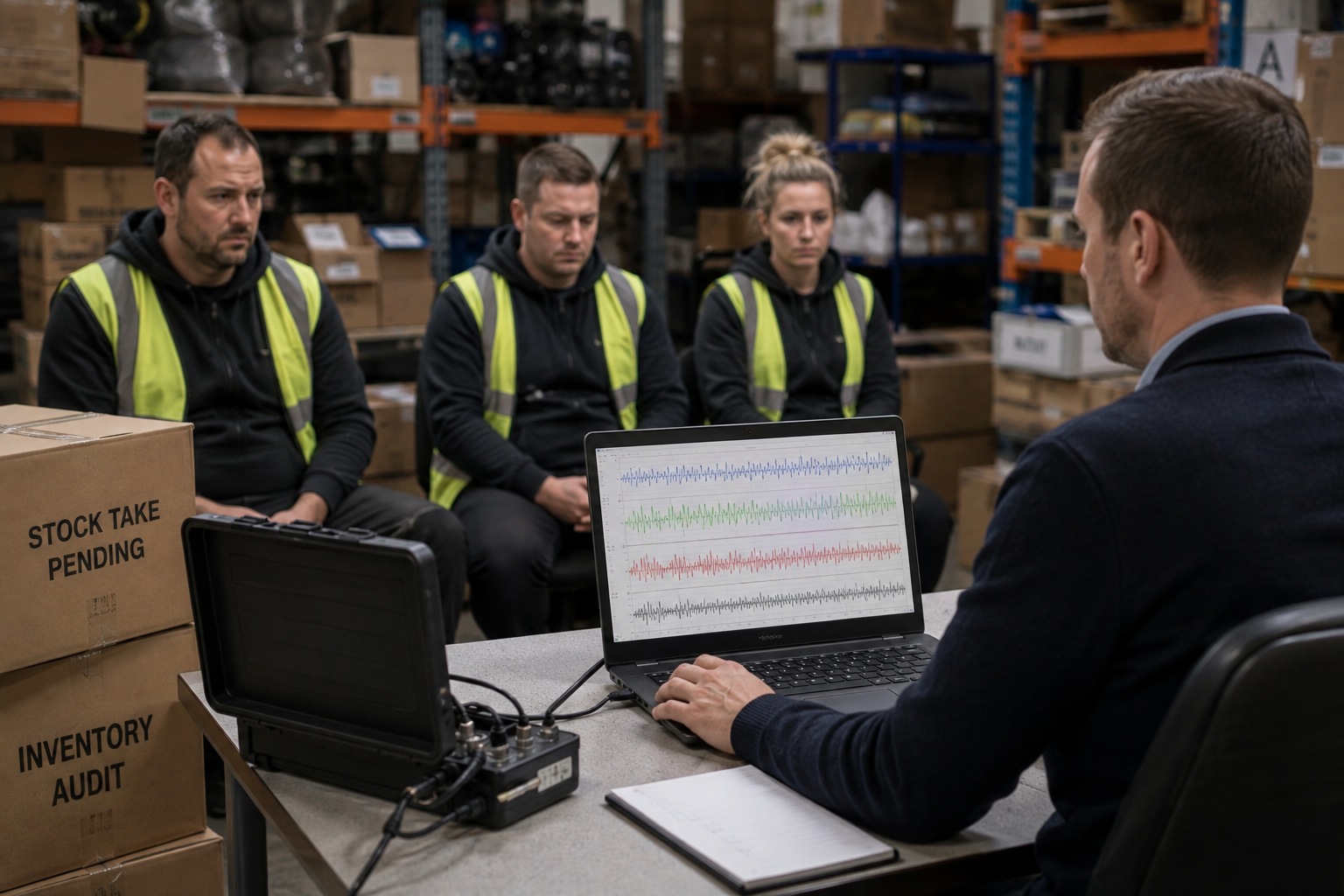
The accuracy disciplines on this page, applied: a single issue, questions agreed in writing beforehand, and a test used as one strand of a documented investigation - never the verdict. How one employer cleared three staff and found the answer.
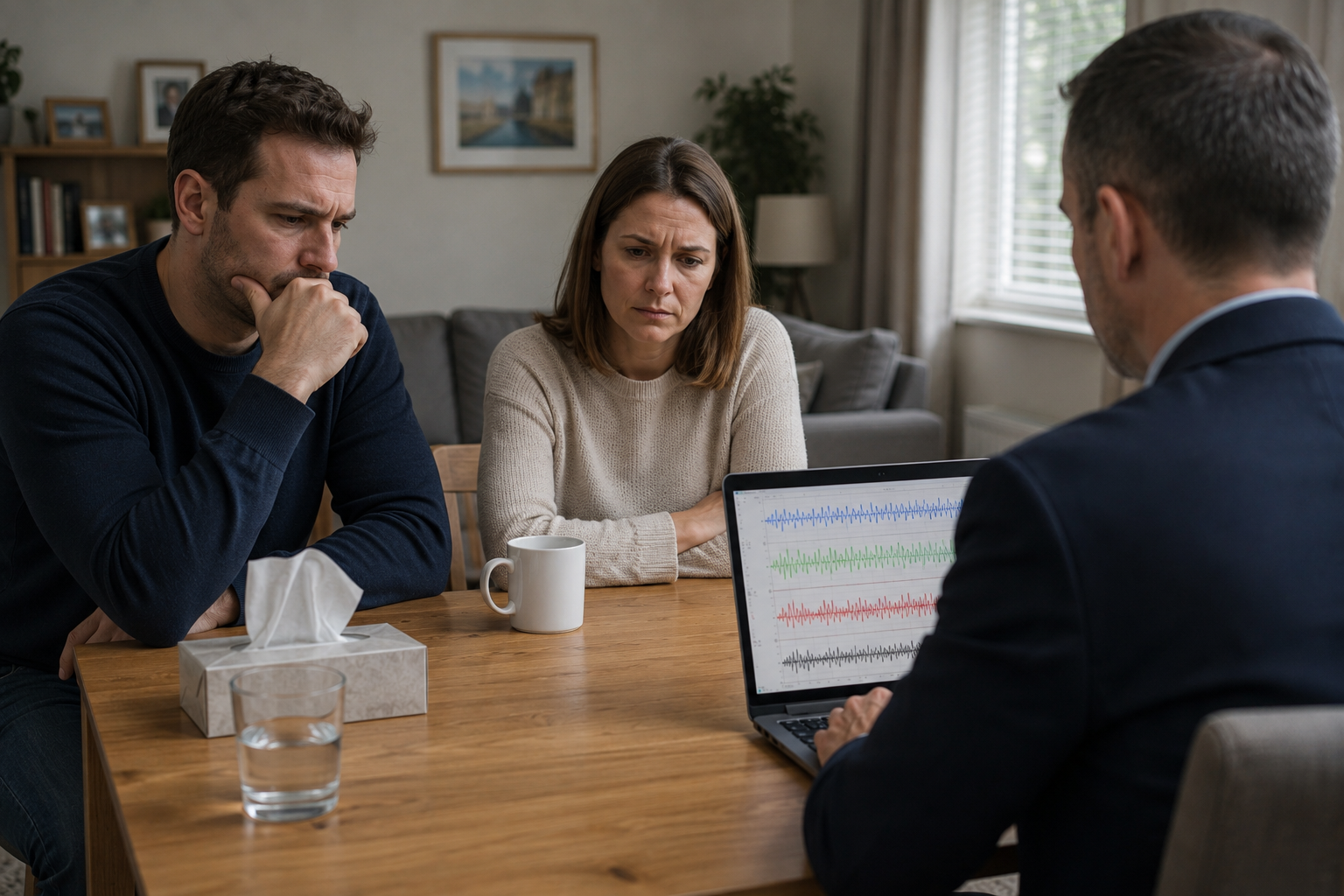
Most private tests are never meant for a courtroom - they are meant to settle a question between two people. How an accused partner volunteered, agreed the questions in advance, and ended a two-month argument in ninety minutes.
When the police cannot attribute shared access and solicitors only harden positions, a symmetrical pair of tests - identical scope, results shared simultaneously - resolved what two years of letters could not.
Polygraph Accuracy and Reliability: Your Questions Answered
Short answers to the follow-up questions people ask next.
Are polygraph tests accurate?
More accurate than chance, less accurate than advertised. Independent reviews put real-world polygraph accuracy at roughly 60-70% for a typical examination, rising towards 85-95% for a disciplined single-issue test with pre-agreed questions. The main weakness is false positives: honest but anxious people scored as deceptive.
Are lie detectors accurate?
It depends on the method. A traditional polygraph infers deception from stress signals, so its accuracy is capped by how well it separates nervous honest people from liars, which the research says it does imperfectly. Lie detector tests that measure recognition responses directly rather than stress remove that error source and report accuracy of up to 95% in controlled conditions.
How reliable are polygraph tests?
Less reliable than the accuracy claims suggest. Reliability means consistency - the same charts scored by two examiners, or the same person tested twice, producing the same verdict - and human chart interpretation plus the subject's anxiety on the day both move polygraph results. Disciplined single-issue protocols improve consistency; recognition-based methods largely remove the two biggest sources of it.
Is a polygraph test 95% accurate?
Figures of 90-95% come from practitioner studies of disciplined single-issue examinations under good conditions. Independent academic reviews are more conservative, typically citing 60-70% for real-world testing overall. Test design and scope explain most of the difference between the two sets of numbers.
Can an honest person fail a polygraph test?
Yes. False positives are the best-documented weakness of stress-based testing: anxiety, certain medications and medical conditions can produce the same physiological signals as deception. This is why test structure - and ultimately the measurement method itself - matter so much more than the headline accuracy claim.
Are lab accuracy studies reliable?
They are informative but flattering. Laboratory subjects face no real consequences, and fear of consequences is precisely what a stress-based instrument records. Field accuracy under real stakes, with real examiners and mixed question quality, is what the more conservative independent estimates try to capture.
Does accuracy depend on the examiner?
Significantly. Scoring a traditional polygraph involves human interpretation of charts, and two examiners can read the same charts differently. A documented, consistent protocol scored to published standards reduces that variability, which is why procedure should be one of your first questions to any provider.
Is a polygraph more accurate than chance?
Yes - the independent reviews accept that properly run specific-incident testing beats chance comfortably. The criticism is the gap between real performance and the confidence with which results are often presented, especially for screening uses, where the research is bluntest.
What is the most accurate form of lie detector test?
Reliability tracks discipline: single-issue examinations with pre-agreed questions outperform everything else, whatever the instrument. Methods that measure recognition responses directly rather than inferring deception from stress remove the largest source of false positives, which is why our service is built on one.
How accurate is the test you actually offer?
We publish our method rather than a single marketing number: recognition-based EEG protocols report accuracy of up to 95% in controlled conditions, and every examination we run uses the disciplines that keep real-world reliability high - single-issue scope, agreed questions and a documented procedure. The booking page sets it out in full.
Stop Researching. Get Your Answer.
You have the facts - what you came for is the answer to your own situation. Professional
lie detector testing across the whole of the UK, with same-day and next-day appointments
and a written results certificate with every test.