Quick answer: countermeasures against stress-based polygraph testing are documented in the research literature as a genuine limitation, because the test relies on comparing stress responses that a motivated subject can attempt to influence. Examiners are trained to detect manipulation, but detection is probabilistic. Recognition-based methods are structurally far more resistant, because the response they measure occurs before conscious control is possible.
Why It Matters
The Question Behind the Question
Nobody asks whether a test can be beaten out of idle curiosity. If you are commissioning a test, you are asking whether the pass you might be shown is worth anything. If you are being tested truthfully, you are asking whether the machine can be trusted to clear you. And if someone in your situation is unusually enthusiastic about taking a particular kind of test, you may be asking a darker version: whether their confidence comes from innocence or from preparation.
The commercial reality sharpens the point. Lie detector tests are typically commissioned in exactly the situations where one party has a powerful motive to deceive and weeks of notice that a test is coming - a suspected affair, missing money, a workplace investigation. The subjects with the most to hide are the subjects with the most reason to prepare. A test whose reliability collapses against a prepared subject fails you precisely in the cases you bought it for.
So the question deserves a straight answer, not the reflexive of course not that much of the industry offers. The straight answer has three parts: yes, the vulnerability is real and documented; yes, professionals have genuine defences; and yes, there is a structural fix - and understanding all three is what lets you buy a result you can actually rely on.
The Evidence
What the Research Actually Says
The vulnerability is not a fringe claim. The US National Academy of Sciences review - the most thorough independent examination of polygraph testing - discussed countermeasures explicitly as a serious limitation of the method, and the peer-reviewed literature contains controlled studies in which subjects given training measurably distorted comparison-based test outcomes. The reason is structural: the test scores the difference between your stress response to two categories of question, and a subject who can influence their own arousal at chosen moments is influencing the very quantity being scored.
The categories of countermeasure discussed in the literature are physical - covert self-stimulation timed to chosen questions, muscle activity, controlled breathing; mental - performing demanding cognitive tasks at chosen moments; and pharmacological - substances that damp physiological responsiveness generally. We describe these at the category level deliberately: the point of this page is to inform buyers, not to coach subjects, and the specifics add nothing to the decision you are here to make.
Two honest caveats stop the picture tipping into cynicism. Effective countermeasure use appears to require genuine practice - the casual tricks people half-remember from the internet mostly produce detectable chart artefacts rather than clean passes. And study conditions differ from field conditions in both directions. The research position is not that every polygraph can be trivially beaten; it is that the possibility is real enough, against a motivated and prepared subject, that no responsible buyer should ignore it.
Get Your Own Answer, Professionally Documented
Reading about testing only gets you so far. A professional lie detector test - at home
or a discreet local venue anywhere in the UK, with a written results certificate - gets
you the answer itself. Same-day and next-day appointments available.
Book Your Polygraph Now
Or call us on +44 161 524 5513 to talk it through in confidence first.
The Internet Problem
Why This Is a Bigger Issue Than It Was
For most of the polygraph’s history, countermeasure knowledge lived in obscure corners - specialist literature, intelligence training, the occasional exposé. That world is gone. Detailed guides, forums and videos on defeating stress-based tests are a search away, some of them written by former examiners, and anyone facing a scheduled test has both the motive and the time to study them.
This asymmetry is the modern buyer’s real problem. You book a test in good faith; the subject gets two weeks of notice and an internet connection. You will never know what they read. The examiner may detect a clumsy attempt - a practised one, perhaps not. Every pound of value in the result now depends on a detection contest you cannot observe and cannot verify.
It is worth noting the equal and opposite danger for truthful subjects: attempting countermeasures when you are innocent is catastrophic. Examiners treat detected manipulation as a finding in itself, and a truthful person caught trying to steer the charts has converted a probable pass into a reported countermeasure attempt. If you are being tested and you are honest, transparency is your entire strategy - and if the method still worries you, the answer is a better method, not a technique.
The Defence
How Examiners Detect Manipulation
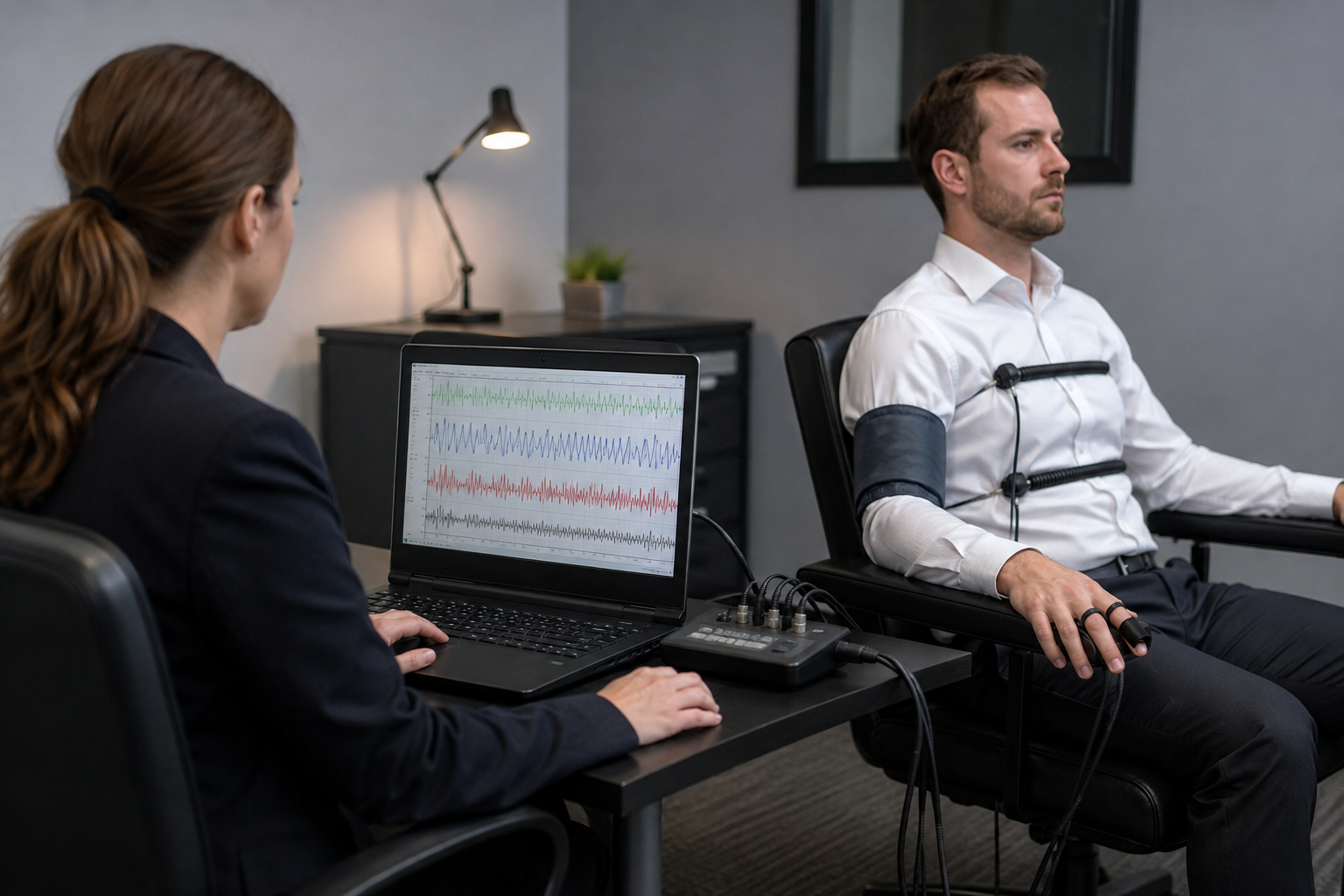
Professional examiners are not passive victims of all this, and the defences are real. Modern instruments include movement sensors whose entire purpose is detecting covert physical activity, and the recorded channels themselves betray interference: artificially regulated breathing has a visible signature, and responses provoked at comparison questions tend to look different from responses that arise naturally. Examiners are trained on what manipulated charts look like, and experienced ones have seen every clumsy trick many times.
Protocol is a defence in itself. A single-issue examination with tightly agreed questions gives a subject far less room to work than a sprawling multi-issue test; varied question ordering across charts makes timing-based tricks harder; and an unhurried examiner who controls the pace of the session controls most of the opportunities a subject might exploit. When manipulation is suspected, the professional response is not to score around it but to report it - a detected countermeasure attempt is itself a significant finding, and arguably a more damning one than a fail.
But the honest summary of the contest is that detection is probabilistic, not guaranteed. Against a naive subject, the examiner usually wins. Against a genuinely prepared one, nobody can promise you the outcome - and since you cannot know in advance which kind of subject you have, you cannot know which contest you are paying for. That uncertainty is exactly what the structural fix removes.
The Structural Fix
Why Recognition Testing Closes the Gap
The decisive move is to stop measuring something the subject can influence. EEG-based recognition testing records the brain’s electrical response to information it recognises - a response that occurs roughly three hundred milliseconds after the stimulus appears. That timing is the entire argument: three hundred milliseconds is faster than deliberate control. By the time a subject could decide to suppress a reaction, the reaction has already been recorded.
Walk the countermeasure categories against this and they lose their target. Breathing control is irrelevant - breathing is not measured. Physical self-stimulation and mental arithmetic are aimed at stress channels that do not exist here. The comparison being scored is not between stress levels the subject can shift, but between the brain’s response to recognised and unrecognised information - and you cannot un-recognise something you know. The countermeasure surface is not merely smaller; most of it simply is not there.
No honest provider claims absolute impossibility - research on recognition protocols continues precisely because scientists probe their edges, which is how good methods earn trust. The defensible claim is comparative: against a prepared, motivated subject, a recognition-based test is structurally far harder to manipulate than any stress-based test, because it measures an event that finishes before manipulation can begin. For a buyer whose whole risk is the prepared subject, that comparison is the one that matters.
Buying Well
How to Commission a Test That Holds Up
Practical guidance, then, for anyone commissioning a test where the subject has reason to prepare. Choose the method first: a recognition-based measurement removes most of the countermeasure question before it arises. Insist on single-issue scope with questions agreed in advance in writing - discipline that raises reliability against every failure mode at once. Ask the provider directly how they detect and report manipulation attempts; a professional has a clear answer, and evasion tells you everything.
And watch for one behavioural signal that costs nothing: how the subject responds to the choice of method. Someone comfortable being tested on what they know, by an instrument they cannot steer, is telling you something. Someone insistent on one specific kind of test - or suddenly reluctant when the method changes - is telling you something too. Our service runs recognition-based examinations across the whole of the UK, with home visits, discreet venues and a written certificate with every test; the booking page explains the method in full, and the choice it presents does some of the work before anyone is wired to anything.
See It in Practice
Case Studies: How These Rules Play Out in Real Situations
Case Study · Workplace Investigation
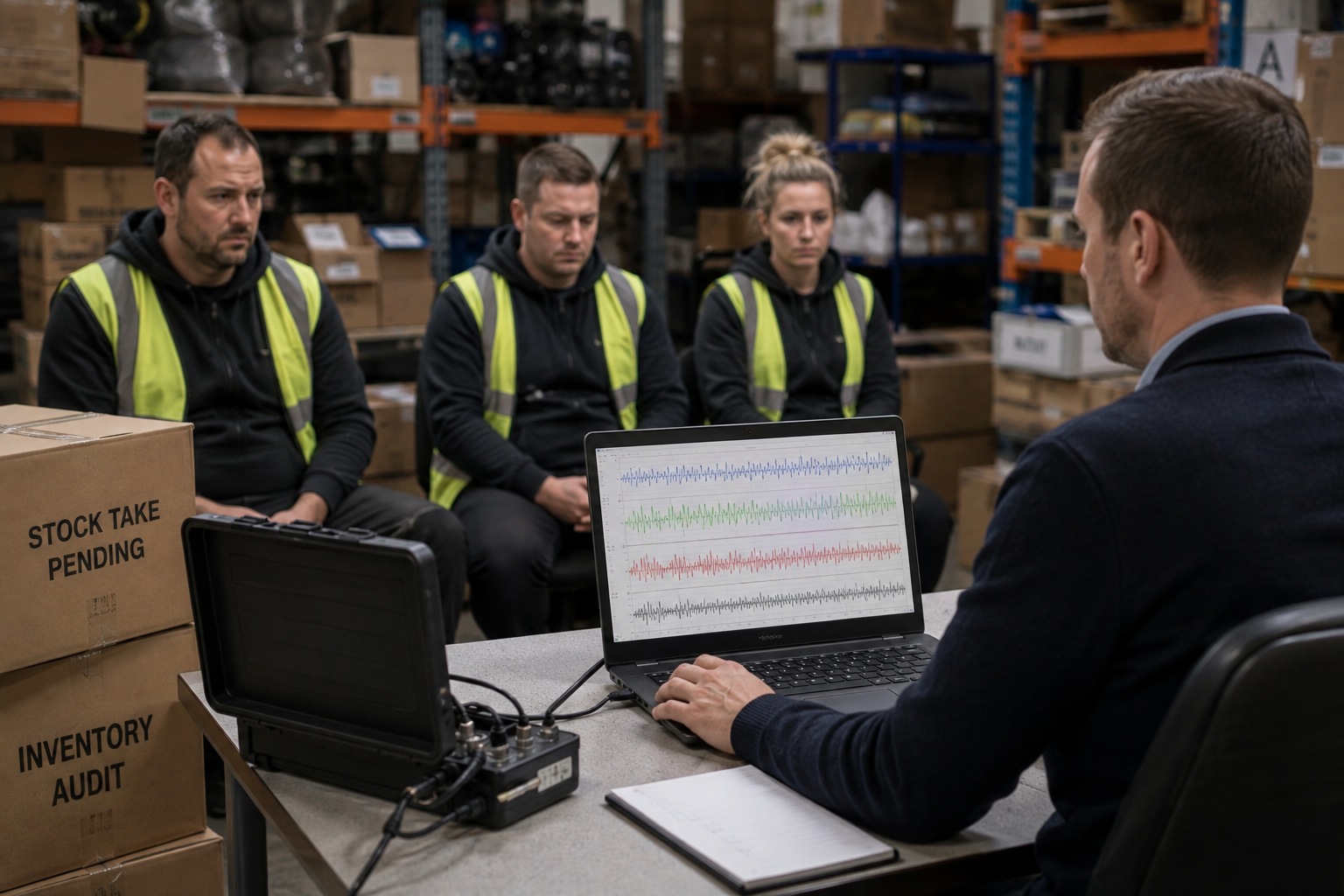
The admissibility rules on this page, applied: voluntary written invitations, HR advice first, and a test used as one strand of a documented investigation - never the verdict. How one employer cleared three staff and found the answer lawfully.
Read the case study
Case Study · Relationship & Infidelity
Most private tests are never meant for a courtroom - they are meant to settle a question between two people. How an accused partner volunteered, agreed the questions in advance, and ended a two-month argument in ninety minutes.
Read the case study
Case Study · Family Dispute
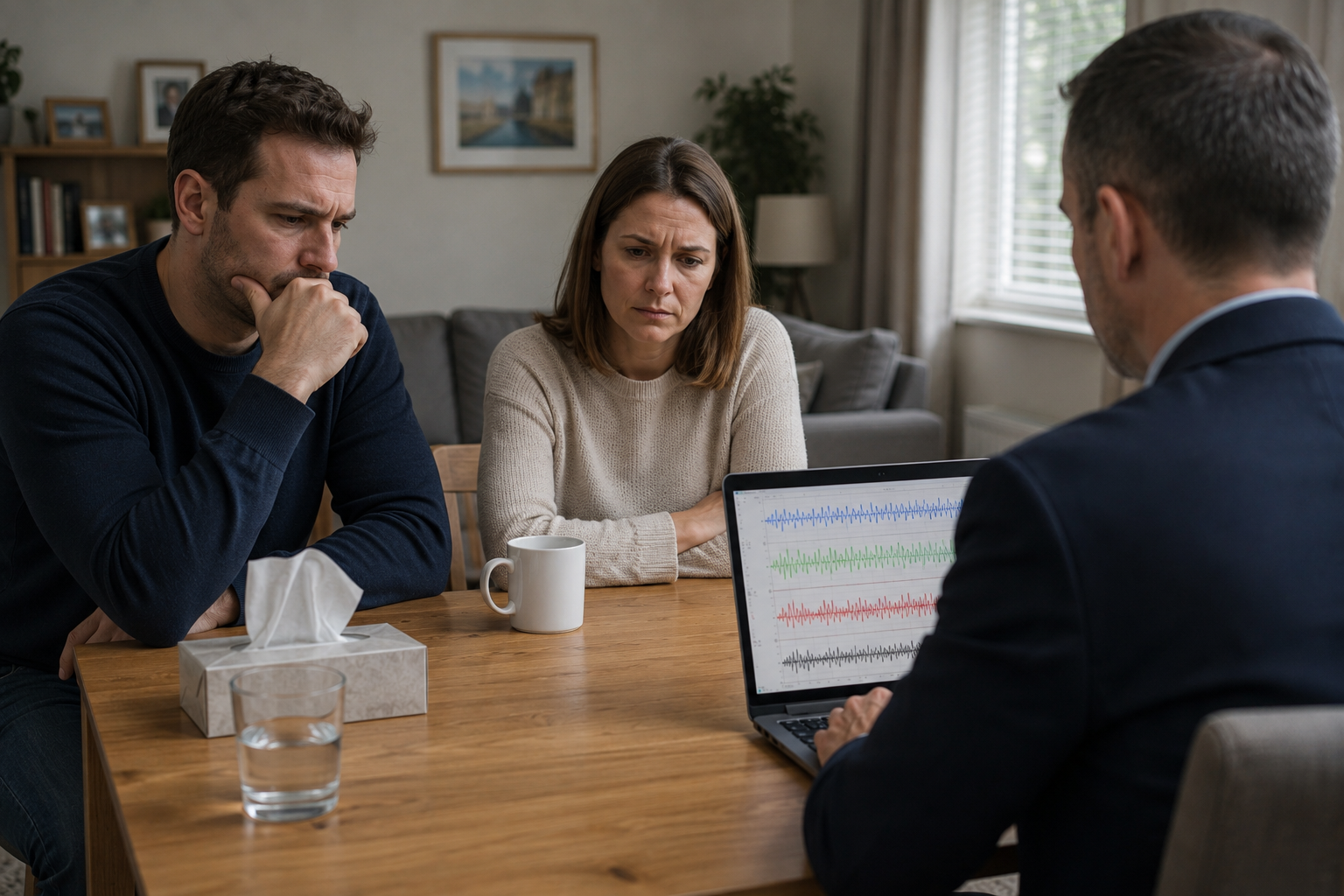
When the police cannot attribute shared access and solicitors only harden positions, a symmetrical pair of tests - identical scope, results shared simultaneously - resolved what two years of letters could not.
Read the case study
All three, with full detail on how each test was structured: browse the polygraph case studies.