Quick answer: lie detector results are not admissible as evidence in UK criminal courts. Statute does provide for polygraph testing in the licence supervision of certain offenders, but that is monitoring, not evidence. Civil and family courts give results little weight. Private reports earn their keep outside the courtroom: informing decisions, resolving disputes and supporting fair internal investigations.
Criminal Courts
The Core Position and the Reasons Behind It
UK criminal courts do not admit lie detector results as evidence of truth or deception, and the position is settled rather than merely customary. Two reasons drive it. The first is reliability: the independent scientific reviews - most prominently the 2003 US National Academy of Sciences report - concluded that the polygraph measures arousal rather than deception and that its accuracy claims outrun the evidence. English evidence law is cautious about expert evidence resting on contested science, and lie detection sits squarely in that category.
The second reason is subtler and arguably more important: the risk of undue weight. A jury shown a scientific-looking chart and told an expert found deception may treat that finding as close to conclusive - substituting the machine’s verdict for their own assessment of the witness, which is constitutionally the jury’s job. Courts guard the fact-finding role jealously, and a device marketed as deciding the very question the jury exists to decide was never going to be welcomed.
The practical consequence for anyone considering a private test: no reputable provider should ever suggest that a result will be usable as evidence in a criminal matter, whether to convict someone or to clear them. If you encounter a provider implying otherwise, treat it as the reddest of flags - it is a false claim about the single most checkable fact in this industry.
The Statutory Exception
Where UK Law Actually Uses Polygraphs
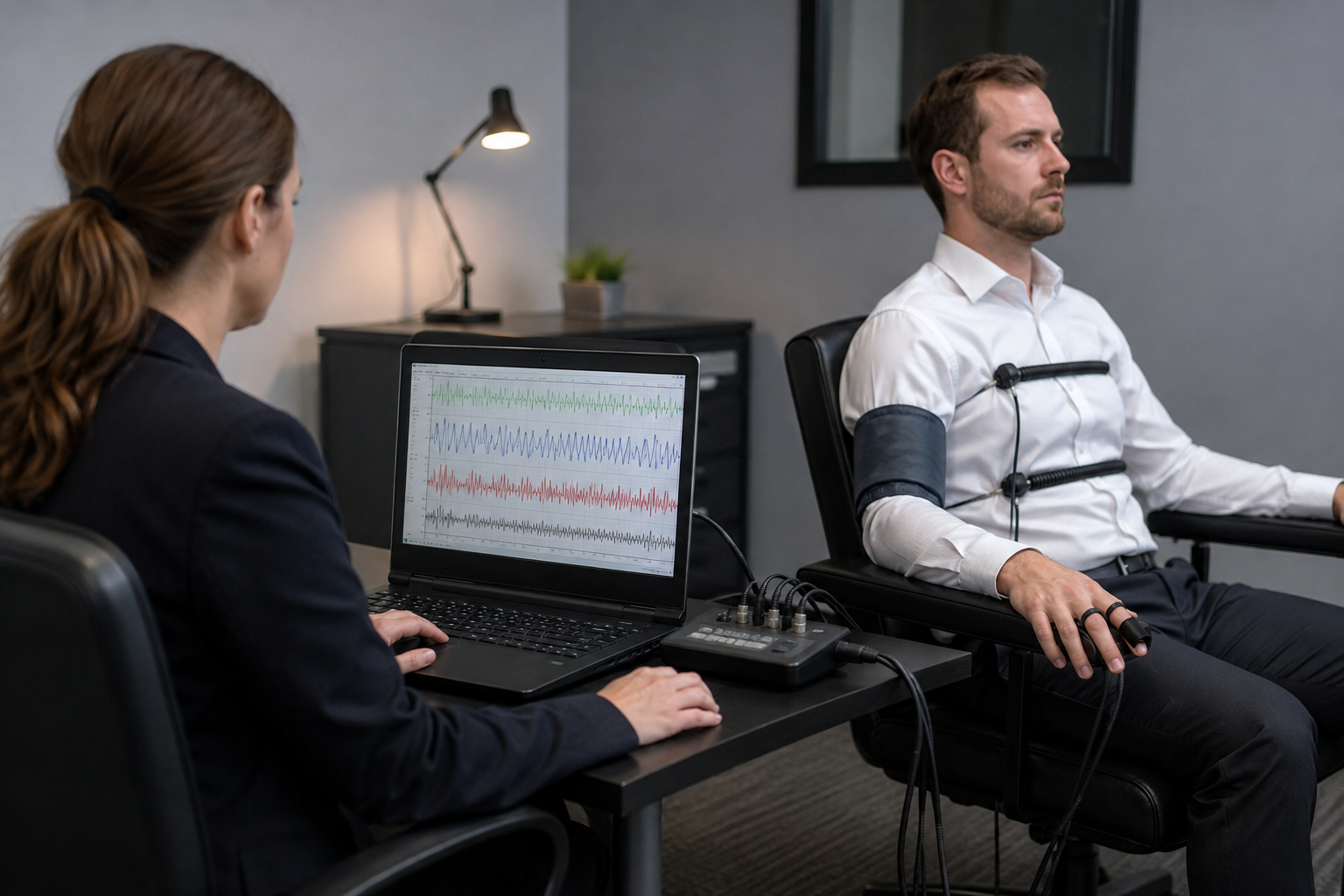
It is not accurate to say UK law ignores the polygraph entirely - there is a real statutory regime, and understanding it clears up most of the confusion in this area. The Offender Management Act 2007 created the power to impose mandatory polygraph conditions on certain serious sexual offenders released on licence, and after successful pilots the scheme became established practice. The Domestic Abuse Act 2021 extended the approach to certain domestic abuse offenders, and subsequent legislation has continued to widen the categories.
But look at what the regime actually does. Licence polygraph sessions are a supervision tool: they inform risk management - whether licence conditions should tighten, whether an offender needs closer monitoring. The statutes are explicit that test results cannot be used as evidence to prosecute the offender for a new offence. Even in the one corner of UK law that embraces the polygraph, Parliament drew a bright line between using it to manage risk and using it to prove facts.
That distinction is worth carrying into every conversation about testing: the question is never simply does the law recognise lie detectors, but recognise them for what. The UK answer is: for supervision, within a statutory scheme, on specific offenders - and for nothing evidential. Private testing sits entirely outside this regime, which is why the licence scheme neither legitimises nor constrains what a private report can do.
Get Your Own Answer, Professionally Documented
Reading about testing only gets you so far. A professional lie detector test - at home
or a discreet local venue anywhere in the UK, with a written results certificate - gets
you the answer itself. Same-day and next-day appointments available.
Book Your Polygraph Now
Or call us on +44 161 524 5513 to talk it through in confidence first.
Civil and Family Courts
Discretion, Weight and Practice
Civil and family proceedings are not bound by the criminal exclusion, and the honest description of the position is discretionary scepticism. Civil judges control what evidence they receive and what weight it carries; in practice, lie detector results are given little to no evidential weight, and no competent solicitor would build a case on one. A report will not decide a dispute, and anyone who tells you otherwise is selling something.
That said, the family and civil arena is where private reports most often brush against formal proceedings in real life - a report commissioned during a dispute may be mentioned, exhibited or referred to in correspondence, and its existence can influence how parties negotiate even where a judge would disregard it. There are documented instances of test findings being received in civil contexts as part of a wider picture. The realistic framing: a professional report can inform the people in a dispute and occasionally colour its atmosphere, but it is not a weapon of litigation and should never be commissioned as one.
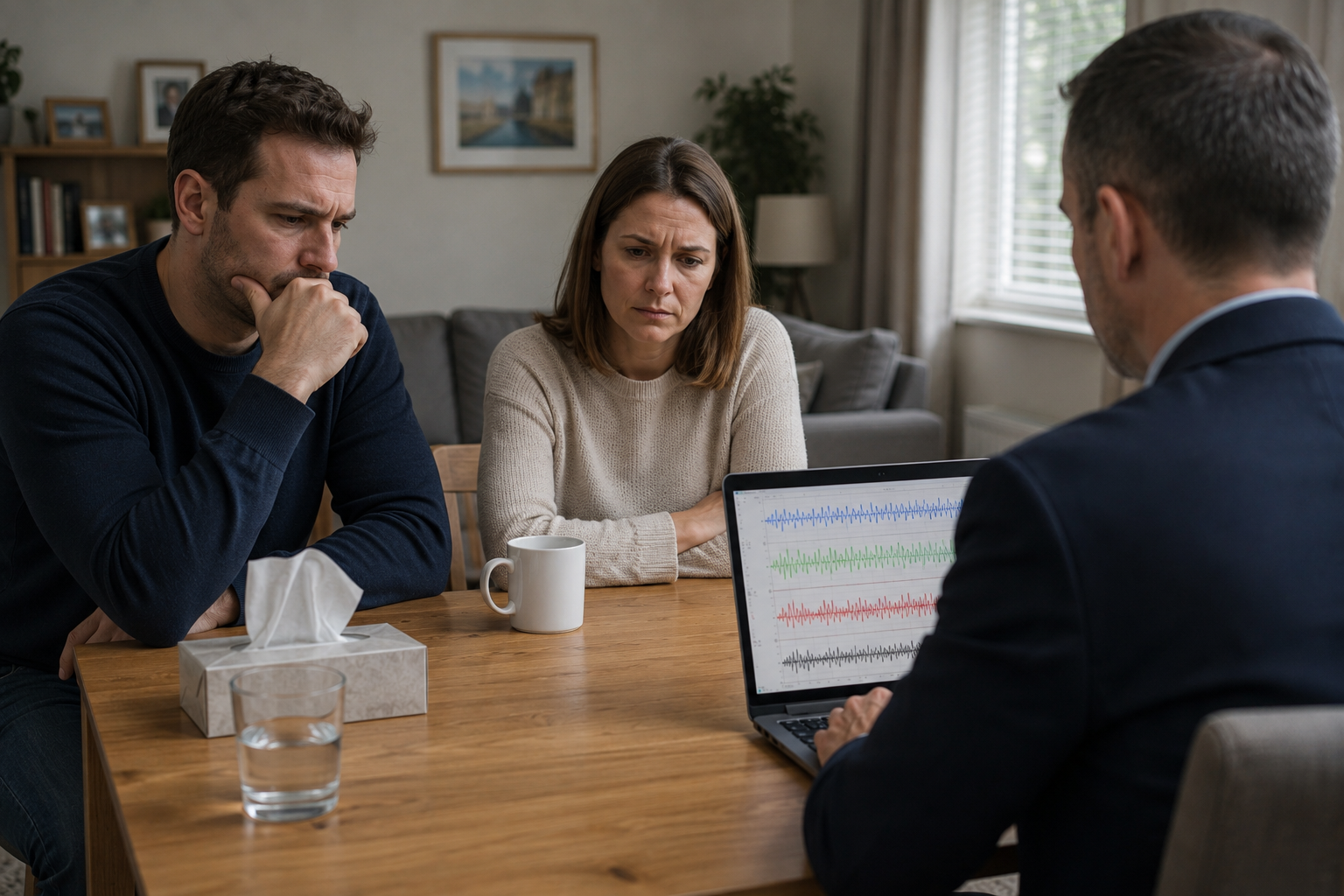
For separated parents and family disputes specifically, one practical note: mediators and families themselves are free to treat a report however they choose, and a neutral documented finding sometimes does what months of allegation and counter-allegation could not - it gives both sides one shared fact to stand on. That is a function about people, not about courts, and it is where family-case reports genuinely earn their fee.
The Workplace
Employment Law and the Fair Process Trap
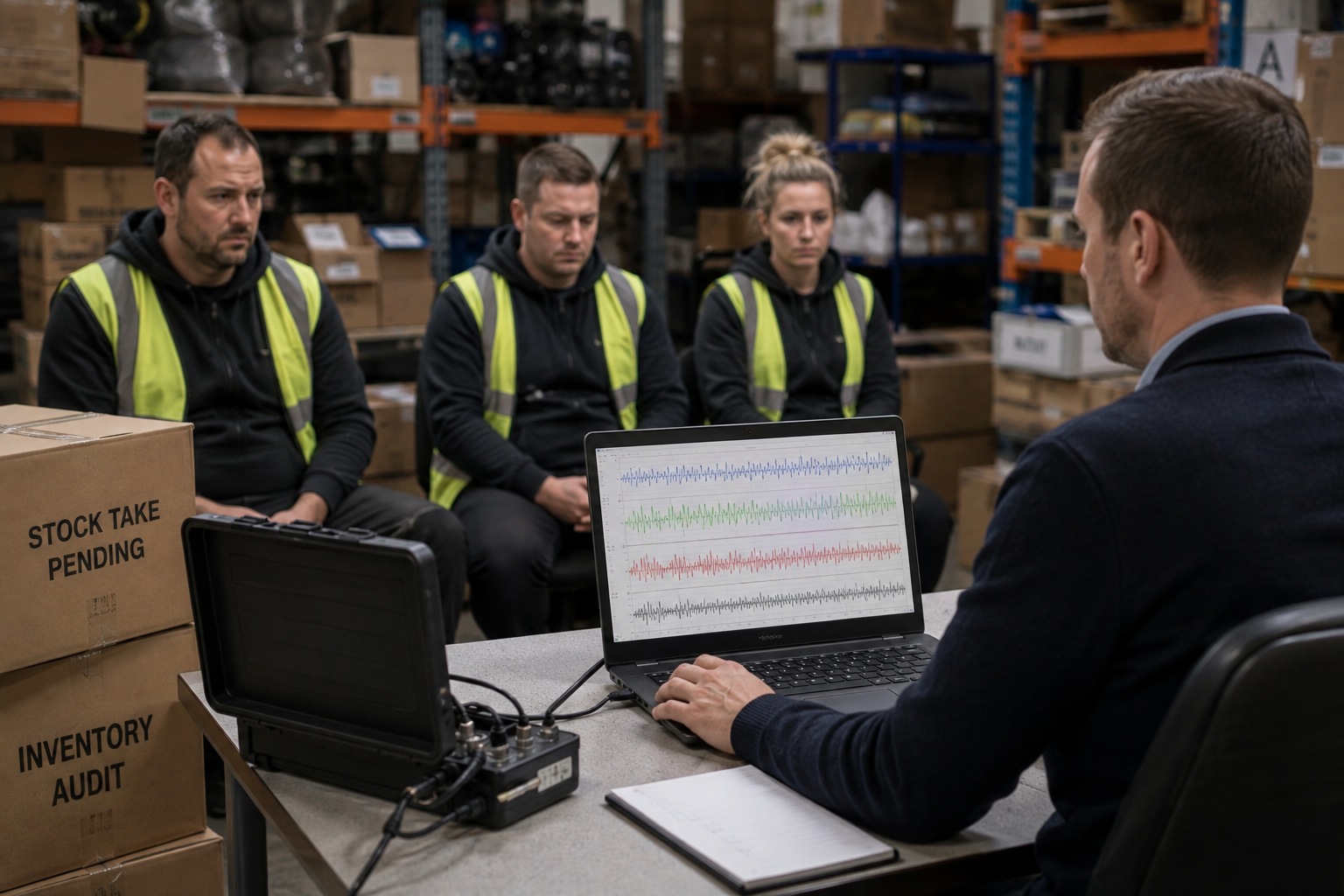
Employment is where the legal risk runs in the opposite direction - not whether you can use a result, but how badly it can backfire if you use it wrongly. Three principles keep employers safe. First, testing must be genuinely voluntary: no UK employer can compel an employee to take a lie detector test, and pressure that makes refusal career-limiting is compulsion in practice. Second, refusal must not be treated as guilt - disciplining someone for declining a voluntary test is a fast route to a constructive dismissal claim.
Third and most important: a test result can never be the sole basis for dismissal. Unfair dismissal law requires a reasonable investigation and a decision a reasonable employer could reach on the evidence; a tribunal asked to accept the machine said so as that evidence will not be kind. The safe pattern is the one careful employers already use for every other investigative tool - the result is one documented element inside a fair process, alongside witness accounts, records and the employee’s own explanation, never a verdict in itself.
Used inside that pattern, testing can genuinely help: it can support an accused employee who volunteers to clear their name, narrow an investigation that has stalled, and demonstrate that the employer explored every avenue before acting. Data protection deserves a mention too - test results are personal data, and sensitive data at that, so collect them with consent, store them securely and share them only with those who need them. None of this is exotic; it is ordinary fair-process discipline applied to an unusual instrument.
The Wider World
How the UK Position Compares
A short comparative note, because the internet is full of American material that confuses UK readers. In the United States, admissibility varies by jurisdiction - most states exclude polygraph evidence, some admit it if both parties stipulate, and federal courts apply case-by-case reliability tests. The US also regulates private testing through employment legislation that restricts employer-mandated polygraphs. American articles about passing court-ordered polygraphs therefore describe a legal world that simply does not exist here.
Elsewhere the pattern is broadly similar to the UK: most comparable jurisdictions exclude lie detector results from criminal evidence while tolerating private use, and several run offender-supervision schemes along the same lines as the UK licence regime. The global picture is remarkably consistent: legal systems distrust the instrument as a fact-finder while accepting it as a management and decision-support tool. That consistency is itself informative about what testing is for.
Practical Value
What a Report Is Actually For
Strip the courtroom away and what remains is the real product: a documented, independent finding that both sides of a dispute can read. Relationships, families and workplaces do not run on rules of evidence - they run on trust, and what breaks them is not usually a lack of admissible proof but an unresolvable clash of accounts. A professional report gives the people involved one shared, documented answer, produced by a neutral third party under a stated method. That is what ends the argument.
What makes a report worth having is the same whether or not a lawyer ever sees it: the questions examined set out verbatim, the method described, the finding stated plainly, and - the mark of a professional document - its limits stated too. Every test we run across the UK ends with exactly that kind of written certificate, in plain English a layperson can follow and a professional can respect. If what you need is an answer you can put in front of someone else, that is the product - and the booking page explains the method behind it before you commit to anything.
See It in Practice
Case Studies: How These Rules Play Out in Real Situations
Case Study · Workplace Investigation
The admissibility rules on this page, applied: voluntary written invitations, HR advice first, and a test used as one strand of a documented investigation - never the verdict. How one employer cleared three staff and found the answer lawfully.
Read the case study
Case Study · Relationship & Infidelity
Most private tests are never meant for a courtroom - they are meant to settle a question between two people. How an accused partner volunteered, agreed the questions in advance, and ended a two-month argument in ninety minutes.
Read the case study
Case Study · Family Dispute
When the police cannot attribute shared access and solicitors only harden positions, a symmetrical pair of tests - identical scope, results shared simultaneously - resolved what two years of letters could not.
Read the case study
All three, with full detail on how each test was structured: browse the polygraph case studies.