Can You Fail a Polygraph If You Are Nervous? Yes on a Lie Detector That Measures Stress. No on One That Does Not.
It is the most common worry we hear, and it deserves honesty rather than reassurance: on a traditional polygraph, nerves genuinely can work against a truthful person. This guide explains exactly why that happens, who is most at risk, what examiners do about it, how to prepare if you are taking a stress-based test - and the modern method that removes the problem at the source.
Quick answer: yes - on a stress-based polygraph, anxiety can produce the same physiological signals the test scores as deception, and false positives in truthful-but-nervous subjects are the method’s best-documented weakness. Recognition-based EEG testing is not affected by nerves at all, because nervousness does not create a recognition signal in the brain.
By the Deception Detection examiner team · Updated
Why the Fear Is Rational
What the Machine Actually Records
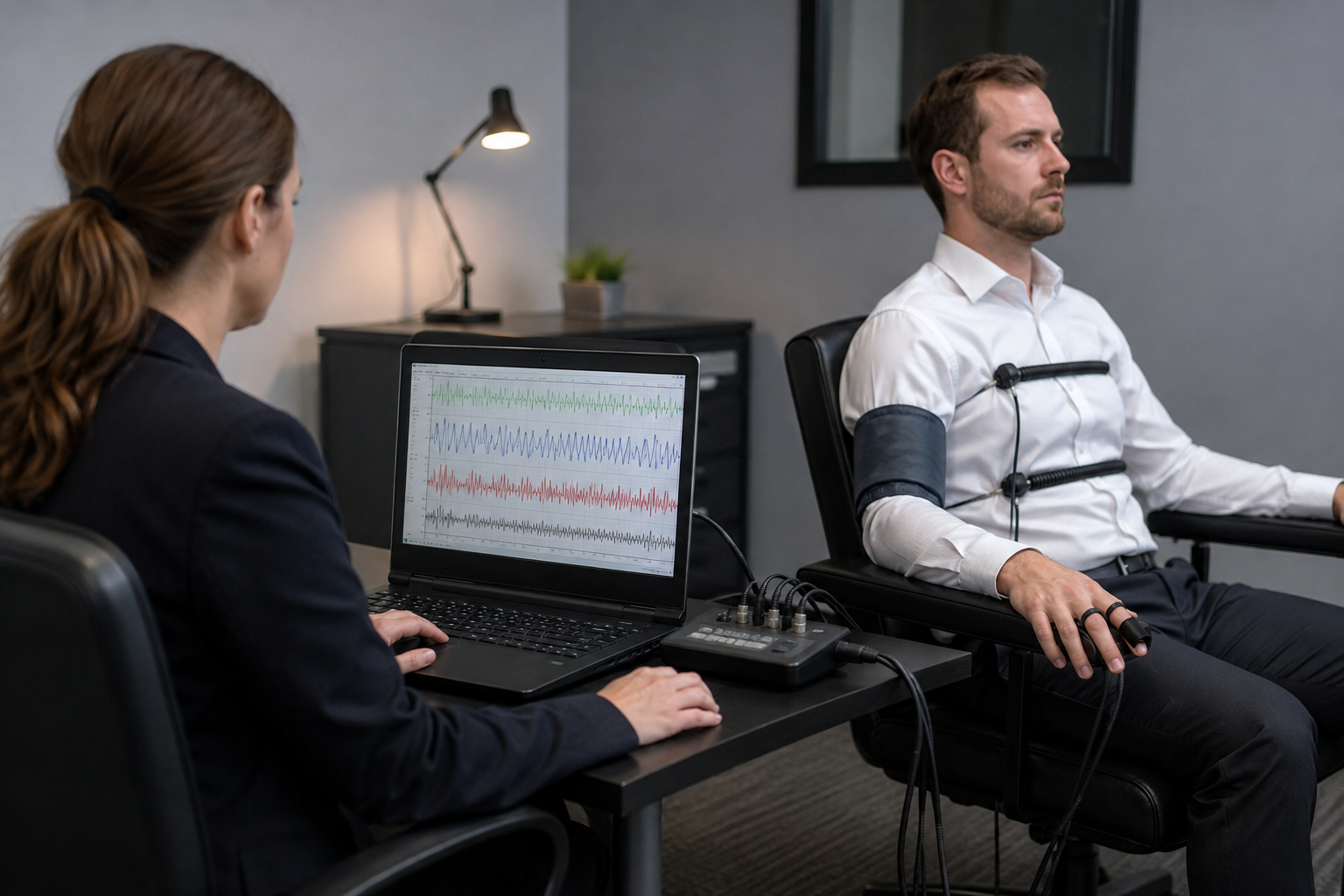
Start with what a polygraph measures: breathing, cardiovascular activity and sweat gland response. Now list what changes all three: fear, anger, embarrassment, surprise, dread - and lying. The machine records arousal, and arousal has many innocent causes. When people worry that their nerves might fail them, they are not being irrational; they have correctly identified the central weakness of the instrument.
The situation compounds itself. A person accused of something they did not do arrives at the test frightened of exactly one thing: the questions about the accusation. Those are the relevant questions - the ones the scoring watches most closely. Innocent fear and guilty fear point at the same questions and move the same needles, and the machine has no channel that distinguishes them.
It is worth saying plainly, because few providers will: the people most anxious about being tested are disproportionately the honest ones. A practised deceiver has usually made peace with the situation; a truthful person facing disbelief from someone they love is often in genuine distress. A method that penalises distress is aimed, structurally, at the wrong group - which is the single biggest reason we do not use one.
The Defence Built Into the Test
How the Comparison Method Tries to Cope
Polygraph technique is not naive about nerves - the comparison question method exists precisely because of them. Rather than asking whether you reacted to the accusation, the test asks whether you reacted more to the accusation than to deliberately uncomfortable comparison questions. In theory, a truthful subject - safe on the relevant questions - is more troubled by the vague comparison probes, while a deceptive subject fears the relevant questions above all. General nervousness, affecting everything equally, should wash out of the comparison.
In practice the defence is partial. General anxiety does not always spread itself evenly: an innocent person can fixate on the accusation questions simply because those are the words their whole future is hanging on, producing exactly the response pattern the scoring reads as deceptive. High baseline arousal also compresses the room the charts have to move in, pushing results toward the inconclusive middle - which usually means paying for a retest.
A skilled examiner adds human mitigation: a long settling-in period, an unhurried consultation, sometimes a demonstration test to build the subject’s confidence in the instrument, and honest chart reading that treats borderline data as borderline. All of it helps. None of it changes the underlying physics: the signal being measured is stress, and stress is what nervous people produce.
Get Your Own Answer, Professionally Documented
Reading about testing only gets you so far. A professional lie detector test - at home
or a discreet local venue anywhere in the UK, with a written results certificate - gets
you the answer itself. Same-day and next-day appointments available.
Or call us on +44 161 524 5513 to talk it through in confidence first.
Risk Factors
Who Is Most Exposed on a Stress-Based Test
Some people carry more false-positive risk than others. Anyone with an anxiety condition starts closer to the physiological ceiling, with less headroom before charts become unreadable or skewed. People with heart conditions, respiratory conditions or blood pressure issues produce atypical readings on exactly the channels being scored. Several common medications - beta blockers, antidepressants, blood pressure treatments among them - alter the recorded signals; so, more dangerously, does abruptly stopping them for the test, which no one should ever do.
Past experience matters too. Someone who has previously been through a hostile interrogation, a bad polygraph experience or a coercive relationship can respond to the test situation itself with an intensity that has nothing to do with the questions. And people who have been accused repeatedly over a long period often arrive in a state of exhausted hypervigilance that makes clean measurement genuinely difficult.
None of this makes testing impossible for these groups - it makes disclosure essential. A professional examiner asks about health and medication as a standard part of the consultation, adjusts expectations accordingly, and treats ambiguous charts from a high-risk subject with the humility they deserve. If a provider does not ask about any of it, they are not running the kind of examination you want to be judged by.
Practical Preparation
How to Pass a Polygraph Test When You Are Nervous and Telling the Truth
If you are sitting a traditional test, preparation is mostly about protecting your normal state. Sleep normally the night before. Eat normally. Take your regular medication exactly as usual and tell the examiner what you take - changes in your routine distort readings far more than the routine itself. Arrive with time to spare, because rushing in flustered starts the session at the ceiling.
Use the pre-test consultation for what it exists for. Ask every question you have about the process until nothing about it is a mystery, and go through the test questions until every word is clear to you - ambiguity you discover mid-test, wired to the machine, is the worst possible moment for it. Most test anxiety is uncertainty wearing a disguise, and a good examiner will happily talk all of it away before anything is measured.
And one firm warning: do not attempt any technique you have read about for controlling your responses - breathing patterns, muscle tricks, mental exercises. Examiners are trained to spot manipulation, instruments carry sensors for it, and a truthful person caught trying to steer the charts converts a probable pass into a reported countermeasure attempt. If you are honest, your best strategy on any test is transparency; if the method itself still worries you, the answer is choosing a better method, not gaming this one.
Choosing Better
Pick the Test Before You Pick the Coping Strategy
Everything above is how to survive a stress-based test as a nervous, honest person. The better question is why you should have to. The false-positive problem is a property of the measurement, not of you - so the cleanest solution available to you, before anything is booked, is choosing a measurement that nerves cannot touch.
This matters doubly if you are the one commissioning a test on someone else. If your partner or employee agrees to be tested and they are telling the truth, a stress-based method exposes them to a real risk of a false fail - an outcome that would damage exactly the trust you were trying to repair, on evidence that was never sound. Choosing a nerve-immune method is not a kindness to the guilty; it is protection for the innocent, in both chairs.
The Real Fix
Testing That Nerves Cannot Touch
EEG-based recognition testing removes the problem at its source by measuring something anxiety does not produce. Sensors record the brain’s electrical activity while details connected to the matter under investigation are shown among neutral alternatives. When the brain recognises something it has genuinely encountered, it generates a characteristic involuntary response within roughly a third of a second - long before conscious control, and completely independent of how frightened the person in the chair happens to be.
Nervousness raises your heart rate, changes your breathing and makes your palms sweat - which is exactly why it wrecks polygraph charts. It does not make your brain recognise information it has never seen. An anxious truthful subject and a calm truthful subject produce the same clean result, because the thing being measured is knowledge, not composure. Research on recognition-based protocols consistently supports this - it is the method’s defining advantage.
That is the method we use across the UK, and anxious-but-honest clients are precisely who it serves best. The session itself is calm - surface sensors, a screen, no cuff, no interrogation - and every test ends with a written results certificate. If nerves are the thing that has been holding you back from getting your answer, the booking page explains the whole process before you commit to anything, or call +44 161 524 5513 and ask us the hard questions first.
See It in Practice
Case Studies: How These Rules Play Out in Real Situations
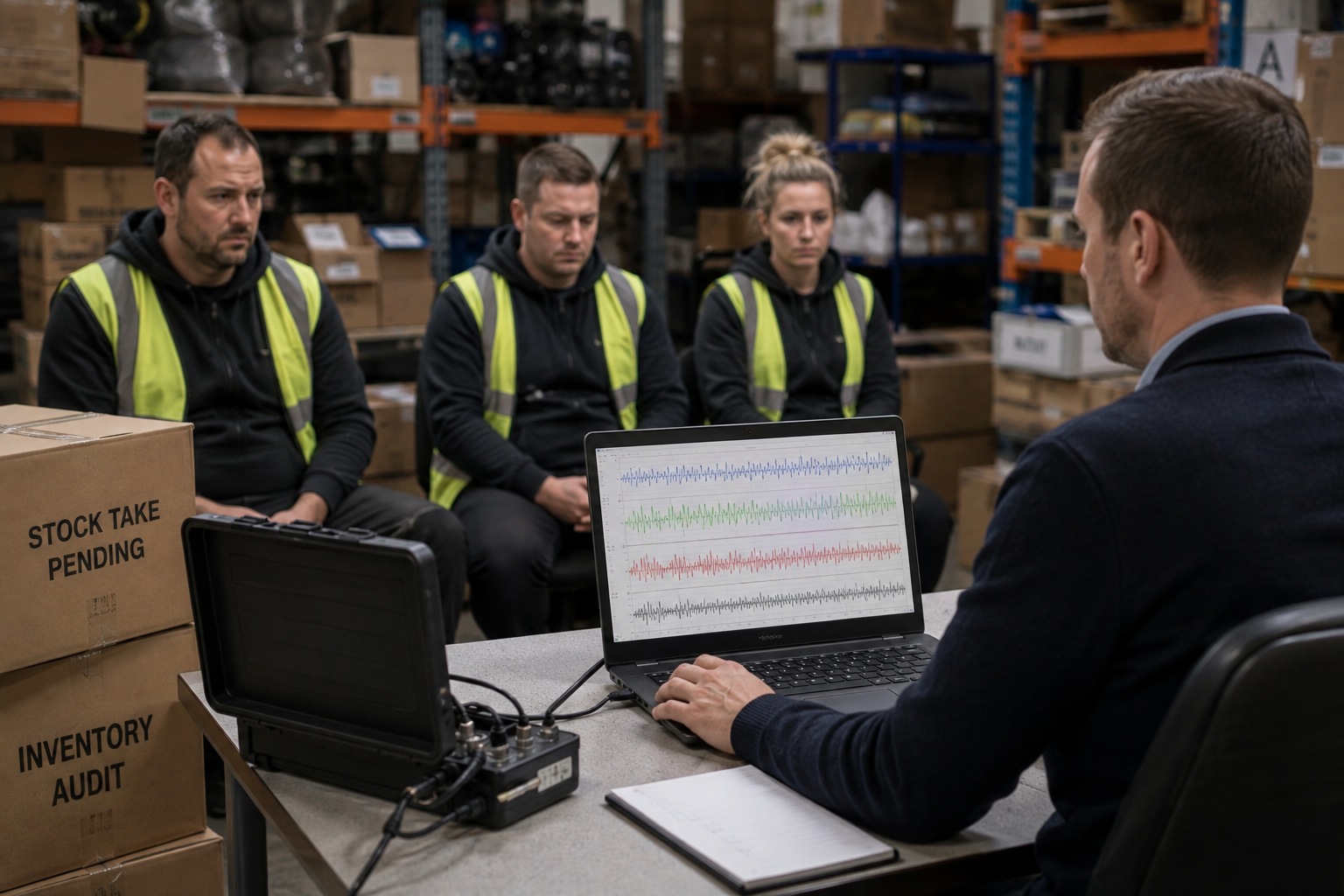
The admissibility rules on this page, applied: voluntary written invitations, HR advice first, and a test used as one strand of a documented investigation - never the verdict. How one employer cleared three staff and found the answer lawfully.
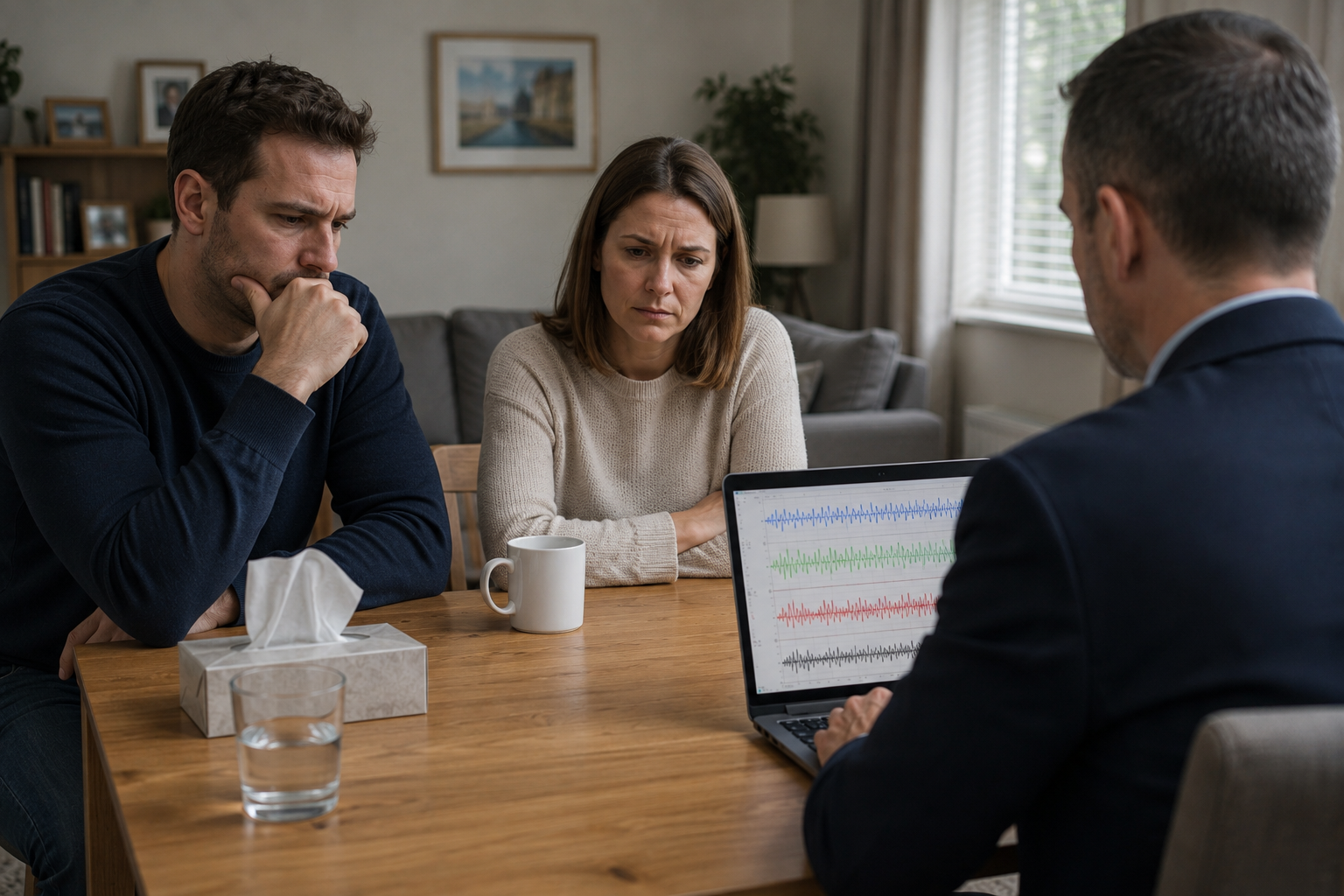
Most private tests are never meant for a courtroom - they are meant to settle a question between two people. How an accused partner volunteered, agreed the questions in advance, and ended a two-month argument in ninety minutes.
When the police cannot attribute shared access and solicitors only harden positions, a symmetrical pair of tests - identical scope, results shared simultaneously - resolved what two years of letters could not.
Nervous About a Lie Detector Test? Your Questions Answered
Short answers to the follow-up questions people ask next.
Can you fail a lie detector test if you are nervous?
On a traditional polygraph, yes. The machine records heart rate, breathing and skin conductance, and anxiety moves all three in the same direction as deception, so a frightened honest person can chart like a liar. On a recognition-based EEG lie detector test the answer is no: it measures whether the brain recognises case details, and nerves do not create a recognition response.
Do honest people fail polygraph tests because of anxiety?
It is well documented that they can. Anxiety produces the same physiological signals a stress-based test scores as deception, and innocent subjects often fixate hardest on exactly the accusation questions the scoring watches. False positives in truthful-but-nervous subjects are the polygraph’s most consistently reported weakness.
Should I take medication before a lie detector test?
Take your regular medication exactly as normal and tell the examiner what you take. Never start or stop anything for the test - abrupt changes distort the recorded signals far more than your routine does, and undisclosed changes can invalidate the examination entirely.
Does having an anxiety condition mean I cannot be tested?
No, but it must be disclosed. A professional examiner takes a health and medication history, adjusts for elevated baseline arousal and treats borderline charts with appropriate caution. Better still, a recognition-based method removes the disadvantage entirely, because it does not score stress at all.
Will trying to stay calm help me pass?
Ordinary composure helps charts stay readable, but deliberate control techniques - managed breathing, muscle tricks - are treated as countermeasure attempts and can convert a truthful pass into a reported manipulation. Prepare by protecting your normal routine and clearing every ambiguity in the consultation, not by managing your body.
Is there a lie detector test that is not affected by nerves?
Yes. EEG-based recognition testing measures an involuntary brain response to recognised information rather than stress signals. Nervousness does not create a false recognition response, so anxious but truthful people are not penalised - it is the method we use for exactly that reason.
I am truthful but terrified - what happens if I fail anyway?
On a stress-based test, request the written report, check the stated method and limits, and consider a retest under a tightly structured single-issue protocol or a recognition-based method. Our guide to what happens after a failed result covers disputed results in detail.
How do I calm my nerves before the test?
Sleep and eat normally, arrive early, and use the pre-test consultation fully - ask every question you have and go through the test questions word by word until nothing is ambiguous. Most test anxiety is uncertainty in disguise, and a professional examiner will remove the uncertainty before anything is measured.
Stop Researching. Get Your Answer.
You have the facts - what you came for is the answer to your own situation. Professional
lie detector testing across the whole of the UK, with same-day and next-day appointments
and a written results certificate with every test.