Quick answer: most appointments take between one and three hours from arrival to debrief, with the pre-test consultation the longest single stage. From deciding to book to holding a written result is usually days rather than weeks - and same-day and next-day appointments are available across the UK.
The Appointment
The Timeline, Stage by Stage
A professional examination has a predictable rhythm. It opens with the pre-test consultation - typically forty-five minutes to an hour and often more - in which the examiner explains the entire process, takes a health and medication history, defines the single issue under examination and agrees every question word for word. Nothing is measured during this stage, and yet it is where the reliability of your result is largely decided, which is why it cannot be compressed without cost.
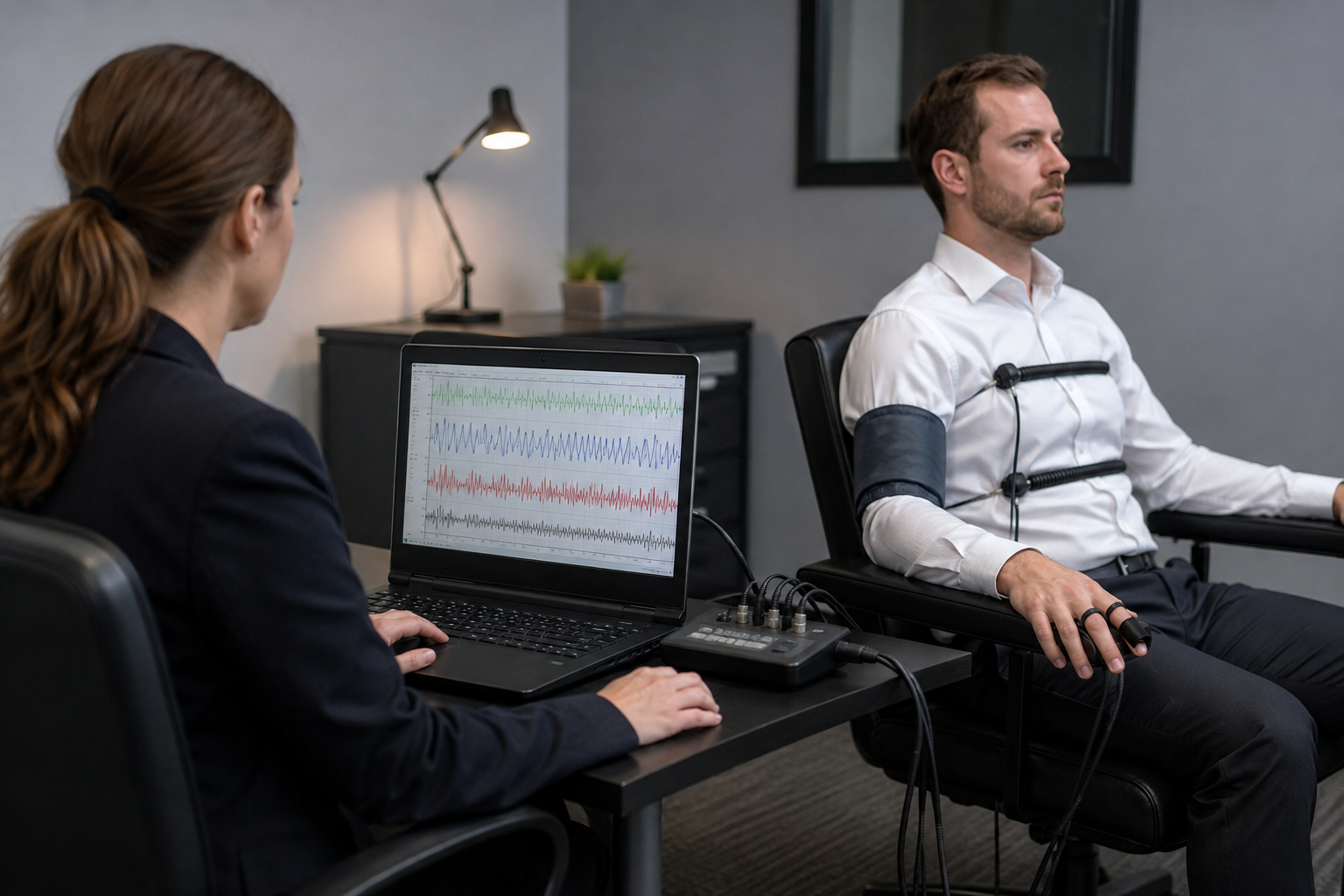
Then comes setup and the testing phase itself, which is shorter than most people expect: sensors fitted, the environment settled, and the agreed questions presented in a controlled sequence - usually several passes through the set, in varied order, with pauses between - while responses are recorded continuously. Depending on the method and the number of questions, this phase commonly runs thirty minutes to an hour of actual measurement.
The appointment closes with a debrief: sensors off, immediate questions answered, next steps explained, and - depending on the service and the case - either an initial indication on the day or confirmation of when the analysed result will follow. Put the stages together and most complete appointments land between one and three hours. Simple single-issue matters sit at the shorter end; complex or multi-subject cases run longer, and honestly so.
The Long Pole
Why the Consultation Dominates - and Should
It surprises people that the talking takes longer than the testing, but the proportion is exactly right. Reliability lives in question design: one clearly defined issue, concrete wording, defined time frames, every ambiguity surfaced and removed while the subject is calm and unwired. Every minute spent achieving that pays back on the charts; every minute skipped shows up later as noise, misunderstanding or an inconclusive result.
The consultation also does quiet technical work on the subject themselves. A person who has had the entire process explained, asked every question they were carrying, and agreed every word they will be asked arrives at the measurement phase in the calmest state they are capable of that day - which matters enormously on any stress-based method, and simply makes for a cleaner session on any method at all. Settling the subject is not bedside manner; it is instrument preparation.
This is also where the half-hour test advertised by some providers falls apart arithmetically. Thirty minutes cannot contain a meaningful consultation, a measured testing phase and a debrief; something on that list has been amputated, and it is almost always the consultation. A short appointment is not efficiency - it is a rushed examination wearing efficiency’s clothes, and the missing minutes come out of your result.
Get Your Own Answer, Professionally Documented
Reading about testing only gets you so far. A professional lie detector test - at home
or a discreet local venue anywhere in the UK, with a written results certificate - gets
you the answer itself. Same-day and next-day appointments available.
Book Your Polygraph Now
Or call us on +44 161 524 5513 to talk it through in confidence first.
Variables
What Stretches the Clock - and What Does Not
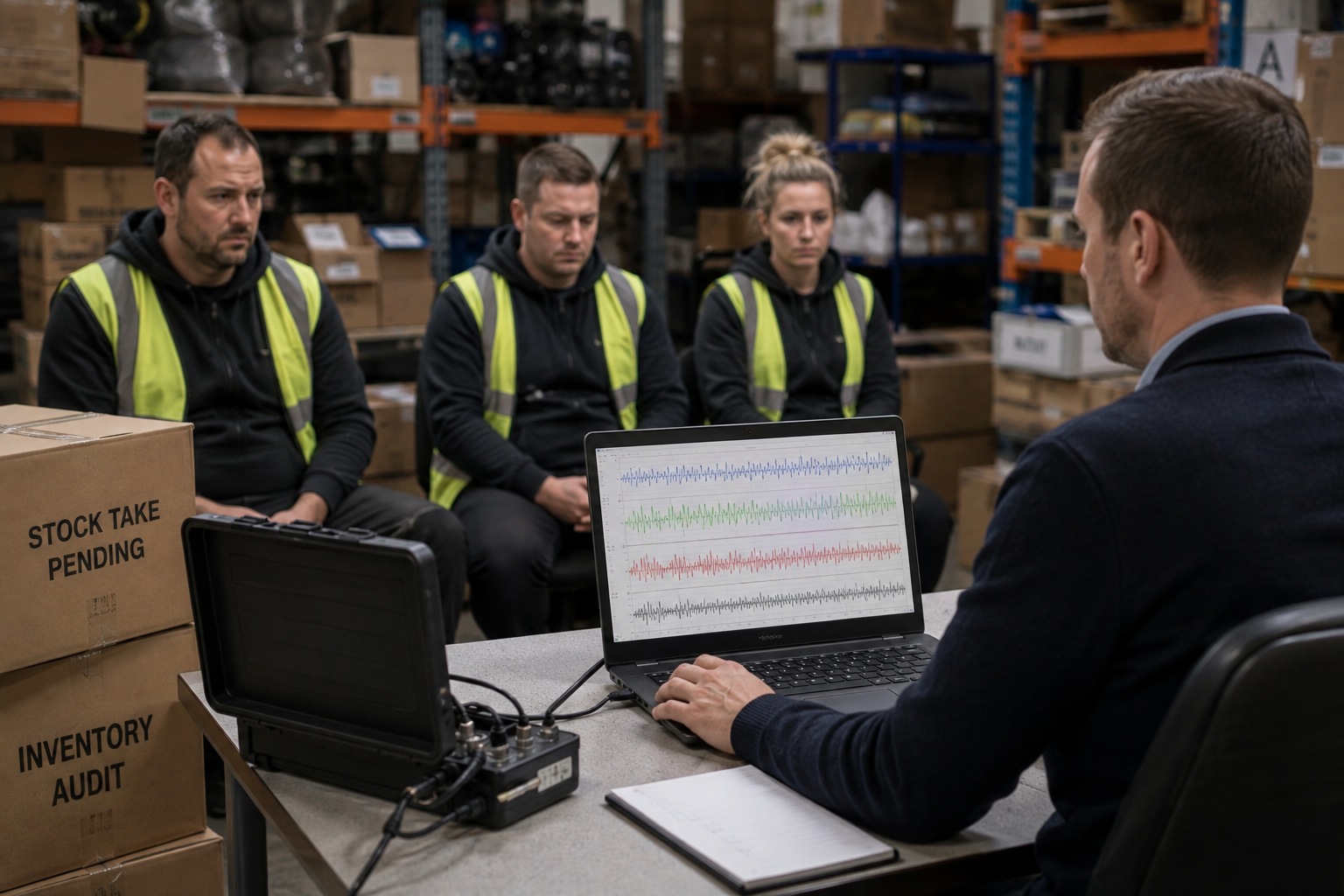
Several factors legitimately extend an appointment. Testing two people on the same matter roughly adds a session, though shared consultation work means less than double. Workplace cases with several subjects run to a day-rate structure. Complex histories - long-running disputes, allegations spanning years - take longer to compress into three clean questions. Interpreted sessions add time at every stage, and subjects with health conditions that need accommodating deserve, and get, an unhurried pace.
What does not change the clock much is location. A home visit takes the same appointment time as a venue session - travel is the examiner’s problem, not yours - and a discreet local venue adds only the minutes it takes to settle into an unfamiliar room. Choose the setting by comfort and privacy, not by any imagined time saving.
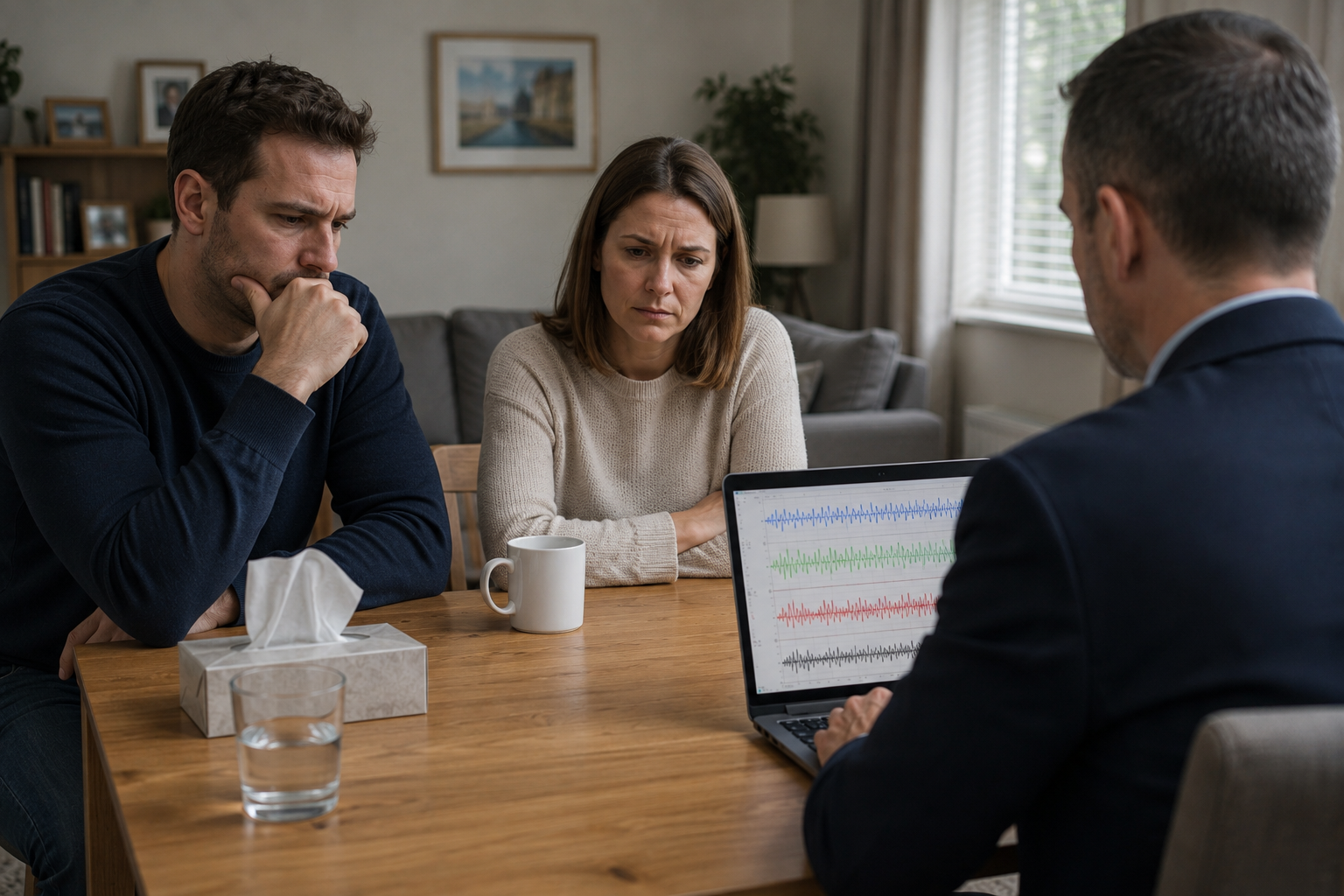
One planning note for home visits: the appointment needs a quiet, private room with a table and no interruptions - no children wandering through, no other household members within earshot, phones silenced. Ten minutes of preparation before the examiner arrives protects the session far better than any amount of goodwill after it starts.
The Calendar
Booking to Written Result
The second clock is the one that usually matters more: how fast the whole journey runs. In practice, most of our clients book for the same day or the next day - when someone finally decides they need an answer, waiting two weeks is intolerable, and a diary built around urgent bookings is part of what a nationwide mobile service is for. The examiner travels to you anywhere in the UK, at home or at a discreet local venue arranged near you.
After the session, analysis produces the result, and the written certificate follows - setting out the method, the questions examined verbatim and the conclusion in plain English. Turnaround on the written document is quick; for most bookings the complete journey - decision, booking, appointment, documented answer in hand - fits inside a few days, and urgent cases move faster still.
If your situation has a genuine deadline - a confrontation you cannot postpone, a workplace process with a hearing date, a decision that will not wait - say so when booking. Deadlines change scheduling, not quality: the appointment itself takes the time it takes, but where it lands in the diary is exactly the flexibility an urgent service exists to provide. Same-day slots carry a clear fixed price agreed before you commit.
Reading the Clock
What Test Duration Tells You About a Provider
Duration turns out to be one of the most honest signals in this industry, because time is the one thing a provider cannot fake. A service that books ninety-minute slots end to end is telling you, structurally, that consultations are being rushed. A service vague about how long the appointment takes has not standardised its protocol. And a service promising the full examination, in your home, with a written report, inside half an hour, is describing something that does not arithmetically exist.
The questions worth asking any provider before booking: how long is the full appointment for my situation; how much of that is the consultation; is the written report included and when does it arrive; and what happens to the schedule if the session needs longer than planned. Confident, specific answers to all four are what professionalism sounds like on the phone.
Our own answers, for the record: one to three hours for most appointments depending on complexity, the consultation given whatever time your case needs, the written certificate included with every test, and a session that runs until it is done properly rather than until a slot expires. The booking page shows live availability across the UK - including today’s.
See It in Practice
Case Studies: How These Rules Play Out in Real Situations
Case Study · Workplace Investigation
The admissibility rules on this page, applied: voluntary written invitations, HR advice first, and a test used as one strand of a documented investigation - never the verdict. How one employer cleared three staff and found the answer lawfully.
Read the case study
Case Study · Relationship & Infidelity
Most private tests are never meant for a courtroom - they are meant to settle a question between two people. How an accused partner volunteered, agreed the questions in advance, and ended a two-month argument in ninety minutes.
Read the case study
Case Study · Family Dispute
When the police cannot attribute shared access and solicitors only harden positions, a symmetrical pair of tests - identical scope, results shared simultaneously - resolved what two years of letters could not.
Read the case study
All three, with full detail on how each test was structured: browse the polygraph case studies.