Can Your Phone Detect a Tracker?
Partly — and the difference matters. Your phone can now warn you about Bluetooth tags like AirTags, but it cannot detect the covert GPS trackers usually fitted to a car. Here is exactly what a phone can and cannot find, and how to actually check.
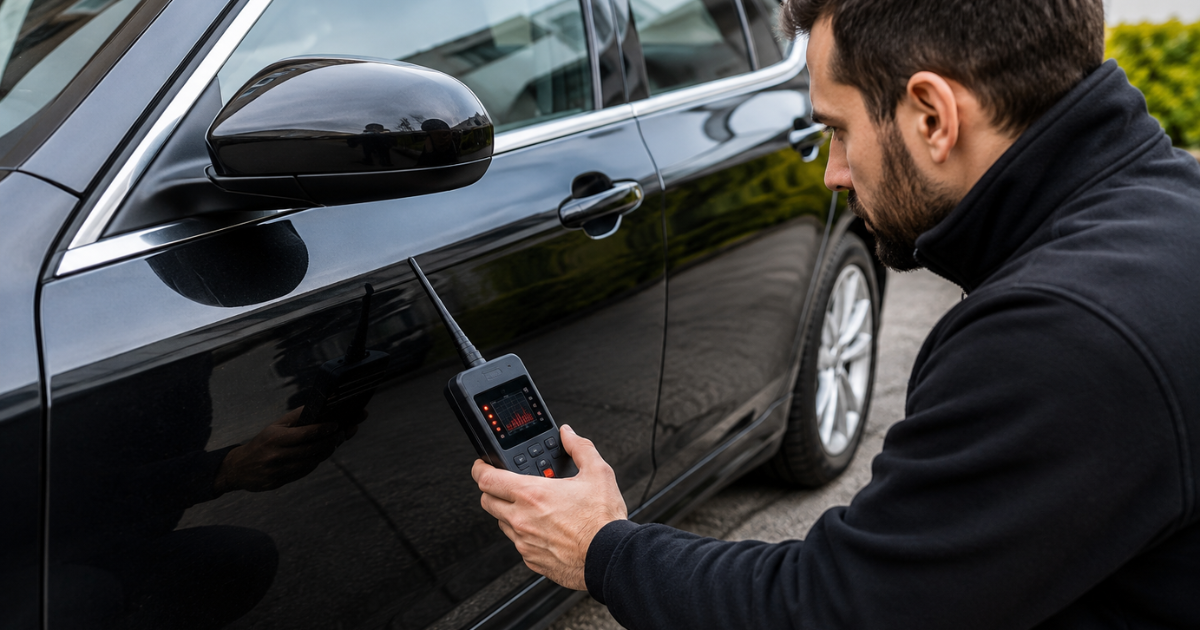
It is one of the most common questions people ask when they suspect they are being tracked, and the honest answer is: it depends entirely on the type of tracker. A phone is genuinely helpful against one kind and completely blind to another — and mistaking the two can give you false reassurance exactly when you need certainty.
What Your Phone Can Detect
Modern phones are now good at spotting Bluetooth trackers — consumer tags such as Apple AirTags, Tile and similar devices. Since May 2024, iPhone (iOS 17.5 and later) and Android (6.0 and later) share an industry standard that shows a “Found Moving With You” alert when an unknown Bluetooth tracker appears to be travelling with you. On Android you can also scan manually under Settings, Safety & emergency, Unknown tracker alerts.
This is a real improvement, and if a jealous partner has dropped a cheap AirTag in your bag or car, your phone stands a good chance of catching it. We cover exactly how to do that on our guide to finding an AirTag that is tracking you.
What Your Phone Cannot Detect
Here is the critical gap. The trackers actually fitted to cars in surveillance and stalking cases are usually covert cellular GPS trackers — and they are invisible to your phone. They do not use Bluetooth, so there is no beacon for a phone to see. They report their location over the mobile network, silently, to whoever is watching. A phone has no way to detect them.
- Magnetic trackers stuck under a wheel arch or bumper, running on their own battery.
- Plug-in OBD trackers drawing power from the car's diagnostic port.
- Hardwired trackers spliced into the vehicle's wiring and hidden in the dashboard.
- Dormant units that sleep while the car is parked and only wake when it moves — so even signal-based checks must be timed correctly.
Why the apps do not help
App stores are full of “GPS tracker detectors,” and they do not work for this. Most simply read the phone's magnetometer — the compass sensor — or list nearby Bluetooth devices. Neither can detect a cellular tracker, and both throw up false positives and false negatives. A clean result from one of these apps tells you almost nothing.
How to Actually Check
The sensible order is simple. First, rule out a Bluetooth tag using your phone's built-in alerts. If that comes up clear but you still believe you are being tracked — because someone knows your movements, or your circumstances give you good reason to worry — the next step is a proper vehicle tracker and bug sweep.
We drive the car to wake motion-triggered units, then combine radio-frequency detection with a hands-on inspection of the OBD port, wheel arches, bumpers, engine bay and wiring. That is the only reliable way to find a covert GPS tracker — and if we find one linked to stalking or abuse, we advise preserving it as evidence and involving the police rather than simply removing it.
Part of a Bigger Picture?
If you are worried about being tracked, you may also want to know what someone is really doing, or verify what they are telling you. We also offer full private investigation and specialist EEG lie detection.
Frequently Asked Questions
The questions we hear most about phones and trackers.
No. A covert cellular GPS tracker — the kind usually fitted to a car — does not use Bluetooth and does not appear on any phone. It sends its location over the mobile network, invisibly, so no phone feature or app will find it. Only a proper sweep, combining radio-frequency detection with a physical inspection, will.
Bluetooth trackers, such as Apple AirTags and similar tags. Since 2024 both iPhone (iOS 17.5 and later) and Android (6.0 and later) show an alert when an unknown Bluetooth tracker is moving with you, and Android lets you scan manually. That is genuinely useful — but it only covers consumer Bluetooth tags, not covert GPS trackers.
Not for finding trackers. Most apps that claim to detect GPS trackers simply read the phone's magnetometer or list Bluetooth devices, and they produce false results in both directions. They cannot detect a cellular tracker, and a clean result from one of them means very little.
Rule out a Bluetooth tag using your phone's built-in alerts, then, if you are still concerned, have a professional vehicle sweep. We drive the car to wake motion-triggered units and check the OBD port, wheel arches, bumpers and wiring by hand and by detector — which is the only reliable way to find a covert GPS tracker.
No, not reliably. A phone cannot detect a covert audio bug, and while some apps claim to find cameras, they miss any camera that is switched off or not on the same network. Lens detection and radio-frequency equipment are needed for a dependable answer.
Yes, entirely. Checking your own vehicle is lawful. It is placing a tracker on someone else's vehicle without consent that is generally unlawful — which is what our clients are usually checking for.
Not straight away if it may relate to stalking or an abusive relationship. It could be evidence, and removing it tells whoever placed it that you know. Preserve it, involve the police, and get advice — we can document the find to support you.
From the Blog
Practical guides on surveillance, lie detection and counter-surveillance.
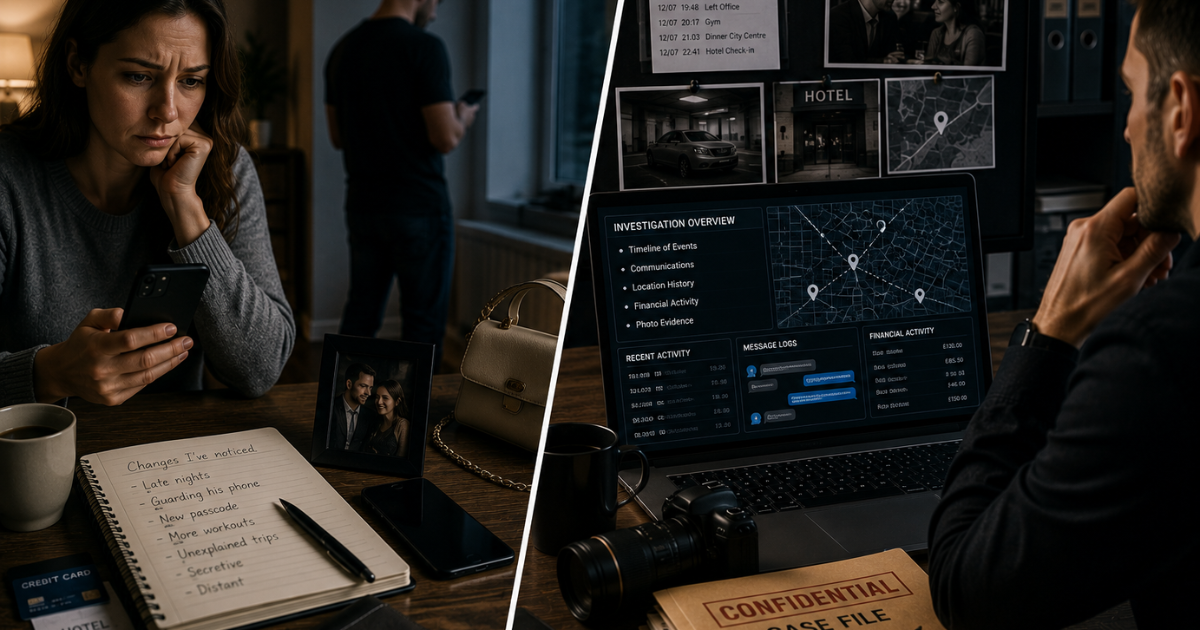
Signs a Partner Is Cheating — and How to Know for Certain
The behavioural, digital and financial signs a partner may be cheating — why none proves anything alone, and the two lawful ways to get certainty.
Read more →
P300 EEG vs the Polygraph: Which Lie Detection Actually Works?
The polygraph measures nervousness; P300 EEG measures whether the brain recognises specific information. Here is why that difference matters.
Read more →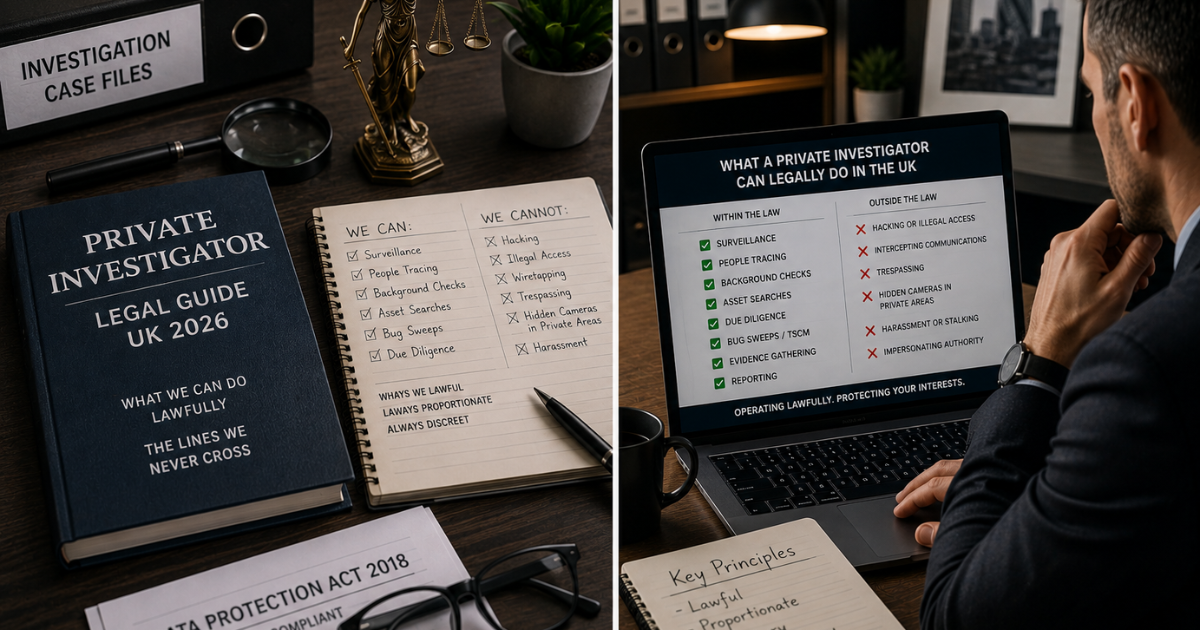
What a Private Investigator Can Legally Do in the UK
Surveillance, tracing and background checks within the law — and the lines a legitimate UK investigator never crosses.
Read more →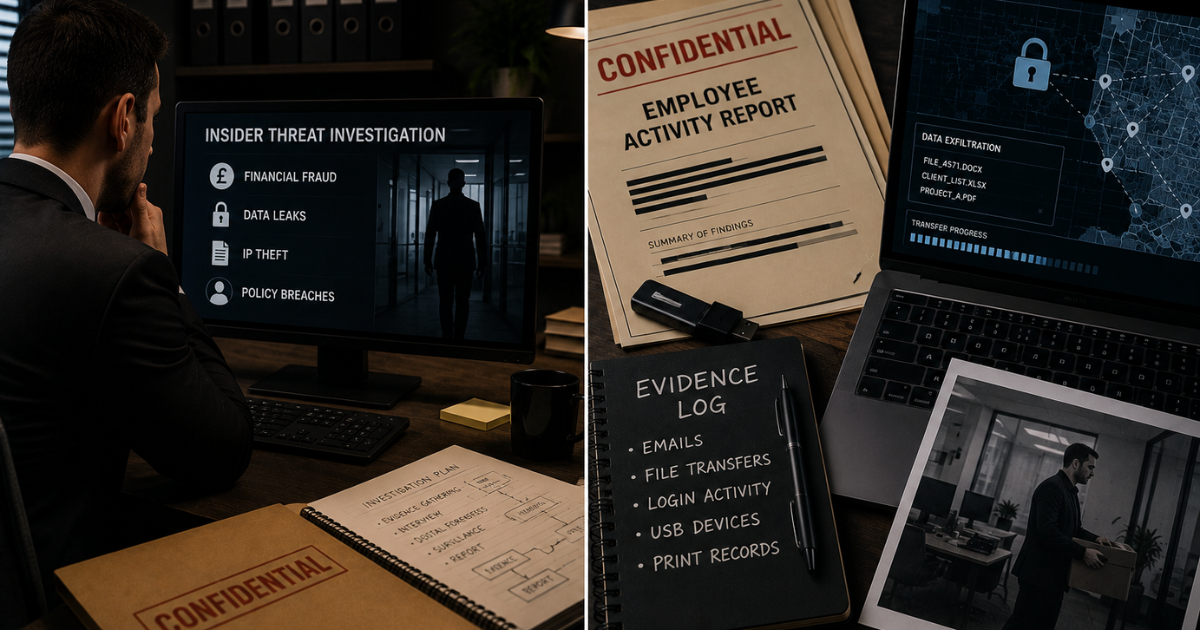
Insider Threats: How Businesses Uncover Fraud and Leaks
Fraud, data theft and leaks come from inside. How corporate investigation and bug sweeps uncover them — discreetly.
Read more →Not Sure If You Are Being Tracked?
Email us in confidence with what is worrying you. We will talk it through and, if it helps, arrange a discreet vehicle sweep that finds what a phone never will.
Email in Confidence