P300 EEG vs the Polygraph: Which Lie Detection Actually Works?
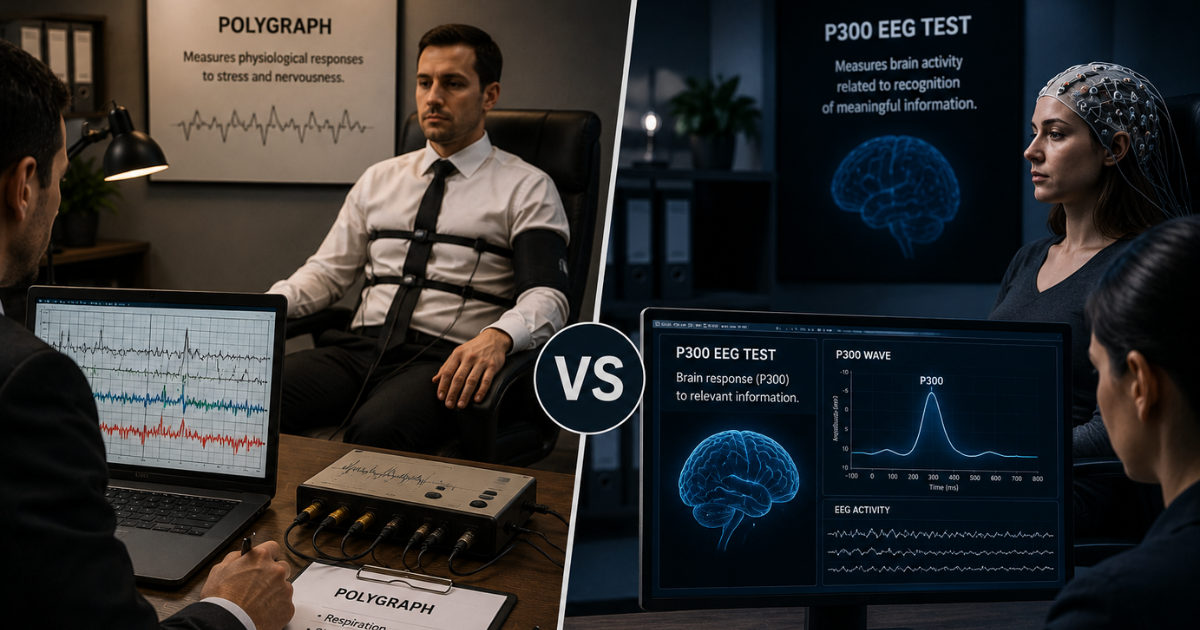
When people picture lie detection, they picture the polygraph — the needles, the chart, the dramatic pause. It is the most famous test in the world, and also one of the most misunderstood. To decide which approach actually works, it helps to be clear about what each one is really measuring, because they are not measuring the same thing at all.
How the polygraph works
A polygraph does not detect lies. It detects arousal — changes in heart rate, breathing, blood pressure and skin conductance while a person answers questions. The theory is that lying causes stress, and stress shows up in the body. The examiner then interprets those physiological squiggles and forms an opinion about deception.
The weakness is built into that chain of reasoning. The body reacts to stress, not to dishonesty specifically — and an innocent person, frightened of being disbelieved about something that matters enormously to them, can be highly aroused while telling the complete truth. Equally, a calm or practised liar may show little. Because the result rests on interpreting arousal, it is also open to countermeasures and to disputes about how the chart was read.
How P300 EEG works
P300 testing starts from a completely different question. Instead of asking whether someone is stressed, it asks whether their brain recognises a specific piece of information. The P300 is a well-documented brainwave — a spike that occurs roughly 300 milliseconds after a person sees something meaningful and familiar to them. It is an involuntary recognition response, not an emotional one.
In a concealed-information test, a subject is shown a stream of items — some irrelevant, and some that only a person with genuine knowledge of an event would find significant. If the brain produces that recognition spike to the significant items, it indicates the information is already known to that person. Crucially, this measures a memory response rather than nervousness, which is why it is far less confounded by how anxious, calm or rehearsed someone is.
The practical differences
- What it measures. The polygraph measures arousal and infers deception; P300 measures recognition of specific information directly.
- Effect of nerves. Anxiety can distort a polygraph; a P300 recognition response is far less affected by how a person feels.
- Interpretation. A polygraph result depends heavily on the examiner reading a chart; a P300 result rests on a measurable, defined brain response.
- Countermeasures. Deliberately controlling breathing or arousal is a known way to influence a polygraph; you cannot easily choose not to recognise something you know.
Which should you trust?
Neither test is magic, and anyone claiming perfection should be treated with caution. But the fundamental design matters: a method that measures recognition of specific facts is asking a sharper, more answerable question than one that measures whether a person is nervous. That is the basis of our approach — you can read more about the technology and the testing service, and pair it with investigation where a case needs both evidence and verification.
What a test involves
A recognition test is calmer than the polygraph's reputation suggests. After a structured interview to agree exactly what is being tested, a light, comfortable EEG headset records the brain's electrical activity while the person views a paced sequence of items on a screen. There is no interrogation and no confrontation — the response being measured is automatic, so the session is quiet and controlled. The output is the pattern of recognition responses, analysed against the agreed items, rather than one examiner's reading of a nervous chart.
The short version: the polygraph asks whether you are anxious. P300 asks whether your brain already knows the answer. For most people trying to establish the truth, the second question is the one worth asking.
A different kind of lie detection
Learn how P300 EEG recognition testing works, and whether it fits your situation.
Book or Enquire