Find What's Really There
Lawful asset tracing across the UK — property, businesses, directorships and hidden means surfaced for divorce settlements, debt recovery and enforcement. Know whether pursuing someone is worthwhile before you spend a penny doing it.
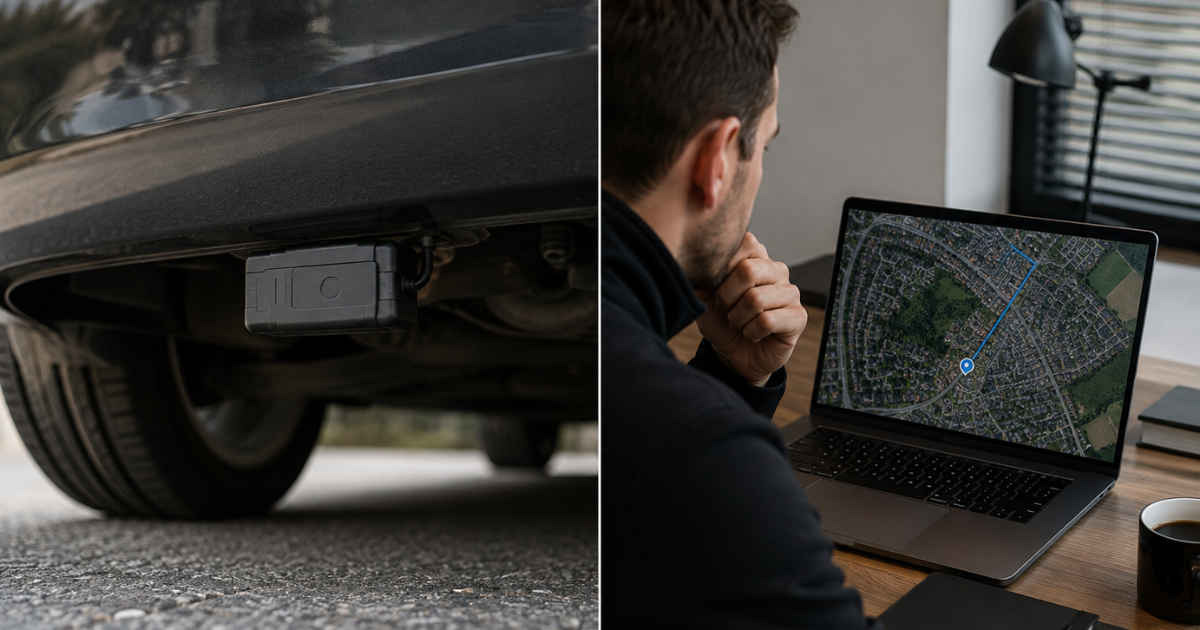
Money has a way of going quiet exactly when it matters most — in a divorce where one side suddenly has far less on paper than in life, or with a debtor who insists there is nothing to pursue. The frustrating part is that you often cannot tell whether that is true, and chasing an empty pocket costs as much as chasing a full one.
Asset tracing answers the question underneath every settlement and every recovery: does this person actually have the means you believe they have? We build a lawful picture of what someone owns and controls, so you and your solicitor can act on evidence rather than assertion — and so you never spend money pursuing someone who genuinely has nothing, or walk away from someone who is hiding a great deal.
What We Trace
A picture of means, built from lawful sources and cross-referenced before we report.
Property & Land
Ownership and interests in property and land, including connections that are not obvious on the surface.
Companies & Directorships
Business interests, directorships and shareholdings that reveal income and control.
Income & Means
The lawful financial footprint around a person that points to genuine means and ability to pay.
Vehicles & Assets
Vehicles and other tangible assets connected to the subject.
Hidden & Undisclosed
Assets moved, understated or held through others, surfaced for fair disclosure.
Locate First
Where the person has gone quiet, we trace them before we assess what they hold.
What Is Lawful — and What Is Not
This is the area where honesty matters most, because the internet is full of firms implying they can hand you anyone's bank balance. They cannot do so lawfully, and neither can we. UK bank account details are protected data; obtaining them covertly is illegal, and anything acquired that way is useless the moment it needs to stand up — worse, it can rebound on the person who commissioned it.
What we can lawfully do is powerful enough for almost every real case. We map the financial footprint around a person: the property they are connected to, the companies they run or own, the directorships and interests that generate income, the tangible assets, and the connections that reveal means being understated or moved. In practice, that is what actually decides whether a settlement is fair or a recovery is worth pursuing. Where a case needs protected data, the lawful route in litigation is a formal disclosure order, and our findings help your solicitor build the case for one.
Why lawful sourcing is the value
The entire point of an asset trace is that the findings can be used — in negotiation, in a disclosure application, in enforcement. That only holds if they were obtained lawfully. Everything we produce is sourced legitimately and prepared to support the legal process, which is exactly why it carries weight when it matters.
When People Come to Us
- Divorce and financial settlement. When one party suspects the other of hiding or understating assets, a trace surfaces the real picture and supports a push for proper disclosure and a fair split.
- Debt recovery. Before spending on recovery action, you learn whether the debtor genuinely has anything worth pursuing — the difference between smart enforcement and throwing good money after bad.
- Judgment enforcement. You have won, but a judgment is only worth what you can enforce it against. A trace identifies the assets to target.
- Probate and estates. Establishing the full picture of an estate's assets so it can be settled correctly.
Where the person has disappeared, we start with a people trace to locate them, then assess their means. You can see the wider range of our work on the private investigator page, and how this is priced in the cost guide.
How It Works
Scoped, lawful and reported to support the legal process.
Tell Us the Situation
Email us the person and the context — divorce, debt, enforcement or probate — and what you need to establish.
Scoped Quote
We agree the approach and a fixed fee or a time budget with a ceiling, before any work starts.
The Trace
We build the picture of assets and means from lawful sources, cross-referenced for reliability.
Report You Can Use
You receive a clear report prepared to support settlement, recovery or your solicitor's disclosure case.
The Assets, and the Answers
Asset tracing shows what someone holds. Where a party is denying the obvious, our EEG recognition test can test what they say about it — a combination that strengthens a disclosure case and that a standard tracing agent cannot offer.
Explore Lie Detection TestingHow Assets Get Hidden
People who want to keep assets out of view rarely bury cash in the garden. The methods are more mundane and more effective, which is exactly why a systematic trace beats guessing. Understanding the common moves is half the work of undoing them.
Assets are frequently held through other people — a new partner, a relative or a friend whose name sits on a property or a company that is really controlled by the subject. They are moved into businesses, where value hides inside a company structure rather than a personal account. They are understated, with income described as far lower than the lifestyle plainly requires. And in divorce cases in particular, they are sometimes timed — disposed of, transferred or run down in the run-up to a settlement so the picture on paper looks thinner than the reality.
A trace works by looking past the surface presentation to the connections underneath: who is really linked to a property, which companies a person sits behind, where the means that fund a visible lifestyle actually come from. Cross-referenced across lawful sources, those connections tell a truer story than a self-declared statement of means ever will — and it is that truer story your solicitor can build a disclosure case on.
Why acting sooner helps
The earlier a trace begins, the better the picture, because it captures the position before it can be further rearranged and gives your solicitor time to seek freezing or disclosure orders where they are justified. If you suspect assets are being moved, the worst thing to do is wait and hope the full picture emerges on its own — it rarely does.
Working Alongside Your Solicitor
Asset tracing rarely happens in isolation — it usually feeds into a legal process, and it works best when it is built to slot straight into one. Much of our asset work is instructed by or alongside solicitors, and even where a client comes to us directly, we prepare the findings so they can be handed to a legal team without rework.
In a financial settlement, our report gives your solicitor the factual foundation to challenge an inadequate statement of means and to press for proper disclosure. In debt recovery and enforcement, it identifies the specific assets worth pursuing, so the legal spend is directed at a target that actually exists. And where the situation justifies a freezing injunction or a formal disclosure order to reach protected data, our evidence helps make the case that such an order is warranted. We understand where the line sits between what a private investigator can lawfully establish and what only a court can compel, and we position our work to support that second step rather than pretending to replace it.
If you do not yet have a solicitor and your matter needs one, we can work to a brief that anticipates it, so nothing has to be redone once you instruct one. The aim throughout is simple: findings that are not just interesting but usable, in the forum where the decision will actually be made.
Know Before You Spend
The most useful thing an asset trace does is often to stop you wasting money. Recovery action, enforcement and contested settlements all cost, and pouring that cost into pursuing someone who genuinely has nothing is a loss on top of a loss. Equally, walking away from a debtor or an ex-partner who is quietly holding real assets means leaving what is rightfully yours on the table. A trace resolves that either way — it tells you which situation you are actually in before you commit your money and energy to it.
That is why we treat the first conversation as a chance to be honest with you about likely value, not just to sell a service. If the picture suggests there is little worth chasing, you deserve to hear it plainly, so you can make a clear-eyed decision. And where the picture points the other way, you go into the settlement or the recovery knowing what is really there and able to prove it. Either outcome is worth far more than continuing to guess.
Frequently Asked Questions
The questions we are asked most about asset tracing.
An asset trace builds a lawful picture of what someone owns and controls: property and land, company interests and directorships, business assets, vehicles, and connections that point to accounts and income. The aim is to establish whether a person genuinely has the means you believe they have, so you know whether pursuing them is worthwhile before you spend money doing it.
We work only within the law. We do not hack, and UK bank account details are protected — a private investigator cannot simply pull them. What we can do lawfully is identify the financial footprint around a person: businesses, property, income sources and connections that indicate means, which is usually what actually matters for a settlement or a recovery decision. In litigation, formal disclosure orders are the route to protected account data, and we support solicitors in building the case for one.
Asset tracing is investigative, desk-based work. Simple enquiries are quoted as a fixed fee; broader investigations are billed against an agreed time budget with a ceiling you approve first. Every case is scoped and quoted before we start. Our private investigator cost guide explains the pricing shapes in full.
Yes, when carried out lawfully, which is the only way we operate. We use legitimate sources, work within UK GDPR and the Data Protection Act 2018, and are ICO registered. Lawful sourcing is exactly what makes the findings usable in a divorce settlement, a debt recovery, or enforcement proceedings.
Yes. Where one party suspects the other of hiding or understating assets in a financial settlement, an asset trace can surface property, business interests and undisclosed means. The findings support your solicitor in seeking proper disclosure and a fair settlement.
Yes. Before you spend on recovery or enforcement, an asset trace tells you whether the debtor actually has anything worth pursuing. It is the difference between throwing good money after bad and enforcing against real assets. We can trace the person first if they have gone quiet, then assess their means.
No. Asset tracing is discreet and desk-based. The subject is not contacted and your identity is never disclosed.
Yes. Much of our asset work is instructed by or alongside solicitors, with findings used to support disclosure applications, settlement negotiations and enforcement. We prepare our reports to a standard that fits into that process.
From the Blog
Practical guides on tracing people, gathering evidence and checking who you are dealing with.

How to Trace a Missing Person in the UK
What you can do yourself, why traces stall, and how a professional finds and verifies a current address for a missing relative or beneficiary.
Read more →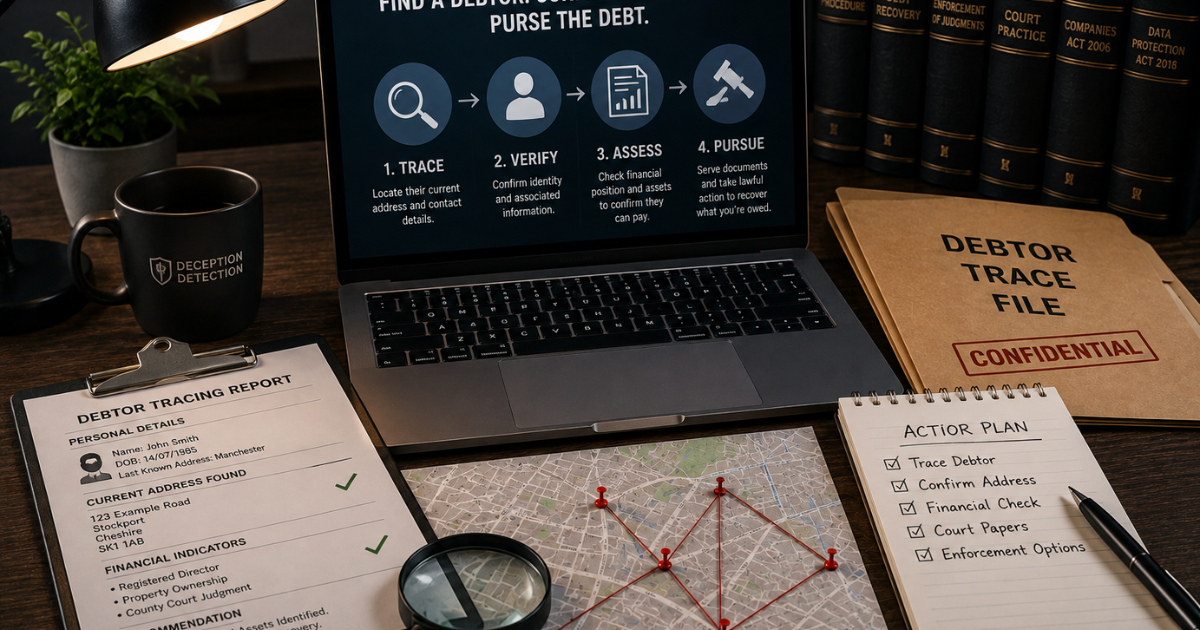
How to Find Someone Who Owes You Money
Locate a debtor, confirm whether they can actually pay, and serve them properly — the right steps, in the right order, all lawful.
Read more →
Surveillance Evidence and the Family Court: What Actually Helps
How lawful surveillance evidence is used in family proceedings — what carries weight, what backfires, and why the method matters as much as the result.
Read more →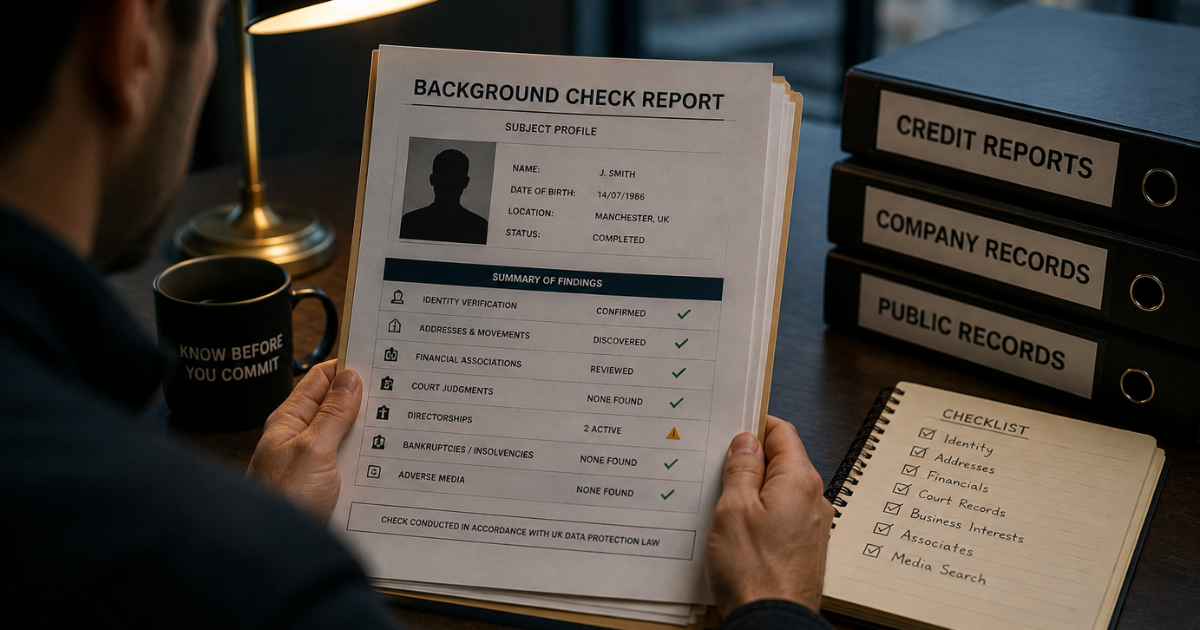
What a Background Check Really Reveals
What a background check can surface — directorships, judgments, identity — what it cannot, and when it is worth doing before you commit.
Read more →Find Out What's Really There
Email us the situation in confidence. We will tell you honestly what a lawful asset trace can establish, how we would approach it, and what it would cost — before you commit to anything.
Discuss Your Case