How to Find Someone Who Owes You Money
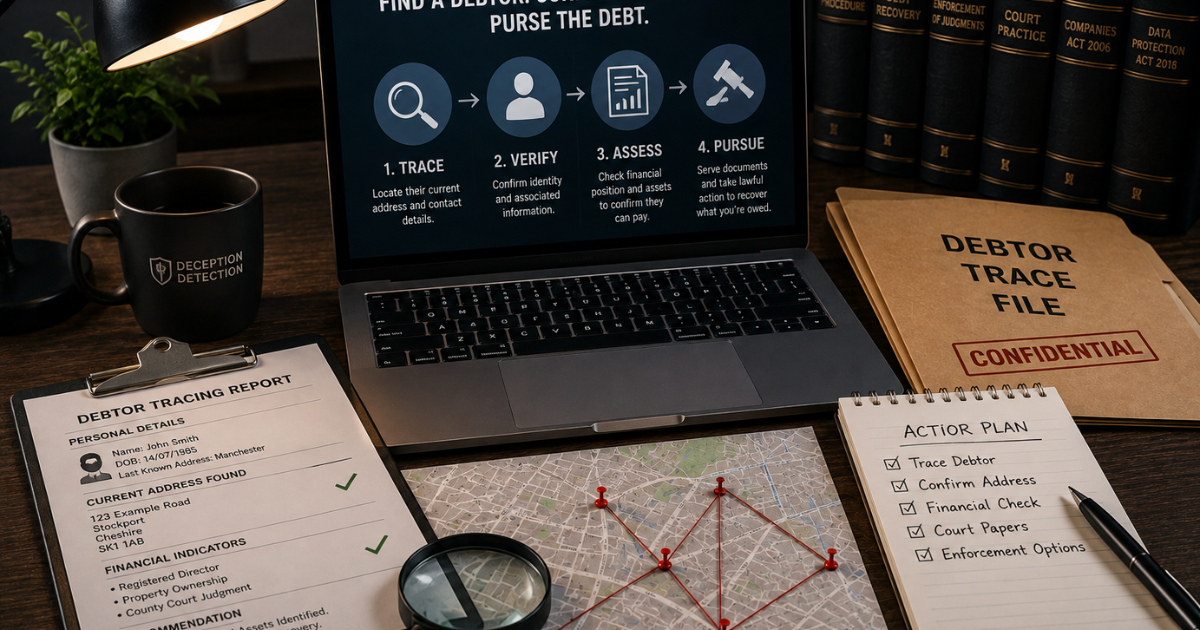
You cannot recover a debt from someone you cannot find. Whether it is a tenant who left owing rent, a customer who stopped paying, or a private loan that went quiet, the first obstacle is almost always the same: the person has moved, gone silent, or simply disappeared. Here is how that gets solved — lawfully, and in the right order.
Step one: locate them
A debtor trace establishes a current, verified address for the person you are pursuing. This is more than a name match — it confirms the individual actually lives where the data says, so you are not wasting a solicitor's letter or a court fee on a dead address. Professional tracing uses licensed sources beyond the free tools, which matters when someone has deliberately made themselves hard to find.
Step two: check whether it is worth pursuing
Finding a debtor is only half the picture; the other half is whether they can actually pay. This is where a light-touch asset trace or status check helps — confirming employment, property ownership, directorships or other means before you spend money chasing. There is little point winning a judgment against someone with nothing to enforce against, and knowing this up front saves good money chasing bad.
Step three: serve them properly
Once you have a confirmed address, legal action often depends on documents being served correctly. A process server delivers claims, statutory demands and other documents to the right person and provides a sworn certificate of service for your file — the proof the court needs that the debtor was properly notified. A trace and professional service together close off the debtor's easiest escape route: claiming they never knew.
Staying on the right side of the law
Debt recovery has rules, and crossing them can hand the debtor a grievance and cost you your case. Tracing must be done under data-protection law, and harassment is both unlawful and counterproductive. The value of doing this professionally is that every step — locating, verifying, serving — is handled so it stands up, and you stay firmly on the right side of the line while the pressure stays firmly on the debtor.
If they have moved abroad
A debtor leaving the country does not automatically end the matter, but it does change the calculation. International tracing is possible, and cross-border enforcement exists — though it adds cost and complexity that only makes sense above a certain debt. The honest first step is the same: locate and verify where they now are, then weigh the realistic prospect of recovery before committing to enforcement. Knowing early that a debtor has genuinely gone dark abroad is itself useful — it lets you decide to pursue, settle or write off with your eyes open.
If someone owes you and has gone to ground, the sooner the trail is followed the fresher it is. We can find them, confirm whether pursuit is worthwhile, and make sure they are served properly.
Chasing a debtor who vanished?
A verified current address and a status check, so you pursue the debt with confidence.
Trace a Debtor