What a Background Check Really Reveals
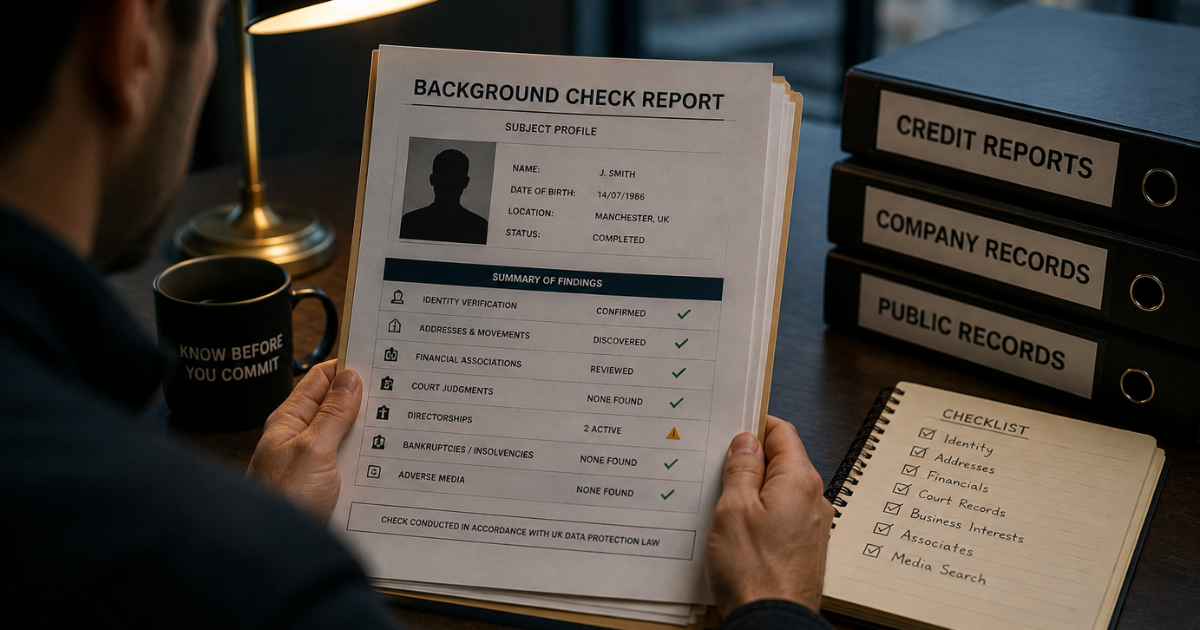
Before you employ someone, go into business with them, rent to them, or trust a person you have only met online, it is reasonable to want to know they are who they say they are. A professional background check answers that — but it is worth understanding what it can genuinely surface, and what it cannot.
What a check can reveal
- Identity verification. Confirming a person is real and is who they claim to be — the foundation everything else rests on.
- Business interests. Current and past directorships, company links and disqualifications through public registers.
- Financial red flags. County court judgments, insolvencies and bankruptcies that speak to reliability.
- Property connections. Links to addresses and property that help build an accurate picture.
- Online footprint. Publicly available information that confirms — or contradicts — the story you have been told.
What a check cannot do
An honest provider is clear about the limits. A standard background check is not a criminal records check — a DBS check requires the individual's consent and, for many roles, is the correct route. It cannot access private financial accounts, medical records or protected data, and anyone offering those is offering to break the law on your behalf. What it does is lawfully assemble the public and licensed-source picture, verify it, and flag what does not add up.
When it is worth doing
The common moments are pre-employment (especially for positions of trust), pre-nuptial or online-dating reassurance, landlord and tenant checks, and due diligence before a business deal or investment. In each, a check is cheap insurance against a costly mistake — and often the reassurance that someone is exactly who they claim to be is worth as much as catching someone who is not.
Doing it lawfully
Everything sits under UK GDPR and the Data Protection Act. A professional background check gathers only what is proportionate to your legitimate purpose, from lawful sources, and reports it clearly. That discipline is what makes the result trustworthy — and keeps you protected too. It also pairs naturally with wider investigation where a single check raises bigger questions.
What you get, and how quickly
A background check is usually returned as a clear written summary — what was verified, what was found, and anything that does not add up — rather than a raw data dump you have to interpret. Defined checks are typically quoted as a fixed fee and turned around quickly, because the scope is known from the start. If an initial check throws up something that warrants a closer look, it can be widened into a fuller enquiry, so you can start proportionate and escalate only if the findings justify it.
If there is a decision riding on who someone really is, a check is a small, sensible step to take first.
Need to be sure about someone?
Discreet identity verification and background checks, quoted as a clear fixed fee.
Request a Check