How to Tell If Your Car Has a Tracker
The warning signs, the types of tracker, how to check your own car, and why a phone app is not enough on its own.
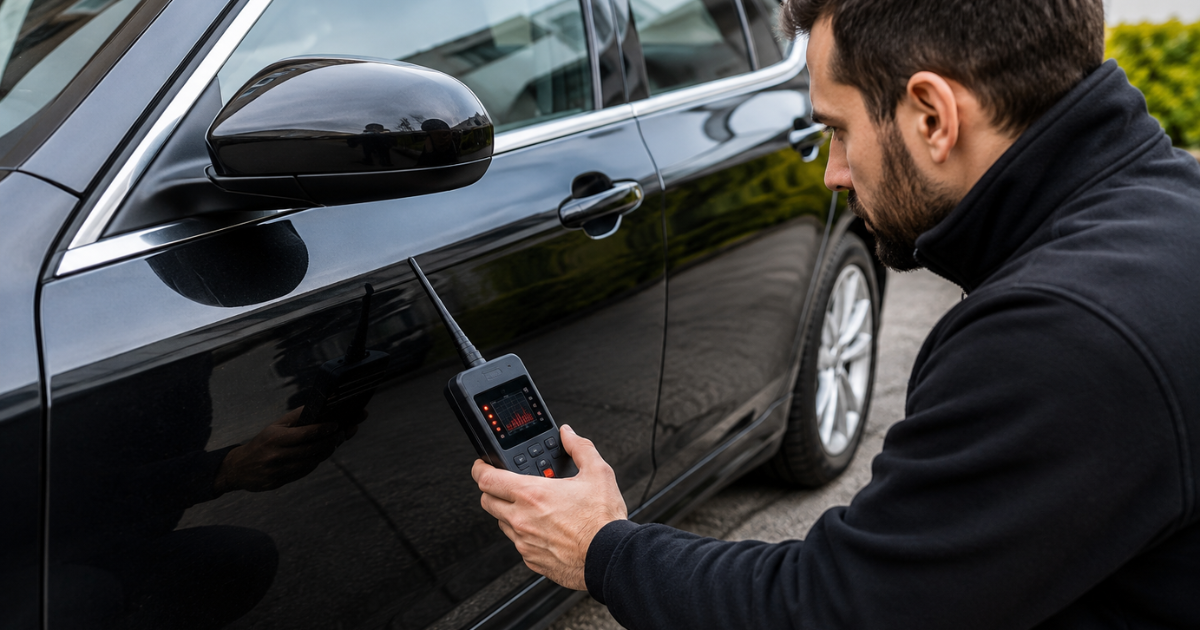
Quick answer: A phone can find a Bluetooth tag like an AirTag, but it cannot detect a covert cellular GPS tracker. To check properly you need to look physically — the OBD port, wheel arches, bumpers and wiring — and ideally drive the car first to wake any motion-triggered device before scanning. If your safety is at stake, get a professional sweep.
Signs someone may be tracking your car
Trackers are hidden precisely so you will not notice them, so the first clues are usually in someone else's behaviour rather than in the car itself. Ask yourself whether any of these ring true:
- Someone keeps turning up where you are, or knows where you have been, with no innocent explanation.
- An ex-partner, current partner or another person references trips or places they should have no way of knowing about.
- You have noticed unfamiliar wiring, a small box, or a device plugged in under the dashboard.
- Your car has been out of your control — a service, a loan to someone, a spell parked somewhere accessible — and something feels off since.
- Your battery drains faster than it should, which can occasionally point to a hardwired device, though there are many innocent causes too.
None of these on their own proves anything. Together, and combined with a gut feeling that you are being watched, they are enough reason to check.
The types of tracker you are looking for
Knowing what exists tells you where and how to look. There are four main kinds:
Magnetic battery trackers
Self-contained units in a magnetic case, usually stuck to the metal underside of the car, inside a wheel arch or behind a bumper. They run on battery, which is why many are set to sleep when the car is still and only wake and report when it moves.
OBD plug-in trackers
These plug straight into the OBD-II diagnostic port, which sits under the dashboard near the steering column. They take power from the car and can report continuously, and they are one of the quickest devices to fit and to find.
Hardwired trackers
Wired directly into the car's electrics or fuse box so they are permanently powered and well hidden. These are the hardest to detect and almost always need a physical inspection rather than a scan.
Bluetooth tags
Consumer tags such as Apple AirTags or Tile, dropped into a door pocket, under a seat or in the boot. These are the only type your phone can help with.
How to check your car yourself
You can do a basic check in under an hour with a phone and a torch. It will not be as thorough as a professional sweep, but it rules out the easy stuff.
1. Scan for Bluetooth tags with your phone
On iPhone, open Find My, then Items, then "Items Detected Near You". On Android, go to Settings, then Safety and Emergency, then Unknown Tracker Alerts, and run a scan. This finds AirTags and similar tags travelling with you. If it is clean, that only rules out Bluetooth tags — not cellular trackers.
2. Search the outside and underside
With a torch and, if you have one, a mirror on a stick, check inside both front and rear wheel arches, behind and under the bumpers, and along the underside of the car. Magnetic units feel like a smooth plastic box stuck to the metal. Do not pull at brake lines or wiring.
3. Check the obvious interior spots
Look at the OBD-II port under the dashboard for anything plugged in that should not be there. Check under the seats, in the glovebox, in the boot including under the boot floor and around the spare wheel, and behind interior trim that looks disturbed.
4. Use an RF detector — but understand its limits
A radio-frequency detector reacts to a device that is transmitting. Turn off your own phone, the car's Wi-Fi, Bluetooth and infotainment first so they do not trigger it, then move it slowly around the car. Crucially, drive the car around the block first to wake any motion-triggered tracker, then scan straight away. A device that is asleep or only bursts occasionally can still be missed.
Why DIY checks often miss trackers
There are two traps. The first is the phone-app myth: many "GPS tracker detector" apps simply use the phone's magnetometer to sense a magnet at very close range, and they will happily report a car as clean while a live cellular tracker sits under the bumper. No app can detect a cellular GPS tracker, full stop. The second is timing and access: dormant battery trackers and hardwired units give off little or nothing to detect, and the well-hidden ones are exactly the ones a quick look will not reveal. That is why a proper sweep pairs radio-frequency detection with a full hands-on physical inspection — the two together, not either on its own.
What to do if you find a tracker
If you find a device and you have any reason to think it is linked to an ex, a controlling partner or a stalker, do not just rip it off and throw it away. Photograph it where it is, note where it was fitted, and contact the police — an unauthorised tracker can be important evidence, and removing it can tip off the person and escalate the situation. If you are in immediate danger, call 999. A professional can document the find and advise you on your next steps safely.
When to get a professional sweep
If your safety is at stake, or a DIY check has not settled your mind, a professional sweep is the reliable way to know for certain. We come to you anywhere in the UK, drive the car to wake motion-triggered devices, sweep across the cellular bands and carry out a full physical inspection of every likely hiding place — and we give you a clear answer and a plan. You can read exactly how we do it on our vehicle tracker detection page, or see the full range on the bug sweep home page. A mobile vehicle sweep starts from £399.
Want It Checked Properly?
We come to you and check your car for hidden trackers, bugs and cameras — electronic and physical sweep, from £399. A clear answer, and peace of mind.
What Our Customers Say
Real results from real sweeps across the UK.
"Booked a bug sweep on my car after becoming suspicious that I was being tracked. The technician carried out a full inspection and located a tracking device hidden on the vehicle. Everything was explained clearly and professionally. Excellent service from start to finish."
"I was convinced there might be a listening device somewhere in my home, so I booked a full sweep for peace of mind. Nothing suspicious was found, but every room and the areas I was concerned about were thoroughly checked. I felt much more at ease afterwards."
"We arranged a sweep of a property after noticing a few things that didn't seem right. During the inspection a concealed camera was identified. The technician showed us exactly what had been found and where it was positioned. Very discreet and professional."
"We needed our office checked following concerns about confidential conversations. The team swept the meeting rooms, offices and communal areas and thankfully found no evidence of listening or recording equipment. Very thorough and handled confidentially."
"A tracking device was discovered during the sweep of one of our company vehicles. We would never have spotted it ourselves. The inspection was methodical and we were given clear information about what had been located. Would definitely recommend the service."
"Booked both my house and car to be checked. The car and property were inspected thoroughly and no hidden devices were detected. It was reassuring to have everything professionally checked rather than constantly wondering if something was there."
"I found something unusual in my property but had no idea what it was or whether I should be concerned. Deception Detection inspected the property and identified a suspicious recording device during the sweep. Professional, discreet and easy to deal with."
"We requested a comprehensive sweep after concerns about privacy. They checked for hidden cameras, listening devices and tracking equipment throughout the property. Nothing was found, which was exactly the reassurance we needed. The whole process was handled professionally and without any fuss."
Frequently Asked Questions
A phone can detect Bluetooth tags such as AirTags using Find My on iPhone or Unknown Tracker Alerts on Android. It cannot detect covert cellular GPS trackers, because those receive satellite signal silently and report over the mobile network, which no app can read.
Common places are the OBD-II port under the steering wheel, inside the wheel arches and bumpers for magnetic units, under the seats, in the boot, and spliced into the wiring or fuse box for hardwired devices.
Many battery trackers sleep when the car is parked and only transmit when it moves, so scanning a stationary car finds nothing. Driving the car first wakes motion-triggered devices; dormant or hardwired units need a physical inspection.
If it relates to stalking or an abusive relationship, do not simply remove it. Preserve it as evidence, photograph it in place and contact the police. If you are in immediate danger, call 999.
If your safety is at stake or a DIY check has not reassured you, a professional sweep combines proper radio-frequency detection with a full physical inspection and is the most reliable way to know for certain. A mobile vehicle sweep starts from £399.
From the Blog
Practical guides on surveillance, lie detection and counter-surveillance.
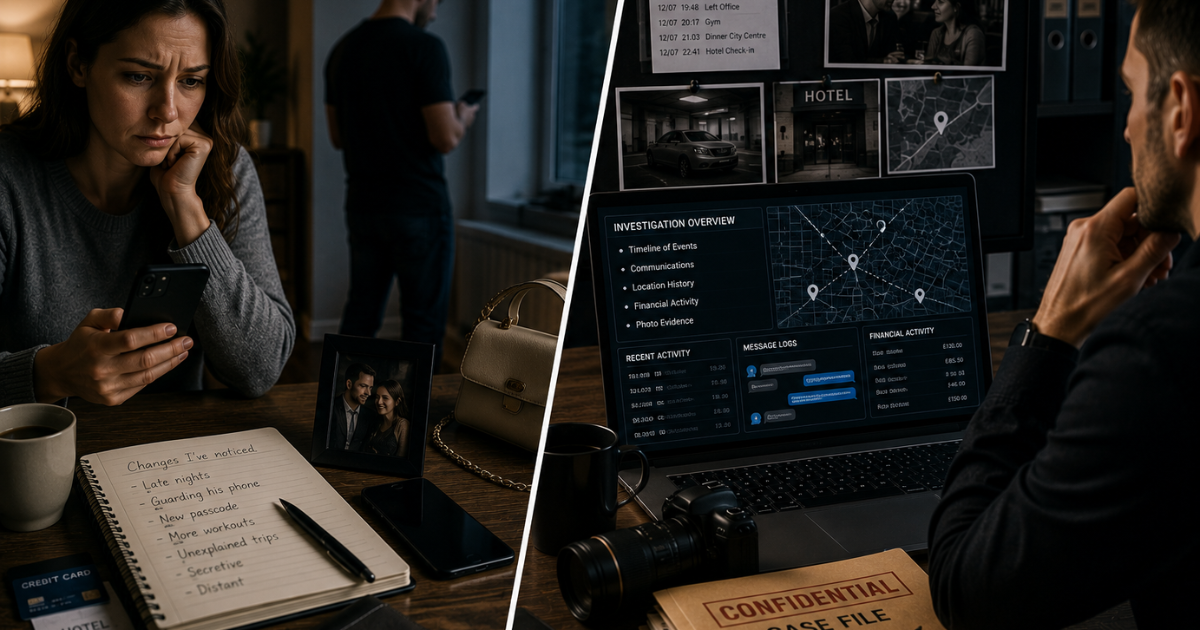
Signs a Partner Is Cheating — and How to Know for Certain
The behavioural, digital and financial signs a partner may be cheating — why none proves anything alone, and the two lawful ways to get certainty.
Read more →
P300 EEG vs the Polygraph: Which Lie Detection Actually Works?
The polygraph measures nervousness; P300 EEG measures whether the brain recognises specific information. Here is why that difference matters.
Read more →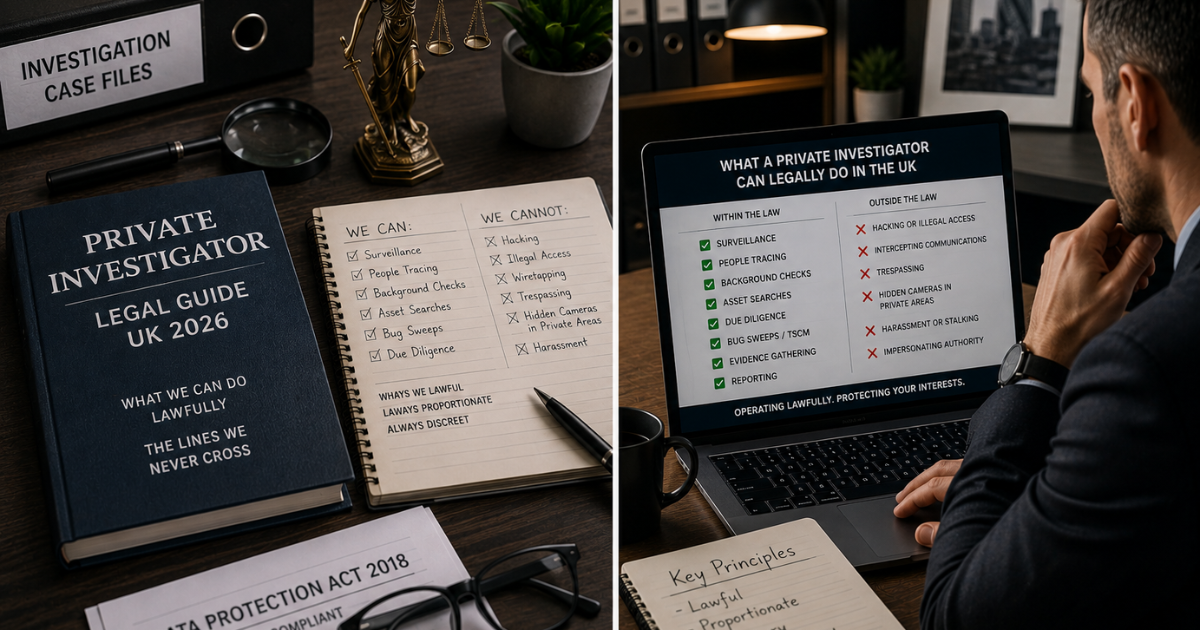
What a Private Investigator Can Legally Do in the UK
Surveillance, tracing and background checks within the law — and the lines a legitimate UK investigator never crosses.
Read more →
Insider Threats: How Businesses Uncover Fraud and Leaks
Fraud, data theft and leaks come from inside. How corporate investigation and bug sweeps uncover them — discreetly.
Read more →Still Not Sure? We'll Check for You
Email us in confidence and we will arrange a discreet sweep of your car, wherever you are in the UK.
Email to Enquire