How to Find a Hidden Camera
A practical guide to checking a room for a concealed camera — the physical search, the lens-reflection scan, the Wi-Fi check, and the honest limits of each. Plus when a professional sweep is the only way to be sure.
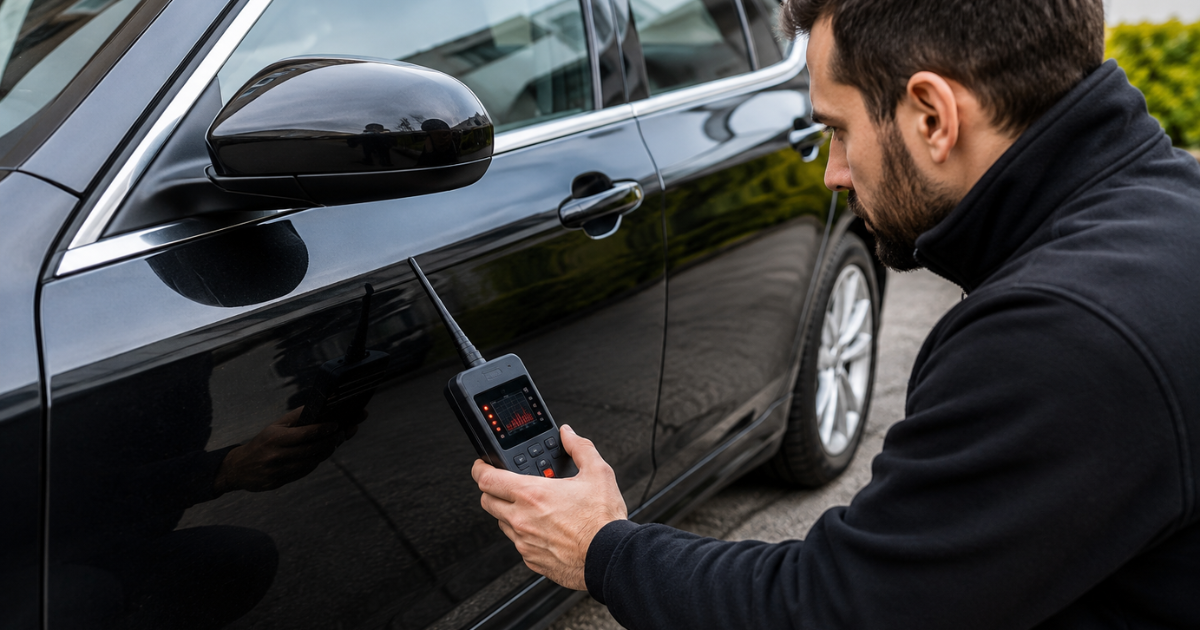
If you suspect a camera in a room — your own home, a rental, a workplace — there are real checks you can do yourself, and it is worth doing them. It is equally worth understanding what they will and will not catch, so a clear result gives you genuine reassurance rather than false comfort.
Step 1: Search by Hand
Start with your eyes and hands. Cameras are hidden in ordinary objects that face the room without drawing attention, so look closely at smoke and heat alarms, clocks, phone chargers and USB plugs, air fresheners, Bluetooth speakers, picture frames, tissue boxes and vents — especially anything with a clear line to a bed, sofa or shower. Look for a tiny lens aperture, a pinhole, a new or out-of-place item, or something that has been moved. Trust anything that feels wrong.
Step 2: Scan for the Lens
A camera lens reflects light distinctively. Dim or turn off the lights, then slowly sweep the room with a torch or your phone's flashlight held near your eyeline, watching for a small, bright pinpoint reflection coming back at you. Check suspicious objects from several angles. On some phones the front-facing camera can also reveal the faint purple glow of a camera's infrared night-vision LEDs, which are invisible to the naked eye — though many modern cameras show nothing this way, so treat it as a bonus, not a guarantee.
Step 3: Check the Network
If it is your own Wi-Fi, look at the list of connected devices in your router settings or a network-scanning app for anything you do not recognise. This can flag a Wi-Fi camera that is switched on and connected — but it is the weakest of the three checks, because it misses any camera that records to a memory card, is switched off, or uses its own mobile connection or a separate network.
The Limits of DIY — and When to Get a Sweep
Here is the honest picture. DIY checks catch obvious and active cameras, and often that is enough to settle a worry. What they reliably miss is the hardest and most concerning category: cameras that transmit nothing, recording silently to an internal card to be collected later. No network scan sees them, and a lens is easy to overlook when you do not know exactly what to look for.
That is the gap a professional hidden camera detection sweep closes. We find cameras optically by lens detection — regardless of whether they are powered or transmitting — combine that with radio-frequency detection for wireless devices, and add a systematic physical inspection. If the space genuinely matters, or your search leaves you unsure, that is the point to bring in a proper sweep and get certainty.
Part of a Bigger Picture?
If you are worried about being tracked, you may also want to know what someone is really doing, or verify what they are telling you. We also offer full private investigation and specialist EEG lie detection.
What Our Customers Say
Real results from real sweeps across the UK.
"Booked a bug sweep on my car after becoming suspicious that I was being tracked. The technician carried out a full inspection and located a tracking device hidden on the vehicle. Everything was explained clearly and professionally. Excellent service from start to finish."
"I was convinced there might be a listening device somewhere in my home, so I booked a full sweep for peace of mind. Nothing suspicious was found, but every room and the areas I was concerned about were thoroughly checked. I felt much more at ease afterwards."
"We arranged a sweep of a property after noticing a few things that didn't seem right. During the inspection a concealed camera was identified. The technician showed us exactly what had been found and where it was positioned. Very discreet and professional."
"We needed our office checked following concerns about confidential conversations. The team swept the meeting rooms, offices and communal areas and thankfully found no evidence of listening or recording equipment. Very thorough and handled confidentially."
"A tracking device was discovered during the sweep of one of our company vehicles. We would never have spotted it ourselves. The inspection was methodical and we were given clear information about what had been located. Would definitely recommend the service."
"Booked both my house and car to be checked. The car and property were inspected thoroughly and no hidden devices were detected. It was reassuring to have everything professionally checked rather than constantly wondering if something was there."
"I found something unusual in my property but had no idea what it was or whether I should be concerned. Deception Detection inspected the property and identified a suspicious recording device during the sweep. Professional, discreet and easy to deal with."
"We requested a comprehensive sweep after concerns about privacy. They checked for hidden cameras, listening devices and tracking equipment throughout the property. Nothing was found, which was exactly the reassurance we needed. The whole process was handled professionally and without any fuss."
Frequently Asked Questions
The questions we hear most about finding hidden cameras.
Start with a careful physical search of anything facing the room — alarms, clocks, chargers, speakers, vents and mirrors — then dim the lights and slowly scan for the small reflection of a lens using a torch or your phone's flashlight. You can also check what is connected to the Wi-Fi. These steps catch obvious cameras, but they miss well-hidden, switched-off and non-transmitting devices, which is where a professional sweep comes in.
To a limited degree. Your phone's torch helps you catch the glint of a lens in a dark room, and on some phones the front camera can reveal the faint glow of a camera's infrared night-vision LEDs. Both methods are hit and miss — many cameras have no visible infrared and lenses are easy to miss — so a clear phone check is reassuring but not conclusive.
Only if they are switched on and connected to the same network you can see. Many spy cameras record to an internal memory card and transmit nothing, and others run on their own mobile connection or a separate network. A Wi-Fi scan is worth doing but will never catch these, which is why lens detection matters.
In everyday objects that naturally face a room: smoke and heat alarms, clocks, phone chargers and USB plugs, air fresheners, speakers, picture frames and tissue boxes. In bedrooms and bathrooms they are often angled toward the bed or shower.
A professional sweep that uses lens detection to find cameras optically — even when they are off or not transmitting — combined with radio-frequency detection for wireless ones and a physical inspection. That combination finds the silent, memory-card cameras that defeat every DIY method.
Do not handle it more than necessary. Where it points to voyeurism, stalking or an abusive relationship, it is evidence — preserve it, involve the police, and get advice. We can document the find to support you.
Yes, entirely. Checking your own property is lawful. It is someone recording you covertly in a private space that is unlawful, and a serious matter.
From the Blog
Practical guides on surveillance, lie detection and counter-surveillance.
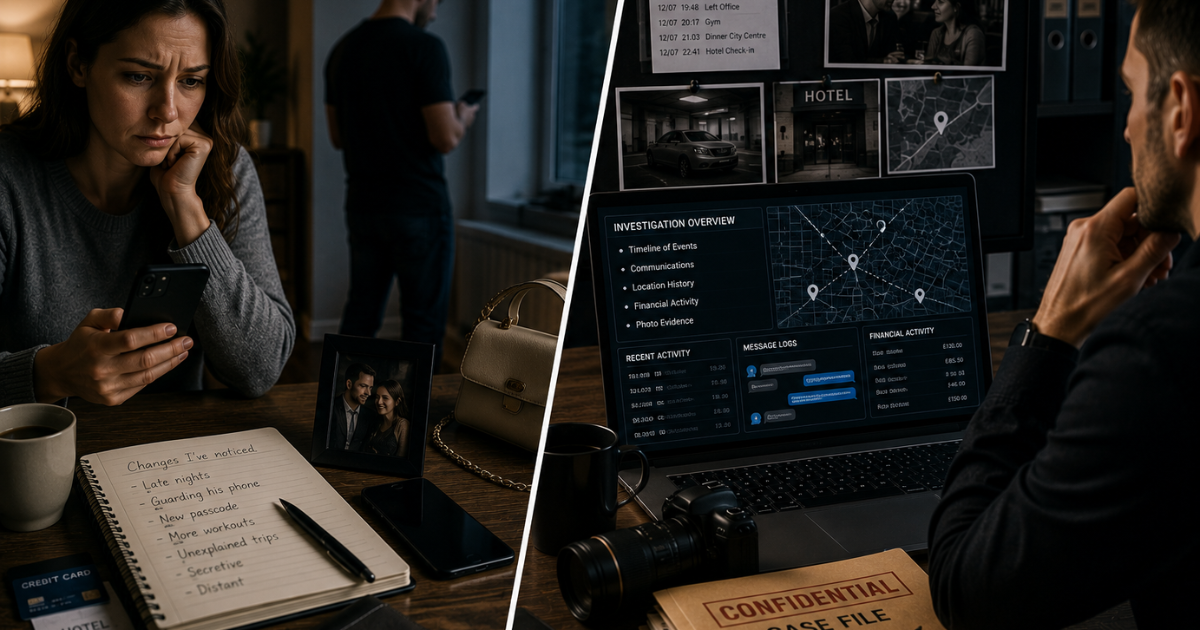
Signs a Partner Is Cheating — and How to Know for Certain
The behavioural, digital and financial signs a partner may be cheating — why none proves anything alone, and the two lawful ways to get certainty.
Read more →
P300 EEG vs the Polygraph: Which Lie Detection Actually Works?
The polygraph measures nervousness; P300 EEG measures whether the brain recognises specific information. Here is why that difference matters.
Read more →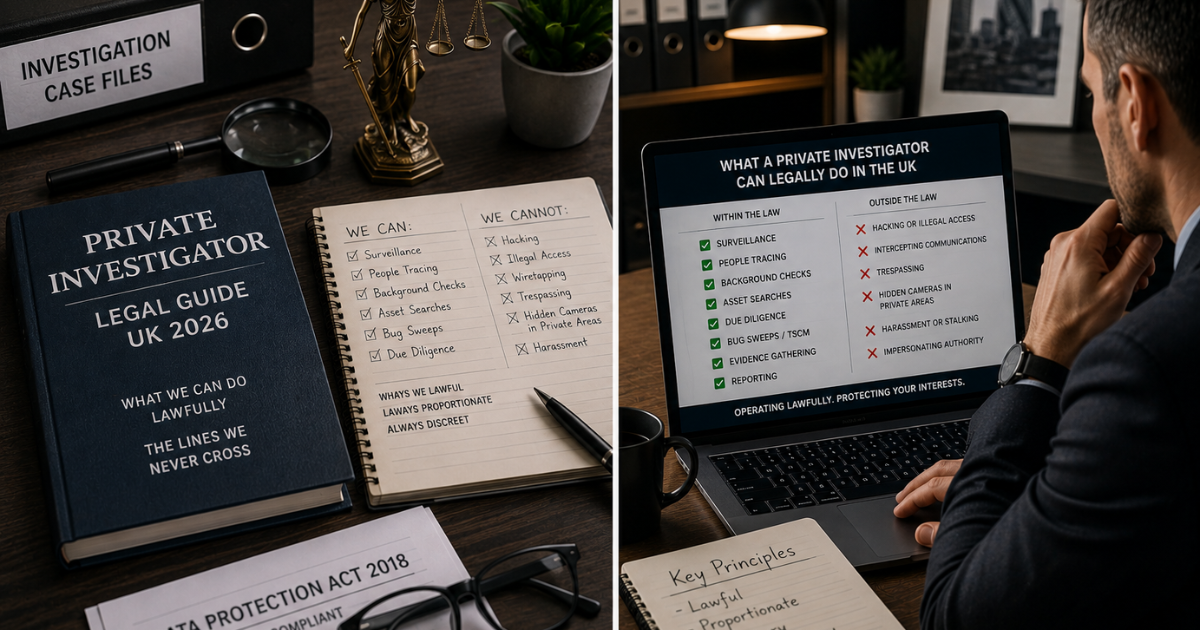
What a Private Investigator Can Legally Do in the UK
Surveillance, tracing and background checks within the law — and the lines a legitimate UK investigator never crosses.
Read more →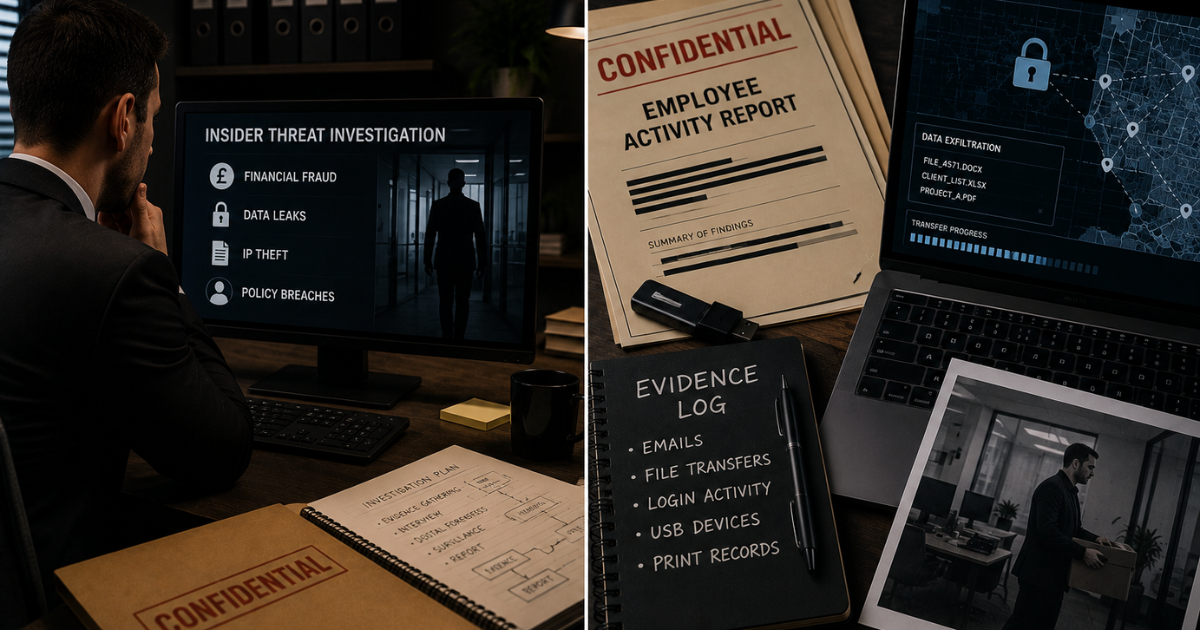
Insider Threats: How Businesses Uncover Fraud and Leaks
Fraud, data theft and leaks come from inside. How corporate investigation and bug sweeps uncover them — discreetly.
Read more →Want to Be Certain?
If a DIY check leaves you unsure, email us in confidence. We will arrange a discreet sweep using lens and radio-frequency detection, and give you a clear answer.
Email in Confidence